
Oven Bakes Fine but the Broiler Won’t Work? Gas and Electric Causes
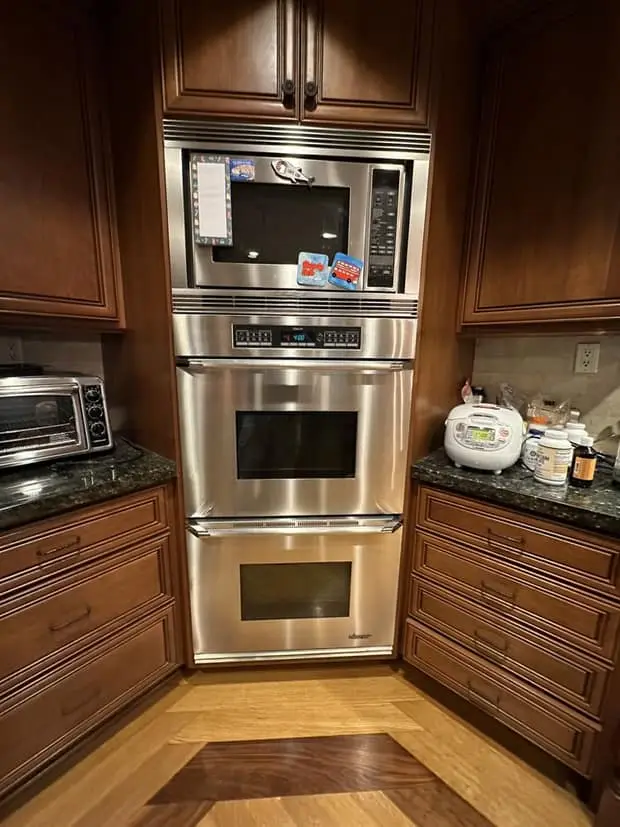
This is a call we take a lot in Irvine kitchens, and it usually arrives in November. Somebody plans to finish a roast under the broiler, hits Broil, waits, and nothing happens. The oven bakes perfectly. The display is normal. The broiler is simply dead.
Here is the useful part. A working bake cycle is a free diagnostic. It tells you the oven is getting its full supply voltage, that the control board is awake and executing its program, that the oven temperature sensor is reporting a number the board believes, and on a gas oven that the gas is on and the safety circuit can do its job. All of that is confirmed working. So the broken thing has to be a part that only broil touches, and on any oven that is a short list.
What bake and broil actually share, and what they don’t
On an electric oven there are two separate heating elements. The bake element sits under the cavity floor, hidden on most newer models, and runs around 2,500 to 3,000 watts. The broil element sits at the top of the cavity and is bigger, typically 3,400 to 4,000 watts on a wall oven. Both run on 240 volts. Both get their power from the same terminal block and the same control board. But each one has its own relay on that board, its own pair of wires, and its own terminal connections at the back of the oven.
On a gas oven it depends on the design. Many freestanding ranges have one burner at the bottom of the cavity that handles both jobs, and a separate broiler compartment in a drawer underneath. Built-in gas wall ovens and professional ranges usually have a second burner at the top of the cavity, often an infrared one, with its own glow-bar igniter. That second igniter is the part that fails. If your gas oven has one burner doing both jobs and bake works, a dead broil is almost certainly a control or selector problem rather than a burner problem, which narrows things nicely.
So the question to settle before anything else is which kind of oven you have. Open the door, look up. A visible coiled element across the ceiling means electric broil. A metal shield or a ceramic panel at the top of a gas oven means a dedicated broil burner. Nothing up top on a gas range means the bottom burner does both.
Symptoms to causes
| What you observe | Most likely causes |
|---|---|
| Electric: bake normal, broil element stays completely dark | Element burned open (1), burned terminal behind the rear panel (2), broil relay on the board (3) |
| Electric: broil element glows only partway, or glows white in one spot | Element failing, replace it now (1) |
| Electric: broil works for a few minutes then quits, comes back later | Loose or oxidizing terminal expanding as it heats (2), thermal limit switch (5) |
| Electric: broil dead and preheat has become much slower than it used to be | Broil element open, because the oven fires it during preheat (1) |
| Gas: broil igniter glows bright but the burner never lights | Weak glow-bar igniter below the valve’s pull-in current (4) |
| Gas: no glow at all at the broil burner, bake lights fine | Open igniter, broken igniter wiring, or the board’s broil output (4, 3) |
| Gas: broil lights with a loud pop after a delay | Delayed ignition. Stop using it and see our gas oven guide (6) |
| Either: breaker trips the moment broil is selected | Shorted element or a grounded wire. Stop and call (7) |
| Either: nothing happens at all when Broil is pressed, no fan, no sound | Mode not actually engaged, control lock, or the door latch sitting mid-travel (8) |
1. The broil element has burned open (electric)
This is the single most common finding. The element is a resistance wire inside a steel sheath, and it spends its life going from room temperature to glowing orange and back. Eventually the wire thins somewhere and opens. Sometimes the break is obvious: a split in the sheath, a blister, a bright scorch mark, a section that has sagged out of line. Often it looks perfectly fine, because the break is inside the sheath.
A quick way to think about it. A 3,400 watt element on 240 volts should measure around 17 ohms across its terminals. A 4,000 watt one reads closer to 14. An open element reads infinite. That measurement takes a technician about two minutes once the back panel is off, and it is the difference between replacing a part and guessing at one.
Safe to check yourself: looking. With the oven off and cool, inspect the whole length of the element for blisters, splits, sagging and scorch marks. Do not pull on it, and do not try to test it with the oven powered.
2. A burned terminal or wire nut behind the rear panel (electric)
This one disappoints people, because the element is fine and the repair is in a spot nobody can see. The broil element’s wires connect to spade terminals that poke through the back wall of the cavity, usually joined with high-temperature porcelain wire nuts. That junction carries the full broil current every time you use it, and it sits in the hottest part of the oven’s cabinet.
Over the years the connection oxidizes slightly. Resistance goes up, that spot gets hotter, oxidation accelerates, and the cycle feeds itself. The end result is a melted terminal, a wire with crumbling insulation, and an open circuit. I’d always check the terminals before condemning an element, because on older built-ins the terminal gives out first about as often as the element does. The repair is a new terminal and a short pigtail of high-temperature wire, which is a lot less than a new element plus a new element.
3. The broil relay on the control board
Bake and broil are switched by separate relays sitting on the same control board. Relays are mechanical, they carry heavy current, and they are the component on an oven board most likely to fail. When the broil relay welds, burns its contacts or loses its coil, broil gets no voltage while everything else on the board keeps working normally. The display is fine, the oven bakes, the timer runs.
The test is clean. With the oven commanded into broil, a technician looks for 240 volts at the element terminals. Voltage present and the element cold means the element or its wiring. No voltage with the board commanding broil means the board. On some models the relay can be replaced on the board, on most the board goes as an assembly. Either way, this is not a parts-cannon repair, it is a measurement.
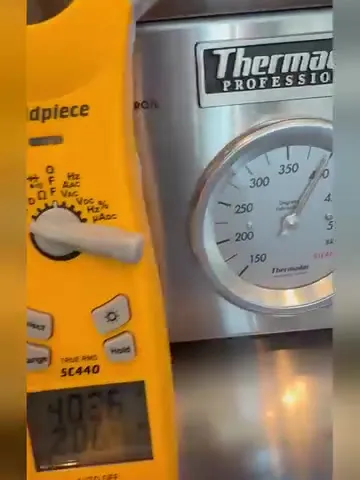
4. A glow-bar igniter that glows but no longer opens the valve (gas)
If your gas oven has a dedicated broil burner, it has its own igniter, and that igniter is the most likely culprit by a wide margin. The design catches people out because it looks healthy right up until the end.
A glow-bar igniter is wired in series with the oven’s gas safety valve. Current flows through the igniter, the igniter heats up, and the same current is what pulls the bimetal valve open. As the igniter ages, its resistance climbs and current falls. It still glows bright orange, because glowing takes less current than opening the valve does. A healthy igniter pulls roughly 3.2 to 3.6 amps and lights the burner within about 30 to 90 seconds. A tired one sits there at 2.6 or 2.8 amps glowing away, and the gas never arrives.
Broil igniters usually fail before bake igniters on the same oven, because broil runs at the top of the cavity at the highest temperatures the oven produces. We see plenty of ovens where bake lights in 40 seconds and broil has been dead for a year.
Safe to check yourself: one observation, no tools, no reaching in. Turn off the kitchen lights, set broil, and watch the top burner from a normal standing distance. If the igniter glows for more than about 90 seconds and the burner never lights, you have found your part. If it glows and lights in under a minute, look elsewhere. If nothing glows at all, the igniter is open or its wiring is broken, and that is also a technician’s job.
Do not try to replace a glow-bar igniter yourself. The ceramic is brittle, the gap and orientation to the burner port matter, and the job is right next to an open gas line. If you smell gas at any point, leave the house and call the gas utility from outside before anyone else. Our guide on gas oven smells and popping ignition covers that in more detail.
5. Thermal limits, fuses and the convection fan
Some ovens run the broil circuit through a thermal limit switch or a one-shot thermal fuse that opens if the cabinet gets too hot. These trip most often after a self-clean cycle, which is the hottest thing an oven ever does. A thermal fuse that opened during self-clean can kill one circuit and leave the rest running.
Convection broil adds a fan to the picture. If your oven offers both Broil and Convection Broil and only the convection version fails, the fan or its relay is the suspect rather than the element. Try plain broil and see what happens. That one piece of information saves real diagnostic time.
This connects to something worth knowing before the holidays. Self-clean is the most common thing we see break an oven that was working fine the day before, and a broiler that stopped right after a clean cycle is a familiar story. Our take on timing is in should you run self-clean before Thanksgiving, and the short version is: not in the week before you need the oven.
6. Delayed ignition, which is a stop-now symptom
If broil eventually lights but does it with a bang, gas has been collecting in the cavity before anything ignites. That is delayed ignition, and the usual cause is the same weakening igniter from cause 4, letting the valve open late. It can also be a partly blocked burner port. A pop can blow the oven door open and it can singe eyebrows. Stop using the broiler, and get it looked at rather than living with it.
7. A breaker that trips when broil is selected
A broil element that has shorted to its sheath, or a wire that has burned through its insulation and touched the cabinet, trips the breaker the moment the relay closes. Reset the breaker once to confirm what you saw. If it trips again on broil, leave it off and call. Repeatedly resetting a breaker into a fault is how a scorch mark becomes a fire.
8. The free checks: mode, lock and latch
Before any of the above, rule out the things that cost nothing.
- Did broil actually engage? Many ovens need a temperature or a Hi/Lo level entered after you press Broil, and then a Start press. If the display shows Broil but no countdown or temperature, the oven is waiting on you.
- Broil versus Convection Broil. On models with both, people often select one and expect the other. Try the plain one.
- Control lock, Sabbath mode, demo or showroom mode. Sabbath mode in particular disables broil on a lot of models while leaving bake alone. It is easy to enter by accident with a long button press.
- The door latch. After a self-clean, the motorized lock sometimes parks mid-travel. The control sees an ambiguous switch and blocks the high-heat modes. Cut power at the breaker for five full minutes, restore it, and try again.
- Double ovens. On many double wall ovens and on most ranges with a warming drawer, only one cavity has a broil element at all. Check the manual before you decide something is broken.
- Time a preheat. Set 350°F and time it. Most ovens fire the broil element alongside bake during preheat, so an oven that now takes half again as long as it used to is telling you the broil element is open. That is a genuinely useful clue to hand a technician.
What you can safely check yourself, in order
- Confirm the mode engaged, and try plain Broil if you were using Convection Broil.
- Check for control lock, Sabbath or demo mode, then cut power at the breaker for five minutes.
- With the oven cold, look at the broil element for blisters, splits, sag or scorch marks.
- On a double oven, confirm the cavity you are using has a broiler.
- Gas only: lights off, watch the broil igniter from a distance and time it. Over 90 seconds glowing with no flame is your answer.
- Time a 350°F preheat and compare it to what you remember.
Leave to a technician: everything with the back panel off. Measuring 240 volts at the element terminals, reading element resistance, testing the board’s broil output, clamping an ammeter on a gas igniter, replacing terminals and high-temperature wiring, and anything touching the gas safety valve. A wall oven also has to come out of its cabinet to reach most of this, and the cabinet opening, the anti-tip hardware and the gas or 240-volt connection all have to go back correctly.
When to stop and call
- Any gas smell, at any point, on any cycle. Leave and call the utility from outside first.
- The broil burner lighting with a pop or a bang.
- A breaker that trips when broil is selected.
- A scorch mark, a melted connector or a burning smell at the back of the cavity.
- An element glowing white at one spot or glowing only partway along its length.
- Soot or yellow flame on a gas broil burner, which is incomplete combustion and a carbon monoxide question.
- A built-in, a professional range, or any oven where the broil element is behind a panel you would have to pry.
Keeping the broiler alive
- Use the broil pan the oven came with, and keep food off the cavity floor. Grease that pools under a broil element burns, smokes and bakes onto the sheath.
- Never line the oven floor with foil. It blocks airflow, reflects heat where it was not meant to go, and is a reliable way to cook a thermal fuse.
- Wipe up heavy spills by hand instead of saving them for a self-clean cycle. Self-clean is the hardest thing an oven does, and it is what takes out fuses, latches and boards.
- Watch the rack when you slide a pan in. Scraping a loaded sheet pan against the broil element is how a sag starts.
- Broil with the door in the position your manual specifies, closed on nearly all modern ovens. Propping it open on an oven that wants it closed makes the control cycle the element oddly and can overheat the panel above.
- Run the broiler for five minutes once a month even if you do not cook with it. A broiler that dies quietly in July is discovered on the worst possible day in November.
That last one matters more than it sounds. The week before Thanksgiving is the busiest stretch of our year for oven calls, and a good share of them are broilers that have been dead for months and were only noticed when the menu needed them. Our oven prep guide has the rest of the pre-holiday run-through, and three kitchen tests covers checking whether your oven’s temperature is honest while you are at it.
What we do when we arrive
The technician confirms which modes work, reads any stored fault codes, and then goes to the back of the oven. On electric, that means voltage at the element terminals in broil, resistance across the element, and a look at the terminals and wire nuts for heat damage. On gas, it means an ammeter on the igniter circuit while broil is calling, because the amp reading separates a weak igniter from a dead valve in one measurement rather than three guesses. You get the finding explained and a quote before any work starts, and most oven repairs finish the same day from parts on the truck. Every repair carries a 90-day parts and labor warranty.
We handle gas and electric broilers on freestanding ranges, slide-ins, built-in wall ovens and professional ranges. We are factory authorized for LG, Bertazzoni, Thor Kitchen and ZLINE, and we provide professional repair for Wolf, Thermador, Viking, Dacor, KitchenAid, GE, Whirlpool, Frigidaire and the other brands common in South Orange County kitchens.
Where we work
Irvine is our home base and where most of these calls come from, and oven and range repair in Irvine is usually a same-day or next-day visit. We run the same routes through Tustin and Lake Forest daily, and on down the corridor through Mission Viejo, Laguna Hills, Aliso Viejo, Laguna Niguel, Rancho Santa Margarita, San Juan Capistrano, Dana Point and San Clemente.
When you call, have the model and serial number ready. On a wall oven the plate is usually on the door frame behind the door, on a range it is often behind the storage drawer or on the left side frame. Tell us gas or electric, whether bake still works, and what the broil element or igniter does when you select broil. That sentence decides which parts ride out on the truck, and it often turns a two-visit job into one. We are 5.0 on Yelp if you want to see how these visits usually go. Call (949) 267-7771.
Frequently Asked Questions
My oven bakes fine but the broiler does nothing. What does that rule out?
Quite a lot. Working bake proves the oven has its full supply voltage, that the control board is awake and running its logic, that the oven temperature sensor is reporting a believable number, and on a gas oven that the gas supply and the safety circuit can work. None of those are your problem. The fault is in the hardware only broil uses: the broil element and its terminal connections on an electric oven, the broil relay on the control board, or on a gas oven the broil burner and its own glow-bar igniter.
What is the most common reason an electric broil element stops working?
The element burning open, and close behind it the terminal connection at the back of the oven. A broil element on a typical wall oven is a 3,400 to 4,000 watt load on 240 volts, which is more current than the bake element draws. The spade terminals and the porcelain wire nuts behind the rear panel run hot every time you broil, and over years the connection oxidizes, heats further, and finally burns open. The element still looks perfect from inside the cavity. We find burned terminals often enough that we check them before condemning the element.
My gas broil burner clicks or glows but never lights. Why?
Almost always a glow-bar igniter that has aged. The igniter is wired in series with the gas safety valve, and the valve only opens when enough current passes through the igniter. As the igniter ages its resistance climbs, so current drops. It still glows bright orange, it just no longer pulls enough amps to open the valve. A healthy igniter typically draws roughly 3.2 to 3.6 amps and lights the burner within about 30 to 90 seconds. A weak one glows for two or three minutes with nothing happening. Broil igniters tend to fail before bake igniters because broil runs the hottest.
Could the control board be the reason only broil is dead?
Yes, and it is the second thing a technician checks on an electric oven. Bake and broil are switched by separate relays on the same board. A relay that has welded, burned its contacts or lost its coil takes out only its own circuit, so bake keeps working while broil gets no voltage. The test is straightforward with a meter: confirm the board is commanding broil, then look for voltage at the element terminals. Voltage present and a cold element means the element or its wiring. No voltage means the board.
Is it safe to keep using the oven for baking while the broiler is dead?
On an electric oven, usually yes, with one caution. Many ovens fire the broil element along with bake during preheat to get up to temperature faster. If the broil element is open, preheat gets noticeably slower and the oven runs its bake element harder than it was designed to. On a gas oven, stop if you smell gas at any point, if the burner lights with a bang, or if you see soot. A delayed ignition that pops is gas pooling before it catches, and that one is worth stopping over.
The broil element glows at one end only. Is it still good?
No. An element that glows unevenly, glows only partway along its length, or shows a bright white spot is failing and will open soon, often with a flash and a tripped breaker. The same goes for a blister, a swollen section or a sag where it has drooped toward the rack. Replace it rather than waiting. Broiling with a failing element also browns food unevenly, which is usually the complaint that brings us out in the first place.
Related Pages
- Broil With the Door Open or Closed? What Really Happens to Your Oven
- Oven Not Heating? Igniter, Element, Sensor and Board
- Oven Won’t Turn On? Dead Display, Control Lock and Breaker Checks
- Gas Oven Smells Like Gas or Pops When It Lights?
- Oven Temperature Problems That Can Ruin Thanksgiving Dinner
- Is Your Oven Lying to You? Three Kitchen Tests
- Should You Run Oven Self-Clean Before Thanksgiving?
- Double Oven and 48-Inch Range Problems During Holiday Cooking
- Gas Range Burner Won’t Light or Burns Yellow
- Wolf Oven and Range Problems Before the Holidays
- How to Prepare Your Oven for Thanksgiving
- What to Do If Your Oven Stops Working on Thanksgiving Day
- Oven and Range Repair in Orange County
- Oven and Range Repair in Irvine
- Oven and Range Repair in Tustin
- Oven and Range Repair in Lake Forest
- Irvine · Tustin · Lake Forest · Mission Viejo · Laguna Hills · Aliso Viejo · San Juan Capistrano · San Clemente