
What to Do If Your Oven Stops Working on Thanksgiving Day
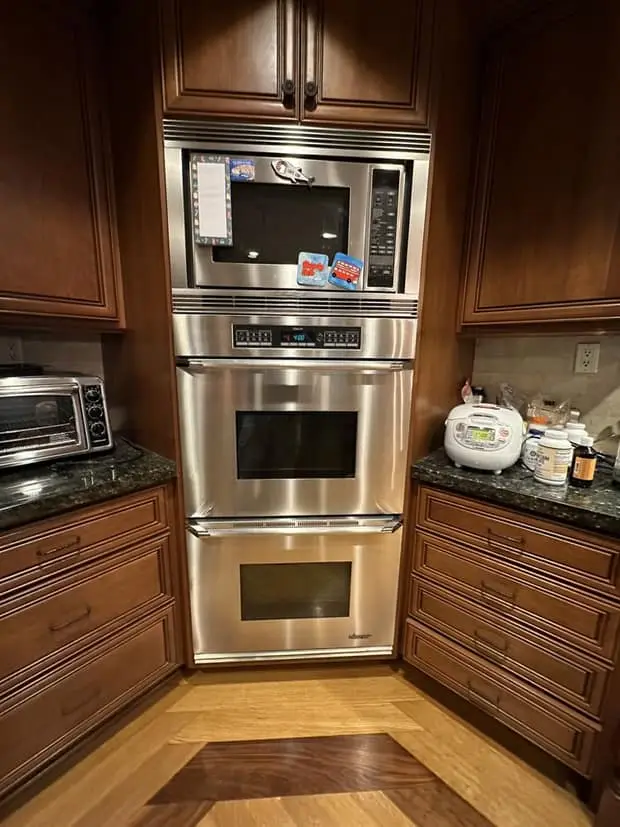
The oven died at eleven in the morning, the turkey has been in for ninety minutes, there are nine people coming at four, and nobody is going to be able to think clearly about this. So here is the short version first.
Spend five minutes on triage, because roughly a third of holiday no-heat calls turn out to be something a homeowner can clear without tools. If triage does not bring the oven back, stop working on the appliance and start working on the food, because the bird is on a clock and the oven is not. Call to get on the schedule, but build your dinner around a Plan B rather than around a technician arriving. That order matters. People lose two hours poking at a dead oven, and the two hours were the thing they could not get back.
We work on gas and electric ovens, ranges and built-ins across Irvine, Tustin and Lake Forest and the rest of the South Orange County corridor, and Thanksgiving week is the busiest stretch of our year on this category. Most of what follows comes from how these calls actually go.
The first five minutes: triage, in order
Work through these in sequence. Do not skip ahead to the interesting theories.
- Read the display. An error code is the single most valuable piece of information you have. Write it down exactly, F- codes and E- codes included. If the display is blank or dead, that is also an answer and it points at power rather than at the heating parts.
- Check the breaker. An electric oven or range runs on a 240V double-pole breaker. Look for one that sits halfway, or one that looks on but feels loose compared to its neighbors. A gas range still needs 120V for its igniter and control, so it has a breaker too. Push the breaker fully off, then fully on.
- Check the door lock. If the display shows a lock icon or the word LOCK and the door will not open, the latch has engaged. Do not pull on it. There is a section on this below.
- Check for a timer, delay start or control lock. Timed Bake that reached its end will shut the oven off and look exactly like a failure. So will a child lock, Sabbath mode or a demo mode. Press Cancel or Off and start fresh.
- Check whether the surface burners still work on a range. Burners working while the oven does nothing narrows the problem a long way, and it also tells you what you still have to cook with.
- Smell. If you smell gas at any point, leave the house with everyone in it and call SoCalGas from outside. Nothing else on this page matters until that is resolved.
Then do the reset. Oven breaker off, wait five full minutes, back on. Five minutes, not five seconds. Control boards hold charge, and a quick flick often leaves the board in exactly the state you were trying to clear. We have had calls where the customer insisted they had already reset it and the five-minute version brought the oven back while we were still on the phone.
What each symptom usually means
| What you are seeing | Most likely cause | Fixable today? |
|---|---|---|
| Display dead, nothing responds, electric oven | Tripped breaker, one lost 240V leg, loose connection at the junction box | Breaker, yes. Wiring, no |
| Display works, oven never gets hot, gas | Weak or failed hot-surface igniter. The common one | No, it is a part |
| Display works, oven never gets hot, electric | Bake element open, or a lost 240V leg so the control runs but the element cannot heat | Usually no |
| Oven ran, then shut off mid-cook, will not restart | Thermal cutoff tripped, cooling fan failure, overheated control | Sometimes, after it cools fully |
| Door locked, oven off, LOCK showing | Clean cycle started by accident, or latch motor stuck | Often yes, see below |
| Error code on the display | Sensor open or shorted, latch, communication fault | Depends entirely on the code |
| Oven heats weakly, food is not cooking | Aging igniter, element failing on one leg, door not sealing | No, but you may still be able to use it, see below |
| Everything dead including surface burners, gas range | Power to the range, or the gas shutoff behind it | Check the breaker and the shutoff position |
| Breaker trips again as soon as you reset it | A genuine short, often a failed element arcing to the cavity | No. Leave it off and stop |
| Burning or electrical smell, scorch marks | Arcing element or wiring damage | No. Shut it down |
The locked door, and why you must not pull on it
This one causes more holiday grief than any other single fault, and part of it is self-inflicted. The latch on a self-cleaning oven is a motorized hook driven by a small gear motor. It is designed to hold a door shut against 900°F, which means it is far stronger than your arm, and the plastic gears inside the motor are far weaker than the hook. Pull hard on a locked door and you strip those gears. Now you need a latch assembly on a day when nobody is selling one.
If the door locked itself, work through this instead. Press Cancel or Clear and confirm no clean cycle is running or counting down in the background. Then let the oven cool with the door shut. Most ovens will not release the latch until the cavity drops below roughly 400°F, and with the door closed and insulated that can take well over an hour. Then, if it is cold and still locked, do the five-minute breaker reset. A latch motor stopped partway through its travel will usually finish the cycle and release when the board restarts.
If it is cold, reset, and still locked, the latch assembly or its switch has failed and that is a technician repair. The food inside is a separate problem and you should assume you are not getting it out today.
The way this usually starts is worth saying plainly: somebody hit Clean instead of Bake, or a cleaning cycle was scheduled and forgotten. If the display is showing a clean countdown, you have found your fault and you have also found the reason we tell everyone to run self-clean in early November or not at all. High-heat cleaning is the most reliable way we know of to turn a working oven into a broken one, because the cycle pushes the sensor, the wiring and the thermal cutoff harder than anything else the oven ever does.
The oven that ran and then quit
An oven that worked for an hour and then went dead mid-roast is a different animal from one that never started. Heat got somewhere it should not have, and something shut the oven down on purpose.
The usual culprit is a thermal cutoff, a one-shot or resettable safety device that opens when the cavity surroundings get too hot. It exists so that a runaway oven does not become a fire. What makes it trip is often not the oven at all. A blocked cooling fan, a built-in oven stuffed into a cabinet with its vents covered, or a towel draped over the vent slot at the top of the door will all cook the control compartment. On wall ovens we see this with the vent above the door blocked by a decorative trim piece or by whatever was set on top of the oven.
Let it cool completely, which means an hour or more, clear anything near the vents, then try again. Some cutoffs reset themselves and some do not. If it restarts and then quits again at about the same point, it is doing its job and something underneath is genuinely wrong. Do not keep cycling it. Our guide on why an oven stops heating goes through the part-level diagnosis once the holiday is over.
One more version of this: an oven that shuts off and shows a code after you opened the door repeatedly to baste. If a heat source is already weak, the oven can spend so long trying to recover that the control decides something is wrong. That is a temperature fault showing up as a shutdown.
The turkey is the clock, not the oven
This is the part people get wrong, and it is the part with actual consequences.
Once poultry has started cooking, it has to keep going until the thigh reads 165°F. You cannot park a half-cooked bird. The surface is no longer raw, the inside has spent time between 40 and 140°F where bacteria multiply fastest, and the usual protections of either raw storage or full cooking are both gone. Refrigerating it to finish tomorrow is not a safe plan and no amount of reheating later makes it one.
So the moment triage fails, the bird moves. Give yourself an hour from the failure, not an afternoon. Here is what actually works, in rough order of how well it handles a whole turkey.
- A gas or charcoal grill with the lid down, indirect heat. Burners on one side only, bird on the other, aim for a dome temperature around 325 to 350°F. This is the closest thing to a real oven that most households in Irvine or Lake Forest already own. Watch the bottom, because grill heat is more radiant from below than an oven's.
- Cut the bird into parts. Legs, thighs, wings and a split breast cook in a fraction of the time and open up every other method on this list. A half-cooked turkey is easier to cut than a raw one. This single decision rescues more holiday dinners than any appliance repair does.
- Stovetop, if the burners work. Braise the dark meat in a covered pot with stock, sear and finish the breast in a covered skillet on low. Not traditional, perfectly good, and often faster than the oven would have been.
- A countertop convection oven or large air fryer. Fine for turkey parts, too small for a whole bird in most cases. Check the real interior dimension before you commit.
- A slow cooker. Works for dark meat and for holding cooked food above 140°F. It is not a safe way to finish a partly cooked bird from cold, because it heats too slowly through the danger zone. Use it for holding, not for rescuing.
- A neighbor's oven. Unglamorous and the fastest fix available. Transport the bird hot and covered, and do not let it sit in a car for forty minutes.
Whatever route you take, the only real test is a thermometer in the thickest part of the thigh, away from bone, reading 165°F. Timing charts assume an oven that works, and yours does not.
Keeping the rest of the meal safe while you improvise
The side dishes rarely get a thought in this situation, and they are what we would worry about. Food that is already cooked needs to be above 140°F or in the refrigerator. Sitting at room temperature for three or four hours while everyone waits on the oven is the risky middle, and because nothing looks or smells wrong, nobody registers it.
Hold hot food in a slow cooker on low or warm, in a covered pot at a bare simmer, or in a well-insulated cooler packed with towels for an hour or two. Send cold food the other direction: shallow containers, into the refrigerator within two hours, reheated to 165°F when the meal finally happens. And take ten seconds to think about the refrigerator itself, because holiday loading is how people discover theirs was marginal all along. A fridge packed to the walls with warm dishes loses its airflow, and if yours is already struggling, our guide on a refrigerator that is not cooling covers what to check.
What not to do today
- Do not force a locked door. Covered above. It converts a free fix into a parts order.
- Do not reset a breaker that trips by itself. A breaker that trips again when you reset it is reporting a short, usually a failed element arcing. Leave it off.
- Do not run self-clean to "reset" anything. People try this. It is the fastest way to add a second failure on top of the first.
- Do not line the oven floor with foil to coax more heat out of a weak oven. It blocks the heat path and can overheat the element.
- Do not pull the oven out of its cabinet or remove the rear panel while it is hot, and not at all if you are not sure the power is off at the breaker.
- Do not use the oven or the range burners to heat a room. Never, and especially not an oven that just failed in a way you do not understand.
- Do not relight anything after a gas smell. Leave and call SoCalGas from outside.
- Do not keep cycling an oven that trips its own safety twice. It is telling you something.
If the oven still half works
Sometimes the oven is not dead, just weak. It reaches 275°F and stalls, or it takes forty minutes to preheat. You can often still get dinner out of it, and here is how to do that without making anything worse.
Stop opening the door. Every opening dumps most of the cavity heat, and a weak oven cannot recover. Use the light and the window, skip basting entirely, and let the bird go. Cook one thing at a time rather than crowding three dishes in, because a struggling oven cannot handle the thermal load. Put an independent oven thermometer on the rack so you know the real temperature instead of the display's. And cut the bird into parts if time is slipping, which lowers the heat requirement dramatically.
If the real cavity temperature is more than about 50°F below the setting, stop planning around it. That oven is not going to roast a whole turkey through, and discovering that at 3pm is worse than accepting it at noon.
What only a technician should do
Everything above is observation, a breaker switch, settings, or moving food. That is the honest limit of what a homeowner should take on, and especially on a day when the house is full of people.
- Any testing on live 120V or 240V circuits, including igniter current draw, which is the only definitive igniter test.
- Work on the gas supply, shutoff valve, regulator or safety valve.
- Resistance testing the oven temperature sensor against the model chart.
- Element, thermal cutoff, relay and control board testing and replacement.
- Latch assembly replacement and freeing a mechanically jammed door.
- Pulling a built-in wall oven out of its cabinet, which is a two-person job with a specific procedure per model.
- Anything involving arcing, scorching, melted wiring, or a breaker that will not hold.
When to stop and call
- You smell gas. Leave first, call SoCalGas from outside, then call us.
- The breaker trips repeatedly, or will not reset at all.
- You see arcing, sparking, scorch marks, or a split or blistered element.
- There is a burning or electrical smell that is not food.
- The oven will not shut off, or keeps heating with the controls off.
- A burner flame is mostly yellow and sooty rather than blue.
- The door is locked, the oven is cold, and the reset did not release it.
- The oven tripped its own safety twice in a row.
Getting on the schedule, realistically
Call even if you have already solved dinner another way. Being on the list early matters more than the day itself, because parts distributors are closed on the holiday and the first business morning afterward is when igniters, sensors and elements start moving again. An oven that failed on Thursday and was reported on Thursday gets handled before one reported the following Monday.
Have four things ready when you call, and it genuinely changes how fast the repair goes. The brand and full model number, usually on a plate behind the door frame or along the edge of the door. Gas or electric. The exact error code if there is one. And what happened right before it quit, including whether a clean cycle had run in the last few weeks. Our short page on what to have ready before the technician arrives covers the rest, and it saves a return trip more often than not.
If the oven turns out to need a part that is no longer made, which happens with built-ins past about fifteen years, that is a separate conversation and not one to have on Thanksgiving. Our guide on repairing versus replacing lays out how we think about it.
The version of this day you want next year
Every holiday failure we see was visible in October. An igniter that takes four minutes to light the burner instead of forty seconds has been doing that for weeks. An element with a blister on it did not blister on Thursday morning. A door gasket that stopped sealing has been leaking heat all autumn.
So the useful move is a test run in early November, with a thermometer and a stopwatch, while parts are three days out instead of impossible. Our Thanksgiving oven checklist walks through it, and the companion piece on oven temperature problems covers the oven that heats but lies about how much.
One specific rule out of all of it: if you are going to run self-clean, run it three weeks before the holiday and never in the week of. We get the same call every year from someone who cleaned the oven on Tuesday night and found it dead on Wednesday morning.
What we do on the call
A no-heat oven follows a set order. We confirm the symptom and read stored codes, verify power at the appliance including both 240V legs on an electric unit, then work through the heat source: igniter current on gas, element continuity and draw on electric, then the sensor resistance against the model chart, the thermal cutoff, the latch circuit and the board's relay switching. Only then do we name a part. The technician quotes the repair on site before any work begins, and the repair carries a 90-day parts and labor warranty.
Most of these calls come from Irvine, where built-in wall ovens and dual-fuel ranges fill the kitchens in Woodbridge, Northwood, Turtle Rock, Quail Hill and the Great Park villages, and where a double wall oven in a tight cabinet is the unit most likely to overheat its own control. Tustin and Lake Forest bring us more freestanding gas ranges, where the igniter is almost always the answer. We work the same day or next day down through Mission Viejo, Laguna Hills, Laguna Woods, Aliso Viejo, Laguna Niguel, Laguna Beach, Ladera Ranch, Rancho Santa Margarita, San Juan Capistrano, Dana Point and San Clemente. If you are in Irvine, oven and range repair in Irvine lists what we handle locally. Elsewhere in the corridor, see oven and range repair.
Frequently Asked Questions
My oven quit with the turkey half cooked. Can I finish it later?
No. Partially cooking poultry and then stopping is the one thing food-safety guidance is unambiguous about. The bird has spent time in the range where bacteria multiply fastest, roughly 40 to 140°F, and the outside is no longer protected the way raw meat is. Once you start cooking poultry you have to carry it through to 165°F in the thigh without a long pause. If the oven dies mid-roast, move the bird to another heat source within the hour and keep going. A grill on indirect heat, a countertop convection oven, a neighbor's oven, or the stovetop after cutting the bird into parts all work. What does not work is refrigerating a half-cooked turkey to finish tomorrow.
The oven door locked itself and will not open. What now?
Do not force it. The latch is a motorized hook, and pulling on a locked door bends it or strips the motor gears, which turns a free fix into a parts order. First make sure no clean cycle is running or counting down, then cancel everything and let the oven cool completely. Most ovens release the lock on their own once the cavity drops below roughly 400°F, and that can take an hour or more with the door shut. If it is still locked when cold, cut power at the breaker for five minutes and restore it. That clears a stuck lock motor more often than people expect. Still locked after that is a latch assembly or a control fault and it needs a technician.
Is it safe to reset my oven at the breaker?
Yes, and it is the most useful thing a homeowner can do with a confused oven. Switch the oven breaker off, wait five full minutes so the control board's capacitors discharge and the board actually restarts, then switch it back on. A short flick does not do it. This clears control lockouts, hung displays and some stuck door locks. What it will not clear is a real failed part. If the same error returns within one or two cycles, the reset has told you what you needed to know: something is actually broken. Do not reset a breaker that trips on its own. A breaker that trips again when you reset it is reporting a fault, not misbehaving.
Can I use my gas range burners if the oven part is dead?
On most gas ranges yes, because the surface burners and the oven burner run on separate ignition circuits and the burners often light even when the oven control is dead. If the burners light normally with a steady blue flame, they are usable. Stop if you smell gas at any point, if a burner lights with a loud whump, or if a flame burns mostly yellow and sooty, and never use the range or its burners to heat a room. If the whole range is dead including the burners, that is a power or gas-supply problem rather than an oven problem and it changes what you check first.
Can a technician come out on Thanksgiving Day?
Treat holiday-day service as unlikely and plan your dinner around that, not around a hoped-for visit. Parts houses are closed on Thanksgiving, so even a correctly diagnosed igniter or sensor usually cannot be replaced that day. The realistic path is a Plan B for the meal plus a call to get on the schedule, with the repair itself landing on the following business days. Call and leave the model number and the exact symptom, and you are first in line when the parts counters open.
How do I keep food hot and safe while I sort out the oven?
Anything already fully cooked needs to stay above 140°F or go cold fast. Holding it between those two states is what makes people sick. A slow cooker on low or warm, a covered pot held at a bare simmer on the stovetop, or a cooler lined with towels for short periods all hold heat. Cold is the other safe direction: spread food in shallow containers and refrigerate within two hours, then reheat to 165°F later. Food left sitting on a counter at room temperature for three or four hours while everyone waits for the oven is the actual risk in this situation, and it is one nobody notices.
Related Pages
- Oven & Range Repair in Irvine
- Oven & Range Repair in Orange County
- Gas Oven Smells Like Gas or Pops When It Lights?
- Oven Not Heating? Igniter, Element, Sensor and Board
- Oven Won’t Turn On? Dead Display, Control Lock and Breaker Checks
- Oven Temperature Problems That Can Ruin Thanksgiving Dinner
- How to Prepare Your Oven for Thanksgiving
- Before the Technician Arrives
- Refrigerator Not Cooling?
- Symptom Index: What's Wrong With My Appliance?
- Repair or Replace?
- Understanding Your Warranty
- Irvine · Tustin · Lake Forest · Mission Viejo · Laguna Hills · Aliso Viejo · Dana Point · San Clemente