
Broil With the Door Open or Closed? What Really Happens to Your Oven (and Your Turkey Skin)
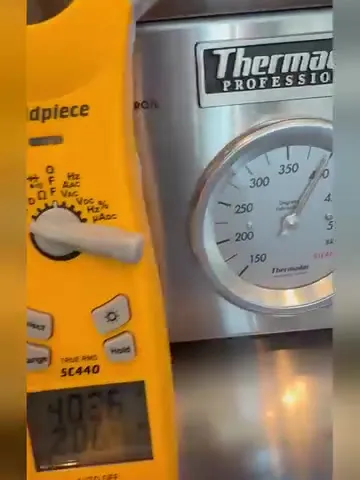
This argument turns up in every holiday cooking thread, and it has a boring correct answer. Broil with the door closed. That is what nearly every modern oven manual says, electric and gas alike, and it is what the control inside the oven expects you to do.
The reason the argument never ends is that the open-door rule used to be right, and on a small number of ovens it still is. So the real answer has two parts: what your specific oven wants, and what changes inside the cavity when you ignore it. Both are worth knowing before Thanksgiving, because a propped-open door is one of the quieter ways people damage an oven in the last week of November.
So which is it for my oven?
Open the manual and look up broiling. On almost every electric wall oven, slide-in and freestanding range, you will find a sentence telling you to close the door. On most current gas ranges with the broil burner inside the oven cavity, you will find the same. On some older gas ranges, and a handful of current ones, you will instead find instructions to leave the door at a broil stop position, usually a couple of inches ajar, where the hinge holds it by itself.
If you no longer have the manual, the model number plate will get you one in about a minute. On a wall oven the plate is usually on the door frame, visible with the door open. On a range it is often behind the storage drawer or on the left side of the frame. Search the model number and the word manual and you will land on the manufacturer PDF.
Two shortcuts that hold up well in practice. If the oven has a digital display and a Broil button with Hi and Lo settings, it is a closed-door design. If the broiler is a separate drawer underneath the oven cavity rather than an element or burner at the top of the oven, that drawer has its own rule and the oven door is not part of the question at all.
Where the open-door rule came from
On an old gas range, the broil burner sat in the oven cavity and the oven thermostat watched the cavity temperature. Broil at full output heats that cavity fast. Once it crossed the thermostat limit, the burner shut off, the food stopped browning, and whoever was cooking got a pale top and a dry middle. Leaving the door ajar bled off enough heat that the cavity stayed below the limit and the burner stayed lit the whole time.
That was a sensible workaround, and it got baked into a generation of recipes and into how a lot of people were taught to cook. The ovens changed. Modern controls handle broil as its own mode with its own limit, often around 500 to 550°F in the cavity, and they are designed to cycle the element or burner on and off at that limit with the door shut. The cycling people see and worry about is the oven doing its job, not a fault.
There is one more piece of history in the mix. On ranges with a broiler drawer below the oven, some manuals said to leave the drawer open a few inches and some said closed, depending on the model. That instruction got remembered as door open, which is how it ended up attached to ovens it never applied to.
What actually changes inside the oven when the door is open
Three things, and the third one is the expensive one.
The element or burner stops cycling. Heat escapes as fast as it is produced, the cavity never reaches the broil limit, and the control leaves the heat on continuously. More radiant energy hits the surface of the food, while the air around it stays cooler. For a thin steak or a tray of peppers you want charred on top and barely cooked through, that is genuinely useful. For anything thick, it means a scorched surface over a cold center.
The oven sensor reads low. The oven temperature sensor sits near the top rear of the cavity, right where the draft runs when the door is open. It reports a number that bears no relation to what the food is experiencing. On an oven that uses that sensor to protect its own components during broil, you have taken away the measurement it protects itself with.
Hot air goes up the front of the door. This is the part nobody thinks about. A closed oven vents through a channel at the back or through a slot above the door, and most ovens run a cooling blower that pulls room air across the electronics and dumps it out that same slot. Open the door and the cavity exhaust path changes. Air at 500°F plus rises along the inside of the open door, exits at the top, and washes straight over the control panel, the display, the touch membrane and the ribbon cable behind it.
Do that a few times and nothing happens. Do it for years and you get what we are called out for: segments missing from a display, a touch panel that needs three presses, a bezel that has gone yellow and brittle, and in the worst case a control board that has been slow-cooked. On a built-in wall oven that board lives in the trim strip directly above the door, which is the single worst place for it to be in that situation.
Symptoms to causes
| What you notice | Most likely explanation |
|---|---|
| Broil element glows, goes dark, glows again, door closed | Normal. The control is holding the cavity at its broil limit |
| Element cycles off within a minute and stays off for a long stretch | Cavity already hot from baking, or a sensor reading high. Let it cool and retry |
| Broil quits part way through and will not restart until the oven cools | Thermal limit switch or one-shot fuse, often tied to a cooling fan that is not running |
| Display dim, segments missing, or buttons need repeated presses after years of open-door broiling | Heat damage to the touch panel, ribbon cable or control board |
| Door will not hold a position, slams, or sits crooked | Worn or sprung hinge, which is also a seal and safety issue |
| Heavy smoke every time you broil | Grease on the cavity floor or baked onto the element, not an oven fault |
| One side of the pan browns and the other stays pale | Element failing, pan warped, or rack not level |
| Broil does nothing at all while bake works fine | Broil-only hardware. See oven bakes but the broiler will not work |
| Gas broil burner lights with a bang after a delay | Delayed ignition. Stop using it, see gas smell and popping ignition |
What this means for turkey skin
Browning is a surface reaction. It needs the surface dry and it needs energy delivered fast enough to drive that reaction before the heat soaks inward and overcooks the meat underneath. A broil element gives you radiant energy, and radiant energy falls off quickly with distance. Move the bird two inches closer and the skin browns noticeably faster.
So the variables that matter, in order: how dry the skin is, how far it sits from the element, and how long it stays there. The door is a distant fourth. Leaving it open mostly buys you a cooler cavity, which matters if you are worried about reheating an already-cooked bird while you crisp it. On a closed-door oven you can get the same effect by letting the oven cool for ten minutes before you broil.
What we would actually do with a turkey. Roast it the normal way to temperature. Take it out, let the skin surface dry, move a rack so the top of the bird ends up five or six inches below the element, put it back in, set broil, close the door, and watch through the window with the oven light on. Two to four minutes is usually the whole story. Turn the pan once if your oven browns unevenly. A whole turkey broiled from raw is not a thing worth attempting, and the skin usually burns before the breast is anywhere near done.
Two practical notes that save pans and tempers. Do not put glass bakeware under a broiler. Thermal shock breaks it, and a broken dish of hot drippings on a holiday morning ruins more than the dish. And do not line the oven floor with foil to catch drips. It reflects heat into places that were not designed for it, blocks the airflow the cavity depends on, and it is a reliable way to take out a thermal fuse. A broil pan with its slotted top, or a sheet pan with a rack, keeps the fat away from the heat where it belongs.
What about the grease fire?
Broiling is the one mode where a fire is a realistic possibility, because you have fat dripping and an element running at full output a few inches above it. The rules are short and they are worth reading before you need them.
- Do not open the door. A closed oven starves a fire of oxygen, and most small broiler fires go out on their own within a minute. Opening the door feeds it air and can push flame out at your face.
- Turn the oven off. On a range you can also shut the gas off at the valve behind it if you can reach it safely. Do not reach past flame to do it.
- If it does not go out, get everyone out and call 911. Do not wait to see. A kitchen fire doubles in size quickly and the cabinets above an oven are the worst thing it can reach.
- Never use water on a grease fire. It flashes the fat into a fireball. Baking soda works on a small flare-up in a pan on the cooktop, water never does.
- Stay in the kitchen while the broiler is on. This is the whole prevention plan. Broil goes from fine to smoking to burning in under a minute, and that minute is always the one somebody spent answering the door.
After any fire, however small, let the oven cool and then look it over before you use it again. Scorched wiring at the back of the cavity, a melted connector or a door seal that has shrunk are all reasons to have someone look at it rather than cook on it the next day.
The open-door risks nobody mentions
Beyond the control panel, a hot door hanging open in a busy kitchen is a hazard in its own right. It sits at roughly thigh height on a freestanding range and it is around 400°F on the inside. In a kitchen with guests, kids or a dog circling the counter on a holiday afternoon, that is a burn waiting to happen.
There is also the hinge. Oven doors run on heavy spring hinges, and the ones designed for ajar broiling have a detent that holds the door there. On a door without that detent, wedging it open with a towel or a spoon loads the hinge in a way it was not built for. Sprung hinges are what cause a door to sag, stop sealing, and then let heat out of the top of the oven during every bake from then on. A door that no longer seals also means the oven runs its elements harder to hold temperature, which is the start of a longer list of problems.
And the obvious one. An open oven is not a space heater. People try it in a cold snap, and with a gas oven that means combustion products in a closed room. Not something to do, ever.
What you can safely check yourself
- Find the model number and look up what the manual says about broiling. One line, and it ends the debate for your kitchen.
- Count rack positions. Most manuals give a recommended rack for broiling, usually the second or third from the top. Measure the gap from the element to the top of the food, not to the rack.
- With the oven cold, look at the broil element along its whole length for blisters, splits, sag or scorch marks.
- Look at the cavity floor and the back wall for pooled grease and burned-on spatter. That is where the smoke comes from, and a cold oven, a plastic scraper and a baking soda paste left overnight handles it.
- Check whether the door seals. Close it on a strip of paper and pull. Light resistance everywhere around the frame is right. A spot where the paper slides out freely is a gasket or hinge issue.
- On a double oven, confirm which cavity actually has a broil element before deciding the other one is faulty.
- Gas only, from a normal standing distance with the kitchen lights off: watch the broil igniter. A healthy one lights the burner inside about 30 to 90 seconds. Glowing for three minutes with no flame means the igniter is on its way out.
What needs a technician
Anything behind the rear panel or behind the control trim. Measuring 240 volts at the element terminals, reading element resistance, testing the board’s broil relay, clamping an ammeter on a gas igniter circuit, replacing a door hinge or a door gasket, and anything touching the gas safety valve.
Door hinges deserve a specific warning. They are under heavy spring tension, and a hinge that lets go while someone has a hand in the wrong place does real damage. They also have to come out in a particular order on most models. This is not a job to learn on a wall oven you need working by Thursday.
Heat-damaged controls are a technician call for a different reason. By the time a display is dropping segments, the question is whether the touch panel, the ribbon or the board is the failed part, and that takes a meter and the model’s service data rather than a guess. Replacing the wrong one is an expensive way to learn.
Keeping the broiler and the door in good shape
- Broil with the door closed unless your manual tells you otherwise. If it does tell you otherwise, use the hinge detent, not a towel.
- Use the broil pan the oven came with, or a sheet pan with a rack. Fat has to drain away from the heat.
- Wipe spills when the oven cools instead of saving them for a self-clean cycle. Self-clean is the hardest thing an oven ever does and it is the most common reason a working oven dies in late November. We went through the timing in should you run self-clean before Thanksgiving.
- Never line the oven floor with foil, and keep foil off the sensor probe at the top rear of the cavity.
- Run the broiler for five minutes once a month even if you never cook with it. A broiler that quietly died in July gets discovered on the one morning of the year you needed it.
- Watch the rack as you slide a loaded pan in. Scraping a sheet pan against the broil element is how a sag starts, and a sagging element browns unevenly from then on.
- Let the oven cool between a long roast and a broil finish if you are reheating something already cooked. Ten minutes with the door shut does what an open door would have done, without the heat on the control panel.
When to call
- Any gas smell, at any point, on any cycle. Leave the house and call the gas utility from outside before anything else.
- A gas broil burner that lights with a pop or a bang after a delay.
- A breaker that trips the moment broil is selected.
- A scorch mark, a melted connector or a burning smell at the back of the cavity.
- A broil element glowing white at one spot or glowing only partway along its length.
- A display losing segments, a touch panel that ignores presses, or discolored trim above the door.
- A door that sags, will not seal, or will not stay where you put it.
- Soot or a yellow flame on a gas broil burner, which is incomplete combustion and a carbon monoxide question.
What we do when we arrive
The technician confirms which modes work, reads any stored fault codes, and checks the obvious comfort items first: rack positions, the condition of the element, the door seal and the hinge travel. On electric, the real diagnosis is voltage at the element terminals in broil and resistance across the element. On gas, it is an ammeter on the igniter circuit while broil is calling, because the amp reading separates a weak igniter from a dead valve in one measurement instead of three guesses. If the complaint is a dim display or a dead touch panel, we work out whether the panel, the ribbon or the board is the failed part before anything gets ordered.
You get the finding explained and a quote on site before any work starts, and most oven repairs finish the same day from parts on the truck. Every repair carries a 90-day parts and labor warranty.
We work on gas and electric ovens in freestanding ranges, slide-ins, built-in wall ovens and professional ranges. We are factory authorized for LG, Bertazzoni, Thor Kitchen and ZLINE, and we provide professional repair for Wolf, Thermador, Viking, Dacor, KitchenAid, GE, Whirlpool, Frigidaire and the other brands common in South Orange County kitchens. If you cook on a Wolf, Wolf oven and range problems before the holidays covers the igniter, sensor, convection fan and broiler faults specific to those models.
Where we work
Irvine is our home base and where most of our oven calls come from, so oven and range repair in Irvine is usually a same-day or next-day visit. We run the same routes through Tustin and Lake Forest every day, and on down the corridor through Mission Viejo, Laguna Hills, Aliso Viejo, Laguna Niguel, Rancho Santa Margarita, San Juan Capistrano, Dana Point and San Clemente.
The week before Thanksgiving is the busiest stretch of our year, and the calls that come in on the Tuesday are the hardest ones to fit. If the broiler has been acting strange, or the display has been fading, or the door stopped sealing a while back, this is the week to deal with it rather than the next one. Our oven prep guide has the full run-through, and three kitchen tests tells you in an afternoon whether the oven’s temperature is honest.
When you call, have the model and serial number ready, and tell us gas or electric, whether bake still works, and what the broil element or igniter does when you select broil. That one sentence decides which parts ride out on the truck. We are 5.0 on Yelp if you want to see how these visits tend to go. Call (949) 267-7771.
Frequently Asked Questions
Should I broil with the oven door open or closed?
Closed, on nearly every oven built in the last couple of decades, electric and gas. The manual for your model says it in one line and that line is the real answer. The exception is a small number of gas ranges, mostly older ones, whose manuals tell you to leave the door at a broil stop position a couple of inches ajar. If your oven has a digital Broil button with Hi and Lo settings, it is a closed-door design.
Why do so many recipes still say to leave the oven door ajar when broiling?
Because it used to be correct. On older gas ranges the oven thermostat watched the cavity temperature and shut the broil burner off once the cavity got hot, which stopped the browning halfway through. Leaving the door open bled off enough heat to keep the burner lit. Modern controls run broil as its own mode with its own limit and expect the door shut. The instruction outlived the ovens it was written for.
Does broiling with the door open actually damage the oven?
Over time, yes, and the damage lands on the control panel rather than anywhere you would expect. With the door open, cavity air above 500°F rises along the inside of the door and washes over the display, the touch membrane and the ribbon cable behind them. On a built-in wall oven the control board sits in the trim right above the door, which is the worst possible spot for it. Faded or missing display segments, buttons that need repeated presses and discolored brittle trim are what we get called out for. One evening will not do it. Years of it will.
Why does my broil element keep cycling on and off with the door closed?
That is the oven working correctly. Broil heats the cavity quickly, and the control cuts the element when the cavity reaches its broil limit, often somewhere around 500 to 550°F, then brings it back as the temperature falls. If instead the element quits within a minute and stays off for a long stretch, the cavity may already be hot from baking, or the temperature sensor may be reading high. And if broil shuts down part way through and will not come back until the oven cools completely, that points at a thermal limit switch or a cooling fan that is not running, which is a service call.
What is the best way to crisp turkey skin without overcooking the bird?
Roast it to temperature first, then crisp it as a separate short step. Let the skin surface dry, set a rack so the top of the bird sits five or six inches below the element, put it back in, select broil, close the door and watch through the window with the oven light on. Two to four minutes usually does it, and you turn the pan once if your oven browns unevenly. Distance from the element and how dry the skin is matter far more than the door does. If the oven is still blazing hot from roasting, give it ten minutes to come down first so you are crisping the skin rather than reheating the whole bird.
Something caught fire in the oven. Do I open the door?
No. Leave the door shut and turn the oven off. A closed oven starves the fire of air and most small broiler flare-ups go out on their own within a minute. Opening the door feeds it oxygen and can push flame out toward you. If the flames do not die down, get everyone out of the house and call 911 rather than waiting to see what happens. Never throw water on burning grease. Once things are cool, have the oven checked before you cook on it again, because scorched wiring and a shrunken door seal are not things you want to find on the day.
Related Pages
- Oven Bakes but the Broiler Won’t Work? Gas and Electric Causes
- How to Prepare Your Oven for Thanksgiving
- Is Your Oven Lying to You? Three Kitchen Tests
- Oven Temperature Problems That Can Ruin Thanksgiving Dinner
- Should You Run Oven Self-Clean Before Thanksgiving?
- What to Do If Your Oven Stops Working on Thanksgiving Day
- Double Oven and 48-Inch Range Problems During Holiday Cooking
- Oven Not Heating? Igniter, Element, Sensor and Board
- Gas Oven Smells Like Gas or Pops When It Lights?
- Gas Range Burner Won’t Light or Burns Yellow
- Wolf Oven and Range Problems Before the Holidays
- Oven and Range Repair in Orange County
- Oven and Range Repair in Irvine
- Oven and Range Repair in Tustin
- Oven and Range Repair in Lake Forest
- Irvine · Tustin · Lake Forest · Mission Viejo · Laguna Hills · Aliso Viejo · San Juan Capistrano · San Clemente