
Viking Refrigerator and Range Problems: What We See in Los Angeles Kitchens
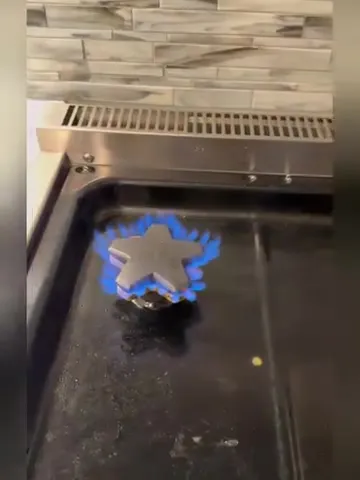
Viking has been in Los Angeles kitchens longer than most of the brands it competes with. The company built its name on bringing a commercial-style range into a house, and a lot of the ranges we open up here went in during a remodel fifteen or twenty years ago. They were built to last that long. What they were not built to do is run forever without anyone touching them, and that's most of what we find. This guide covers what actually fails on Viking ranges and Viking built-in refrigeration in Los Angeles, what you can check yourself, and what we'd rather you didn't.
One thing up front. We repair Viking with long hands-on experience and we are not authorized by Viking, and we'll say that plainly rather than let you assume otherwise. Our factory authorizations are LG and Liebherr. If a shop tells you it's authorized for every premium badge in your kitchen, ask which manufacturer issued it.
What actually fails on a Viking, and in what order
Owners usually call bracing for the worst. A pro range that cost as much as a used car makes people assume something catastrophic when the oven runs cool. In practice the list is pretty boring, and the boring stuff comes first.
Ignition parts go first. On the cooktop that means spark electrodes, the spark module, and the burner caps and heads that have to sit square for any of it to work. In the oven it means the bake igniter on gas models. These are consumable parts. They wear out on a schedule nobody writes down.
Then temperature sensing. The oven sensor is a resistance probe that reads its own temperature and reports it to the board. It drifts as it ages, slowly, and the oven follows it. Nothing breaks. The oven just quietly bakes thirty or forty degrees off what the display says and your cakes start coming out wrong.
Then the doors. Viking oven doors are heavy, and so are the doors on a Viking built-in refrigerator. Weight plus a few thousand open-close cycles stretches hinge springs and flattens gaskets. On the oven that leaks heat and throws off the thermostat cycle. On the refrigerator it lets humid kitchen air in, which turns into frost and a compressor that never gets a rest.
Then airflow on the refrigeration side. Condenser fins loaded with dust, pet hair or salt corrosion, an evaporator fan with a worn motor, a defrost system that has stopped defrosting.
Boards and sealed systems last. They do fail. They're just not where a good technician starts, and if someone quotes you a control board before they've put a meter on anything, get a second opinion.
Your cooktop clicks and clicks after the burner is already lit
This is probably the single most common Viking range call we get, and it's the one most likely to end without a part. The spark system keeps firing because the control thinks the burner isn't lit yet. Nine times out of ten the reason is water or a cap that isn't seated.
If you've just cleaned the cooktop, that's your answer. Water wicks into the electrode area and it does not evaporate in an hour. Pull the grates, caps and burner heads, dry everything with a towel, then let the range sit uncovered overnight before you judge it. We've driven out for clicking burners more than once and ended up just drying parts and showing the owner where the water hides.
If it's dry and still clicking, look at how the burner cap sits. It has to drop flat into its locating notches. A cap that's a few degrees off rotation changes the flame pattern enough that the electrode never sees a proper flame. Lift it, rotate it, set it back down square.
Still clicking after that, it's electrical. A cracked ceramic electrode, a chafed igniter wire, or a spark module that fires every position at once. That's a technician job. On ranges fitted with Viking's automatic re-ignition, a failing module shows up as burners that relight themselves repeatedly for no reason, which is worth mentioning when you call.
Low flame won't hold, or the simmer setting has turned into off
Viking's low-end simmer control is one of the reasons people buy these ranges, and when it stops holding, the usual cause is the burner port ring rather than the valve. Ports partially blocked with boil-over residue make the flame uneven, and an uneven flame at a low setting self-extinguishes. A burner head that has been soaking in a sink and went back on damp does the same thing.
Clean the ports with a soft brush, not a paperclip and not a drill bit. Opening a port wider than it was built is permanent and it changes the burner's behavior at every setting. If a clean, dry, correctly seated burner still can't hold a low flame, the valve or the regulator needs a look, and that's gas work.
The oven: igniter on gas, element on dual fuel
Which one you have decides the whole diagnosis, so check the range first. A straight gas Viking heats the oven with a gas burner and a glow-bar igniter. A dual-fuel Viking has gas burners on top and an electric oven underneath.
On the gas oven, the bake igniter and the gas safety valve are one circuit in series. The valve only opens once the igniter draws enough current to trip it. As the igniter ages it still glows bright orange, but it pulls less current, so the oven takes longer and longer to light. Then one day it glows and nothing happens. This is the part owners get wrong most often: a glowing igniter is not a good igniter. You can't judge it by eye. A technician measures the draw in amps while it's running.
The tell is the pattern. If your oven used to light in forty seconds and now takes four minutes, the igniter is dying and you have weeks, not years. Booking it before Thanksgiving week costs you a lot less aggravation than booking it on Thanksgiving morning.
On a dual-fuel Viking there's no igniter. A bake element that has failed usually shows a blister, a split, or a bright spot where it burned through, and an element that looks perfect can still be open internally. The broil circuit is separate from the bake circuit on most of these ranges, which is why an oven can broil fine and refuse to bake, or the reverse.
The oven says 375 and your food disagrees
Put an oven thermometer on the center rack, set the oven to 350°F, and let it run a full thirty minutes so it cycles properly. Read it a few times across the next half hour. A swing of about 25°F either side of the setpoint while it cycles is normal for a thermostatically controlled oven. A steady offset of 30°F or more is not.
A steady offset usually means a drifted oven sensor. A wandering, unpredictable one usually means a door that isn't sealing or a convection fan that has slowed down. Many Viking ovens let you enter a calibration offset from the control, and that's worth doing for a small error. It is not a fix for a 60°F error. That's a sensor telling lies, and calibrating around it just moves the lie.
While you're there, look at the door. Close it on a dollar bill at the top corner and tug. If it slides out with almost no resistance there, and grips at the bottom, the hinges have settled and the door is no longer pulling flush. Heat escaping at the top of the door skews everything the sensor reports.
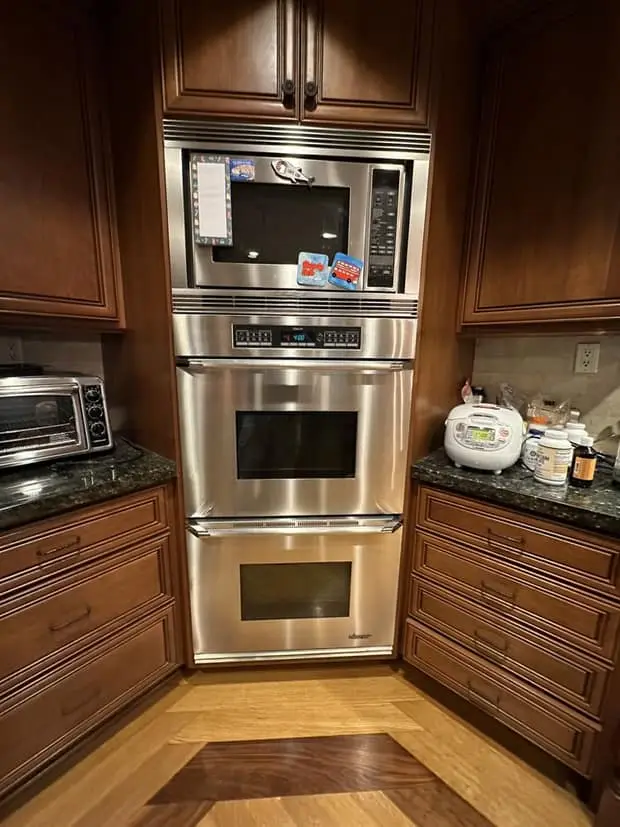
Viking built-in refrigeration is a different machine entirely
People assume one brand means one way of working. It doesn't. The refrigeration side has its own logic, and it's worth knowing the layout of yours before you call anyone.
On a Viking built-in, the machine compartment lives at the top of the cabinet behind a removable grille. That grille is the only air path the unit has. The condenser pulls room air in, dumps the heat it stripped out of your food into it, and pushes it back out through the same opening. Block it and the whole appliance degrades, quietly, without an error code.
This matters in Los Angeles more than it sounds, because of how often the grille gets covered. We see decorative trim added during a kitchen refresh, a cabinet soffit built down over the top of the unit, and in more than one hillside house a run of crown molding laid straight across the air intake. The refrigerator still runs. It just runs all the time and never quite holds temperature in August.
If your fresh food side is warm while the freezer is still hard-frozen, that's almost never the compressor. A compressor that's failed takes both compartments with it. One warm compartment with a cold one next to it points at airflow: the evaporator fan, an iced-over evaporator, a damper that's stuck closed, or a thermistor reporting the wrong number to the board.
Frost that keeps coming back
A frost-free refrigerator doesn't avoid frost, it melts it on a schedule. A heater near the evaporator coil runs for a few minutes every so often, the melt runs down a drain, and the cycle repeats. When that system fails, frost builds on the coil until air can barely pass through it, and the symptom you notice is a warm fresh food compartment with a freezer that seems fine.
Here's a test you can run yourself over a weekend. Empty the unit, unplug it, prop the doors open and let it sit for a full 24 hours so every bit of ice melts. Plug it back in. If it cools beautifully for a week or two and then drifts warm again, that is a defrost failure, almost without exception. A defrost heater, a defrost thermostat or a sensor. Tell us that result when you call and you've saved the technician half the diagnosis.
Water pooling in the bottom of the fresh food compartment is a related problem with a different cause. The defrost melt has nowhere to go because the drain is blocked, so it finds its way into the box instead of down the tube.
What Los Angeles air does to a condenser
Two climates, one service area, two different maintenance intervals.
Near the water, salt is the problem. Marine air oxidizes aluminum condenser fins into a chalky white coating that holds dust and insulates the coil. The coil doesn't look dirty in the usual way, and it still sheds heat worse every year. In Santa Monica, Marina del Rey, Manhattan Beach, Hermosa Beach, Redondo Beach, Torrance and along the Palos Verdes bluffs, I'd look at that coil once a year. Within a mile or so of the sand it's not optional.
Inland, heat is the problem instead. A kitchen in Sherman Oaks, Encino, Van Nuys, Glendale, Burbank or Pasadena runs hotter for more months, and a refrigerator's compressor run time tracks ambient temperature directly. Add a partially blocked condenser to a 95°F kitchen and the unit never catches up. Every hour of extra run time is wear you don't get back.
Central Los Angeles, Mid-Wilshire, Hollywood, West Hollywood and Beverly Hills sit between the two, and there the housing stock is the variable. Older kitchens were fitted around the appliance, often tightly, and a built-in squeezed into an opening half an inch too narrow never had the clearance it needed to begin with.
Read your symptom off this table
| What you are seeing | Where we would look first |
|---|---|
| Burner keeps clicking after it lights | Moisture in the electrode area, then a burner cap sitting crooked, then the spark module |
| One burner won't light, the rest do | Blocked ports on that burner head, a cracked electrode, or its igniter wire |
| Low flame goes out on its own | Partially blocked burner ports first, then the valve or regulator |
| Gas oven takes longer to light every month | Bake igniter losing current draw, then the gas safety valve |
| Dual-fuel oven won't bake, broiler works | Bake element or its relay. Separate circuit from broil |
| Oven set to 350°F, food says otherwise, steadily | Oven temperature sensor drift, then the door seal and hinges |
| Uneven browning front to back with convection on | Convection fan motor, the baffle, or a door not pulling flush |
| Oven door won't close square, heat at the top corner | Hinge springs stretched, gasket flattened |
| Fresh food side warm, freezer still hard-frozen | Evaporator fan, iced evaporator, stuck damper or thermistor. Not the compressor |
| Both compartments warm, machine compartment hot, compressor never stops | Condenser coil loaded or corroded, condenser fan, or a blocked grille |
| Frost returns within weeks of a full manual defrost | Defrost heater, defrost thermostat or sensor |
| Water pooling in the bottom of the fresh food compartment | Blocked defrost drain |
| Ice maker making small, hollow or no cubes | Filter past due, inlet valve, frozen fill tube, or a freezer running too warm |
| Burner lights with a bang, or a gas smell that doesn't clear | Stop. Shut the gas off at the appliance if you can do it safely, ventilate, and call. |
| Breaker trips when the oven or the refrigerator starts | Leave it off and call. That's an electrical fault, not a nuisance trip. |
What you can safely check yourself
None of this needs tools beyond a flashlight, a towel and a thermometer.
- Dry the cooktop properly after any cleaning, and give it overnight before you decide the ignition is broken.
- Reseat the burner caps and heads. They only sit one way. Square and flat.
- Run the thermometer test on the oven, 350°F, thirty minutes, several readings. Write the numbers down.
- Do the dollar bill test on the oven door and on the refrigerator door, at several points around the seal. Even resistance all the way around is what you want.
- Pull the upper grille on the built-in refrigerator and look at the coil with a flashlight. Vacuum what you can reach with a brush attachment. Don't bend the fins and don't pull the unit out of its opening.
- Check clearances. Nothing stored on top of a built-in, no trim or molding across the grille, nothing stuffed into the gap at the sides.
- Check the refrigerator thermometer rather than the display. 37°F to 38°F in the fresh food compartment and 0°F in the freezer, measured with a thermometer in a glass of water left overnight.
- Change the water filter if the ice maker is underperforming and you can't remember the last time.
- Try the 24-hour manual defrost on a refrigerator that keeps drifting warm, and tell us what happened afterward.
What we'd rather you left alone
Not a liability list. These are the jobs where the cost of getting it wrong is out of proportion to what you'd save.
- Anything behind the gas manifold. Valves, regulators, the oven safety valve, the supply connection. Gas fittings need testing after they're disturbed, and that means equipment.
- Igniter and element replacement with power on. A pro oven's bake circuit is not a lamp socket.
- Sealed system work. Compressors, evaporators, condensers, refrigerant. Handling refrigerant is regulated work and needs recovery equipment, which makes it a non-starter at home.
- Hinge springs on heavy pro doors. These are under real tension. Door hinges on a Viking range have hurt people who assumed otherwise.
- Pulling a built-in refrigerator out of its opening. Water lines, electrical, flooring and an appliance heavy enough to do damage on the way out. It's designed to be serviced from the front.
- Defrosting a coil with a heat gun or a screwdriver. Puncture an evaporator tube and a defrost problem becomes a sealed system problem.
Maintenance that's actually worth booking
I won't pretend every appliance needs an annual visit. Most don't. On a Viking kitchen, two things genuinely pay for themselves.
The condenser on the built-in refrigerator. Once a year near the coast, every two years inland unless you have shedding pets. That's it. Don't let anyone talk you into quarterly.
A burner and oven check before the cooking season. Ports cleaned, caps checked, igniter current measured, oven temperature verified against the setpoint, door seal and hinges looked at. October or early November is the right window. A bake igniter that's measurably weak in October will be dead by Christmas, and it's a straightforward part to change on a scheduled visit.
Beyond those two, replace the water filter on schedule, keep the kitchen vent working so grease isn't settling on everything, and leave the rest alone until something changes.
Is an older Viking worth repairing?
Usually yes on the range, and that isn't the answer we give for every brand. A Viking pro range is mostly steel, brass and cast iron. The parts that fail are ignition components, sensors, elements and door hardware, and those are replaceable items rather than a reason to replace the appliance. A twenty-year-old Viking range with a fresh igniter and a calibrated oven will outcook most new ranges at any price.
Viking has been owned by Middleby since 2013, and parts support for the common Professional series has held up. The place to be careful is a discontinued electronic control on an older unit, where supply is the real question rather than the labor.
On the refrigeration side the calculation shifts. A built-in refrigerator is worth repairing well past the point where you'd scrap a freestanding one, because the cabinetry was built around it and replacing the box means a carpenter as well as an appliance. Where we start saying otherwise is a compressor failure on a unit that has already had sealed system work done once, or a cabinet with failed foam insulation, which shows up as panels that sweat and condensation inside the walls of the box. That one isn't repairable in any sensible way.
When to stop checking and call
- Gas smell that doesn't clear after ventilating, or any gas smell with the range turned off.
- A burner that lights with a bang or a pop instead of a soft whoosh.
- Yellow, lazy flames on burners that are clean and correctly seated.
- A breaker that trips when the oven or the refrigerator starts.
- A scorched smell, a buzzing from the control area, or any sign of heat damage around a connector.
- Frost back within a few weeks of a complete manual defrost.
- Fresh food compartment holding above 40°F for more than four hours.
- A compressor that runs without ever cycling off for a full day.
Where we work in Los Angeles, and what to have ready
We cover central Los Angeles including Mid-Wilshire and Hollywood, Beverly Hills and West Hollywood, the valley side through Sherman Oaks, Encino, Tarzana, Van Nuys, North Hollywood, Studio City, Glendale, Burbank, Pasadena, South Pasadena and La Cañada Flintridge, and the Westside and South Bay from Santa Monica, Venice and Marina del Rey down through El Segundo, Manhattan Beach, Hermosa Beach, Redondo Beach, Torrance and the Palos Verdes peninsula.
When you call, have the model and serial number ready. On a Viking range the rating plate is usually behind the kick panel at the bottom, or on the frame behind the oven door. On a built-in refrigerator it's generally inside the fresh food compartment on an upper side wall, or behind the top grille. Give us the brand, the model and the symptom in one sentence, and that's normally what decides which parts ride out on the truck the first time.
If you're in a building rather than a house, tell us at booking whether a certificate of insurance has to be on file, whether the service elevator needs reserving a day ahead, and what hours the HOA allows work. We schedule inside that window. Parking in Hollywood, West Hollywood and Beverly Hills is worth a sentence too.
Every repair carries a 90-day parts and labor warranty, and the technician quotes the work on site before anything starts. We're 5.0 on Yelp if you want to see how these visits usually go. Call (949) 267-7771 or (949) 267-7771.
Frequently Asked Questions
Are you authorized by Viking?
No. We are not authorized by Viking and we won't let anyone assume otherwise. We repair the brand on long hands-on experience instead, the same way we describe our work on Sub-Zero, Wolf and Thermador. Our factory authorizations are LG and Liebherr, and our technicians are Samsung-certified. If your range or refrigerator is still in manufacturer warranty, that work should go through the manufacturer.
My Viking burner keeps clicking after it's lit. Is the igniter bad?
Probably not. Start with moisture, especially if the cooktop was cleaned recently. Pull the grates, caps and burner heads, dry everything, and leave it uncovered overnight. Then check that each burner cap is seated flat in its notches, since a cap off by a few degrees changes the flame pattern enough that the electrode never registers a lit burner. If it's dry and square and still clicking, it's a cracked electrode, a damaged igniter wire or the spark module, and that's a service call.
My gas oven takes several minutes to light now. What's happening?
That's the bake igniter losing current draw. On a gas oven the igniter and the gas safety valve are wired in series, and the valve only opens once the igniter pulls enough current. As the igniter ages it still glows orange but draws less, so the lighting delay stretches out month by month until one day the oven never lights at all. A glowing igniter is not proof of a good igniter, it has to be measured in amps. If yours has gone from under a minute to several minutes, replace it before it strands you mid-roast.
The fridge side of my Viking is warm but the freezer is fine. Is the compressor dying?
Unlikely. A failed compressor takes both compartments with it. One warm compartment next to a cold one is an airflow or defrost problem: the evaporator fan, an evaporator iced over, a damper stuck closed, or a thermistor reporting the wrong temperature. Before you call, pull the upper grille and check the condenser, and feel for air movement at the vents inside the fresh food compartment.
How often should the condenser be cleaned on a Viking built-in?
Once a year if you're within a mile or two of the water, from Santa Monica through the South Bay to Palos Verdes, because marine air oxidizes the fins into a chalky layer that insulates the coil. Every two years is enough further inland, unless you have pets that shed or a kitchen that collects grease. More often than that is wasted money. The part that matters more than frequency is making sure the top grille is never blocked by trim, molding or anything stored on top of the unit.
Is a twenty-year-old Viking range worth fixing?
In most cases, yes. The structure of these ranges is steel, brass and cast iron, and what fails on them are igniters, electrodes, sensors, elements and door hardware, all of which are replaceable parts rather than reasons to buy a new range. Parts support for the common Professional series has held up since Middleby took over the brand in 2013. The exception is a discontinued electronic control on an older model, where availability, not labor, is the thing to check first.
Related Pages
- Professional Viking Appliance Repair
- Sub-Zero and Wolf Repair in Los Angeles: What Fails First
- Thermador Freedom Column Refrigerator Problems in Los Angeles
- KitchenAid and JennAir Built-In Refrigerator Repair in Los Angeles
- Oven & Range Repair
- Gas Range Burner Problems
- Oven Not Heating: Igniters, Elements and Sensors
- Oven Bakes but the Broiler Won't Work
- Is Your Oven Lying to You? The Thermometer Test
- Gas Oven Smells Like Gas or Pops When It Lights
- Refrigerator Repair
- Sealed System & Compressor Repair
- Frost Building Up in Your Freezer?
- Refrigerator Maintenance Checklist
- Repair or Replace?
- Los Angeles · Beverly Hills · West Hollywood · Santa Monica · Marina del Rey · Manhattan Beach · Hermosa Beach · Redondo Beach · Torrance · Palos Verdes · Sherman Oaks · Encino · Van Nuys · North Hollywood · Glendale · Burbank · Mid-Wilshire