
Oven Won’t Turn On? Dead Display, Control Lock, Breaker and Gas Valve Checks
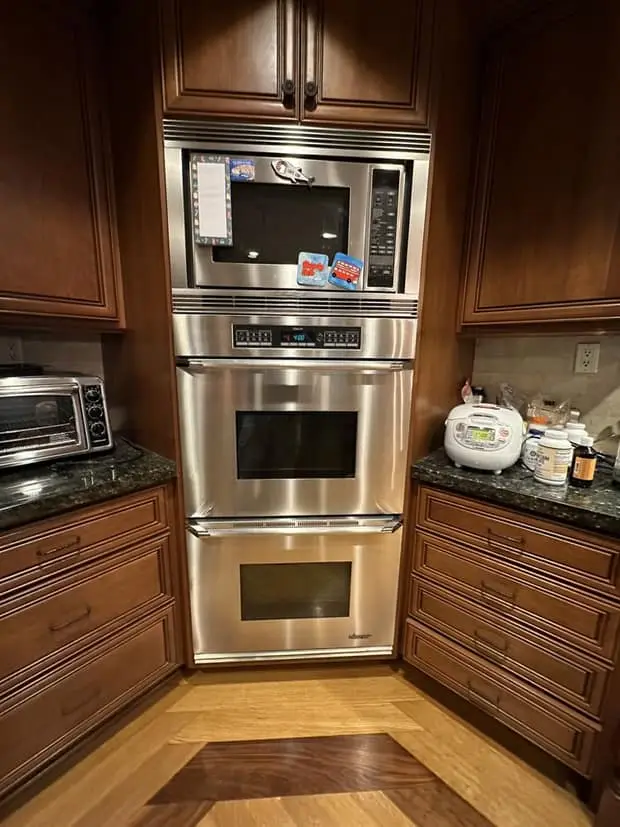
If your oven will not turn on at all, start with power and lockouts, not with parts. Roughly speaking, a dead oven has four possible causes and only one of them is expensive: the supply is interrupted somewhere, the control is locked or in a mode you did not intend, the control board has hung and needs a real reset, or something in the control circuit has actually failed. The first three cost nothing to rule out and you can do all of them in about ten minutes.
That order is not arbitrary. An oven that will not respond has, by definition, not reached the stage where elements and igniters matter. Those parts fail in ovens that light up, accept a setting and then sit cold. We keep them separate on purpose, and if yours powers up normally but never gets hot, our guide on why an oven is not heating is the one you want instead.
We work on gas and electric ovens, ranges and built-in wall ovens across Irvine, Tustin and Lake Forest and the rest of the South Orange County corridor. Dead-oven calls cluster in two places: older freestanding ranges where the outlet or cord has given up, and built-in wall ovens in newer kitchens where the control compartment runs hot in a tight cabinet. What follows is the order we actually work in.
What does “won’t turn on” actually mean?
People use that phrase for four different faults, and sorting out which one you have cuts the diagnosis in half before you touch anything.
- Nothing at all. No display, no clock, no beep, no light when the door opens. The appliance is not getting power, or it is getting only part of it.
- Display alive, controls dead. The clock shows the right time, buttons may beep, but nothing happens when you select Bake. The board has power and the problem is downstream.
- Display alive, controls accepted, nothing happens. The oven says 350°F and PREHEAT, the fan may run, but no heat ever appears. This is the no-heat branch, not the dead-oven branch.
- Dead after something specific. A self-clean cycle, a power flicker, a Santa Ana outage, a new outlet, a kitchen remodel. The event usually names the fault.
Figure out which of those four you have before you read further, because the rest of this page is organized around them. The fourth one in particular deserves a moment of thought. If the oven died the morning after a self-clean cycle, you have almost certainly blown a thermal cutoff or a control fuse, and that is a very different conversation from an oven that quietly stopped working one Tuesday.
Symptoms and what they point to
| What you are seeing | Most likely causes | Who should handle it |
|---|---|---|
| Completely dead, electric oven or range | Tripped or half-tripped 240V breaker, one lost leg of the supply, loose wire in the junction box behind the unit | Breaker yourself, wiring is a technician |
| Completely dead, gas range, burners also will not spark | 120V supply: outlet, cord, breaker. Burners that still light with a match confirm gas is fine | Check the outlet, then call |
| Clock alive, oven refuses every mode | Control lock, Sabbath mode, demo mode, delay start still running, door latch switch not reading closed | Yourself first, then a technician |
| Display lights briefly then goes dark | Failing control board power supply, or a short pulling the board down | Technician |
| Dead the day after a self-clean cycle | Thermal cutoff opened, control fuse blown, heat-damaged wiring at the back of the cavity | Technician |
| Dead after a power flicker or outage | Board locked up and needs a full reset, or a surge took the board’s low-voltage supply | Try the five-minute reset first |
| Breaker trips the moment you reset it | Genuine short, usually a bake element arcing to the cavity wall | Leave it off and call |
| Door locked and oven unresponsive | Clean cycle started by accident, or latch motor stopped partway | Cool it fully, then reset, then call |
| One oven of a double oven dead, the other fine | Relay board or latch circuit for that cavity, shared control with a failed output | Technician |
| Burning smell or scorch marks anywhere | Arcing wire, melted terminal block, damaged element | Shut off the breaker and call |
Why does the breaker come first?
Because it is right more often than anything else on this page, and because the way breakers fail is genuinely hard to see.
An electric oven or range runs on a 240V double-pole breaker, two poles tied together, usually 40 or 50 amp. When that breaker trips it frequently does not snap all the way to off. It sits a few millimeters out of line with its neighbors, and in a dim garage panel on a row of twenty identical white switches, that is invisible. Run your finger down the row and feel for the one that is out of step or soft under pressure. Then reset it the right way: push it firmly all the way to off until you feel the click, then all the way back to on. Pushing it from almost-off to on does nothing at all.
There is a worse version of this that trips people up every season. A double-pole breaker can lose one leg while still appearing on. The oven then has 120V where it needs 240V. Depending on the model that shows up as a completely dead display, a display that lights but no heat, or a cooktop that works while the oven does not. There is no way to confirm it without a meter at the terminal block, which is a technician job, but a full off-and-on cycle of the breaker is free and it occasionally restores the missing leg.
Gas ranges have breakers too, and this surprises people. A modern gas range needs 120V for the clock, the control board, the oven igniter and the burner spark module. No electricity means no oven, even with gas sitting right there at the valve. Check the outlet behind the range with something else plugged into it, and check the breaker or GFCI that feeds it. Kitchen outlets on a GFCI circuit trip from unrelated causes all the time, and the reset button is often on a different outlet across the room.
How do I reset an oven properly?
Breaker off. Five full minutes. Breaker on. That is the whole procedure, and the only part people get wrong is the time.
Control boards store charge in capacitors so the clock survives short interruptions. Flick the breaker for two seconds and the board never actually loses power, which means whatever state it was stuck in survives too. Five minutes guarantees a cold start. We have been on the phone with customers who were certain they had already reset the oven, walked them through the five-minute version, and had the oven come back before the call ended.
A real reset clears a decent list: control lockouts, hung displays, communication errors between the user interface and the relay board, a latch motor that stopped partway through its travel, and the confused state an oven can land in after a power flicker. It will not fix a failed element, a blown thermal cutoff or a dead board. That is useful too. If the oven comes back and keeps working, the fault was a lockup. If the same dead display returns within a cycle or two, you now know it is hardware.
One rule attached to this: do not reset a breaker that trips by itself. A breaker that will not hold is doing its job and telling you there is a short somewhere, most often a bake element that has split and is arcing against the cavity wall. Each reset energizes that fault again. Leave it off.
Is my oven locked rather than broken?
This is the outcome we like least, because by the time we are standing in the kitchen the customer has usually spent a weekend assuming the oven was dead. A locked control looks exactly like a failure. The display is normal, the buttons beep, and the oven simply will not start a cycle.
Work through the modes that hold an oven off.
- Control lock or child lock. Look for a key or padlock icon, or the letters LOC, on the display. On most ovens you hold the lock button, or a specific pair of buttons, for three to five seconds. The exact combination is in the manual and it varies by brand more than you would expect.
- Sabbath mode. Designed to keep an oven running without responding to controls, which means an oven stuck in it looks broken in a very specific way. It is more common than its name suggests because it can be entered accidentally on some control panels.
- Demo or showroom mode. The display behaves perfectly and the oven never heats, because the appliance thinks it is sitting on a sales floor. We mostly see this on units bought as floor models or delivered after a remodel.
- Delay start and Timed Bake. A delay start that has not reached its time will refuse to begin. A Timed Bake that already finished shuts the oven off and leaves it looking dead. Press Cancel or Off, then set the oven fresh instead of working from whatever the display was holding.
- Self-clean still counting down. If the display shows a clean countdown or a lock icon, nothing else will run until the cycle ends and the cavity cools.
After you clear anything you find, cancel everything and start a plain Bake at 350°F. Do not test with the mode that was already selected.
The door the oven does not think is closed
Most ovens will not begin a cycle unless a switch tells the board the door is shut. That same switch runs the oven light, which gives you a free test. Open the door, the light comes on. Close it slowly while watching through the window, and the light should go out well before the door seats. If the light stays on with the door closed, or flickers, the switch or its plunger is the problem and the board is refusing to start for a reason that has nothing to do with heat.
On wall ovens we also see doors that no longer close square because a hinge has sprung. The door looks shut, feels shut, and sits far enough out that the latch switch never makes contact. Press the door firmly closed at the top corner and try again. If it starts, you have found a hinge, not a control fault.
Then there is the locked door, which is its own problem. If the latch has engaged and the oven is unresponsive, do not pull on the door. The latch is a motorized hook built to hold against 900°F, and the plastic gears in the motor driving it are the weakest thing in the assembly. Let the cavity cool below about 400°F with the door shut, which takes well over an hour, then do the five-minute reset. Our page on an oven that quits mid-cook goes through the locked-door sequence in more detail.
Gas ranges and the shutoff valve nobody remembers
If the display is lit, the controls respond, and the oven burner never lights, you are no longer in dead-oven territory. But there is one check worth doing before you move on, because it is quick and it is occasionally the answer.
Behind every gas range is a shutoff valve on the supply line. The handle is parallel to the pipe when the gas is on and crosswise when it is off. After a remodel, an appliance delivery, a water heater replacement or any work where a plumber shut things down, that valve sometimes comes back only partly open or not at all. Look at the handle. That is the entire check, and it is the only thing we suggest anyone do with a gas line.
Everything beyond that handle belongs to a technician. Do not disconnect the flex line, do not put a wrench on a fitting, and do not try to light an oven burner with a match. The oven burner on a modern range is gated by a safety valve that opens only when the hot-surface igniter draws enough current to prove it is hot. That interlock exists so gas cannot collect in a closed cavity, and defeating it is the single most dangerous thing a homeowner can do to an oven.
If you smell gas at any point, stop. Do not touch light switches, do not use the phone indoors, get everyone out of the house, and call SoCalGas from outside. Call us afterward, once the line itself has been cleared.
When the oven died right after something
An oven that was fine on Sunday and dead on Monday usually has a reason, and the reason is almost always the last thing that happened to it.
After a self-clean cycle. This is the most predictable dead oven there is. High-heat cleaning pushes the cavity past 850°F and bakes the wiring, the sensor and the control compartment harder than anything else the appliance ever does. The usual casualties are a thermal cutoff that opens permanently, a fuse on the control board, or the latch motor. The oven works perfectly during the cycle and is dead the next morning. We get these calls in clusters every November, which is why we tell people to run self-clean in early autumn or skip it and wipe the cavity by hand.
After a power outage or flicker. South Orange County gets its share of these during Santa Ana wind events. A board that browned out partway through a write cycle can hang in a state no button will clear. The five-minute reset fixes most of them. A surge that actually damaged the low-voltage supply does not come back, and the giveaway is a display that lights for a second and then goes dark.
After a remodel or new installation. We see wall ovens that never worked properly from day one because the junction box behind the cabinet has a loose or backed-out connection, or because the unit was wired to the wrong breaker size. If an oven has been strange since the day it was installed, it is an installation problem and it will not resolve on its own.
After the oven ran hot for hours. A blocked vent, a cooling fan that stopped, or a built-in crammed into a cabinet with its airway covered will cook its own control compartment until a thermal cutoff opens. Clear anything near the vents, let it cool completely, and try again. If it does the same thing at the same point twice, the cutoff is doing its job and something underneath is wrong.
What you can safely check yourself, in order
- Note exactly what the oven does. Dark display, lit display, error code, beeps, light with the door open. Write the code down character for character if there is one.
- Check the breaker properly. Feel the row for one out of line. Push fully off, fully on.
- On a freestanding range, check the outlet. Plug a lamp or phone charger into the nearest outlet on the same circuit. On a gas range, confirm the cord is fully seated.
- Look for a lock icon or LOC on the display, and clear control lock, Sabbath mode, demo mode or delay start as described above.
- Press Cancel or Off, then set a plain Bake at 350°F. Do not test with whatever mode was already selected.
- Test the door switch with the oven light. It should go out before the door fully seats.
- Do the five-minute breaker reset. Off five minutes, on. Try Bake again.
- On a gas range, look at the shutoff valve handle behind the appliance. Parallel to the pipe is open.
- Check whether a self-clean cycle ran recently, and whether the vents are clear and nothing is sitting on top of a wall oven.
- Find the model number on the plate behind the door frame or along the door edge, and have it ready.
That is the full list of what we would ask a homeowner to do. If all ten come back clean and the oven is still dead, the fault is in a place that needs a meter.
What only a technician should do
- Measuring voltage at the terminal block to confirm both 240V legs are present. This is the test that separates a supply problem from an appliance problem, and it is live-circuit work.
- Opening the junction box behind a wall oven or range and checking the wiring connections.
- Testing the control board fuse, the low-voltage supply and the relay outputs.
- Testing and replacing a thermal cutoff or thermal fuse, including finding out what made it open.
- Door latch assembly and latch switch testing and replacement, and freeing a mechanically jammed door.
- Anything on the gas side past the shutoff valve handle: the safety valve, the regulator, the manifold, the flex connector.
- Pulling a built-in wall oven out of its cabinet. These weigh well over a hundred pounds, the procedure differs by model, and a double oven is a two-person job.
- Any situation involving arcing, scorch marks, melted terminals or a breaker that will not hold.
What not to do
- Do not keep resetting a breaker that trips on its own. It is reporting a short, not misbehaving.
- Do not force a locked door. You will strip the latch motor gears and turn a reset into a parts order.
- Do not light an oven burner with a match. The safety valve interlock is there for a reason.
- Do not run self-clean to try to “wake up” a confused oven. People do this. It adds a second failure on top of the first.
- Do not pull a wall oven out of its cabinet alone, and never with the breaker on.
- Do not use the oven or the range burners to heat a room, and especially not an appliance that just failed in a way you do not understand.
- Do not order a control board based on a guess. Boards are the expensive part and they are rarely the right answer on the first pass.
Keeping an oven from going dead in the first place
Most of what kills an oven control is heat and time, and you have some influence over the heat.
Run self-clean sparingly. Once a year is plenty for a home oven, and a wipe-down with a damp cloth after spills does more for the cavity than a 900°F cycle does. If you are going to run it, run it in a month when the appliance being out of service for a week would not matter. Never the week of a holiday.
Keep the vents clear. A wall oven vents through a slot above the door, and a range usually vents at the back of the cooktop. Covering either one with a towel, a cutting board or a tray of rolls is how a control compartment overheats. On built-ins, check that nothing has been stuffed into the gap above the unit inside the cabinet.
Pay attention to small warnings. A display that flickers, a clock that resets itself, a beep with no obvious cause, or an oven that has needed two resets in a month is a board or a connection on its way out. Those are cheap to catch early and inconvenient to catch at six in the evening with dinner half made.
And if you host, test the oven in October. Bake at 350°F with a separate thermometer on the middle rack and watch how long it takes to get there. Our Thanksgiving oven checklist walks through the full test, and the companion guide on oven temperature problems covers the oven that heats but lies about how much. If the oven went dark right after you ran the cleaning cycle, that is its own story, see why ovens fail right after self-clean.
When to stop and call
- You smell gas. Leave the house first, call SoCalGas from outside, then call us.
- The breaker trips again on its own, or will not reset at all.
- You see scorch marks, melted plastic at a terminal, or a burning electrical smell that is not food.
- The display lights for a moment and then goes dark.
- The oven went dead the day after a self-clean cycle.
- The door is locked, the oven is cold, and the five-minute reset did not release it.
- The oven will not shut off, or keeps heating with the controls off.
- You have worked through all ten safe checks and it is still dead.
What we do on the call
A dead oven follows a fixed order, and it is mostly measurement rather than parts swapping. We confirm the symptom and read any stored error codes, then verify power at the appliance itself, which on an electric unit means both 240V legs at the terminal block rather than at the panel. From there we check the control board fuse and its low-voltage supply, the door latch circuit, the thermal cutoff, and the relay outputs that are supposed to be switching. Only when one of those measurements is wrong do we name a part. The technician quotes the repair on site before any work begins, and every repair carries a 90-day parts and labor warranty.
Most of these calls come from Irvine, where built-in wall ovens and dual-fuel ranges fill the kitchens in Woodbridge, Northwood, Turtle Rock, Quail Hill and the Great Park villages, and where a double wall oven in a tight cabinet is the unit most likely to overheat its own control. Tustin and Lake Forest send us more freestanding ranges, where the outlet, the cord and the breaker account for most dead displays. We cover the same corridor the same day or next day down through Mission Viejo, Laguna Hills, Laguna Woods, Aliso Viejo, Laguna Niguel, Laguna Beach, Ladera Ranch, Rancho Santa Margarita, San Juan Capistrano, Dana Point and San Clemente. In Irvine, oven and range repair in Irvine lists what we handle locally. Elsewhere in the corridor, see oven and range repair.
Have the model number, the exact error code and a one-line description of what the oven does ready when you call and the visit goes faster. Our short page on what to have ready before the technician arrives covers the rest.
Frequently Asked Questions
My oven display is completely dead. Is it the control board?
Sometimes, but check power first, because a dead display is the symptom of a power problem far more often than a board failure. An electric oven or range runs on a 240V double-pole breaker, and it is possible to lose one of the two legs while the breaker still looks on. That usually leaves the oven fully dead or heating weakly. Switch the breaker completely off and completely on, which is further than most people push it, then wait and look again. If the display is still dead and the breaker is holding, the next suspects are the wiring connection in the junction box behind the appliance, a blown control fuse on the board, and then the board itself. Those are technician checks because they require testing live circuits.
How do I reset an oven that will not turn on?
Switch the oven breaker off, leave it off for five full minutes, then switch it back on. The five minutes matter. Control boards hold charge in their capacitors, and a quick flick of the breaker often leaves the board in exactly the state you were trying to clear. A proper reset clears control lockouts, hung displays, stuck door lock motors and a fair share of communication errors between the control and the relay board. What it cannot do is fix a failed part. If the oven comes back and stays working, the fault was a lockup. If the same dead display returns within a cycle or two, you have learned something real: there is a hardware failure underneath.
The clock works but the oven will not start. What does that mean?
A live clock means the control board has power, so the problem is downstream of the power supply. The most common answers are a control lock that was turned on by accident, a delay start or Sabbath mode still active, a door latch switch the board does not see as closed, or a relay on the board that is no longer switching the heat source. Start with the free ones. Look for a key or lock icon on the display and hold the lock button for three to five seconds. Press Cancel or Off and set the oven fresh rather than starting from whatever the display was showing. Open and firmly close the door. If the oven still refuses every mode, the fault is in the latch circuit or the board and it needs to be measured, not guessed.
My gas range burners light but the oven will not turn on at all. Why?
On most gas ranges the surface burners light from a separate spark module, and on older ranges they will even light with a match when the range has no electricity at all. So burners working does not prove the range has power. If the oven display is dark while the burners light, suspect the 120V supply to the range: the outlet behind it, the cord, or the breaker. If the display is lit and the oven simply never ignites, that is a different fault and it belongs to the igniter and safety valve, which our oven not heating guide covers. Either way, do not try to light an oven burner with a match. The oven burner on a modern range is gated by a safety valve that only opens once the igniter draws enough current, and bypassing that is how gas collects in a closed cavity.
Can a tripped breaker still look like it is on?
Yes, and this is the single most common reason a service call ends in thirty seconds. A tripped double-pole breaker often sits a few millimeters off from its neighbors rather than snapping fully to the off position, and in a dim garage panel that is easy to miss. Run your finger down the row and feel for the one that is out of line or softer than the rest. To reset it properly you have to push it firmly all the way to off until it clicks, then all the way to on. Halfway does nothing. One warning that matters: if the breaker trips again on its own after you reset it, stop. A breaker that will not hold is reporting a short, often a failed bake element arcing to the oven cavity, and repeated resets just keep energizing a fault.
Is a dead oven worth repairing?
Usually yes, and more often than with most appliance failures, because the parts that make an oven dead are cheaper than the ones that make it cook badly. A door latch switch, a thermal cutoff, a control fuse or a wiring connection is a modest repair on almost any oven. The decision gets harder when the answer is a full control board on a built-in that is fifteen years old or more, because boards are the expensive part and they are the first thing manufacturers stop making. Age, whether the part is still produced, and whether the oven is freestanding or built into cabinetry all push the answer. Our repair or replace guide lays out how we think about it, and the technician quotes the repair on site before any work starts, so you decide with a real number in front of you.
Still dead after all ten checks?
Call us at (310) 600-8152 with the model number and what the display is doing. We are 5.0 on Yelp, family-owned in Irvine since 2005, and the technician quotes the repair on site before any work begins.
Related Pages
- Oven & Range Repair in Irvine
- Oven & Range Repair in Orange County
- Oven Not Heating? Igniter, Element, Sensor and Board
- Gas Oven Smells Like Gas or Pops When It Lights?
- What to Do If Your Oven Stops Working on Thanksgiving Day
- Oven Temperature Problems That Can Ruin Thanksgiving Dinner
- How to Prepare Your Oven for Thanksgiving
- Should You Run Oven Self-Clean Before Thanksgiving?
- Before the Technician Arrives
- Symptom Index: What’s Wrong With My Appliance?
- Repair or Replace?
- Understanding Your Warranty
- Irvine · Tustin · Lake Forest · Mission Viejo · Laguna Hills · Aliso Viejo · Dana Point · San Clemente