
Gas Oven Smells Like Gas or Makes a Loud Pop When It Lights? What It Means and When to Stop Using It
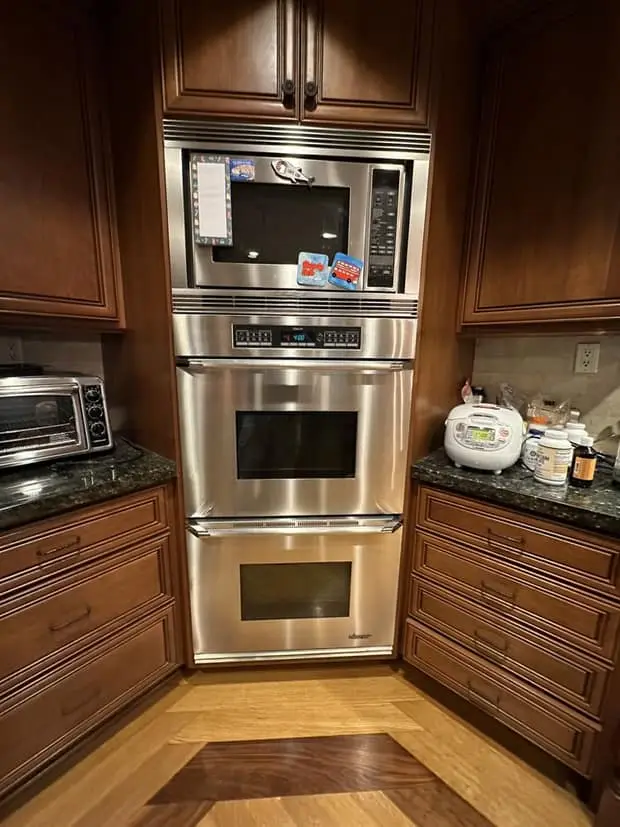
Here is the short version. A brief smell of gas at the moment a gas oven lights is normal and always has been. A bang, a boom or a loud pop when it lights is delayed ignition, and that is a real fault with a short list of causes. A smell of gas that lasts more than a few seconds, happens when the oven is off, or is strong enough to notice from the next room is not something to diagnose from a web page. Shut the oven down and get it looked at, and if it is strong, follow the box above.
The two symptoms in this guide are related, which is why they share a page. Both of them come down to the same question: is gas arriving at the burner at the right moment relative to the flame? Too early and it piles up and then goes off with a bang. Arriving with no flame at all and you get raw gas in the cavity and a smell that hangs around. Same fault family, two different ways of showing itself.
We work on gas ranges and gas wall ovens across Irvine, Tustin and Lake Forest and down the corridor toward San Clemente. Ignition complaints come in clusters, and the clusters are predictable: older ranges where the igniter has simply aged out, and newer kitchens where a big spill got cleaned off the oven floor but not out of the burner ports underneath it.
Why does a gas oven smell for a second when it lights?
Because of how the safety system is built, and the design is a good one.
A modern gas oven does not have a standing pilot light. It has a hot surface igniter, a thin bar of silicon carbide or silicon nitride that glows orange when current runs through it, and a bimetal safety valve that only opens once enough current is flowing. The sequence is: you press Bake, the igniter starts drawing current, it takes somewhere between thirty and ninety seconds to come up to temperature, the valve senses the draw and opens, gas travels down the burner tube, and the gas lights off the igniter that is already glowing.
There is a real gap in there between the valve opening and the flame establishing. It is short, usually a second or less on a healthy oven, and in that moment a small amount of unburned gas goes into the cavity. You can smell that. It is supposed to clear in a breath or two.
So the test is duration, not presence. Count it. One or two seconds at light-off and then nothing is the oven working as designed. Five seconds, ten seconds, a smell that is still there when the oven is up to temperature, or a smell with the oven switched off entirely, means something else is going on and the list below covers it.
What is delayed ignition and why does it bang?
Delayed ignition is a timing failure. Gas should light within about a second of reaching the burner. When it takes five or ten seconds instead, gas keeps flowing the whole time, filling the burner tube and spilling out into the oven cavity. When the flame finally does establish, it does not light a thin stream of gas. It lights everything that has accumulated, all at once, and the pressure wave is the bang you hear.
People describe it a few different ways on the phone. A thump. A whump. A pop like a car door. Sometimes a visible flash through the oven window if the oven light is on. One customer described it as the oven clearing its throat, which is actually a decent description of a small one.
The size depends on how long the gas was flowing before it lit. That number is not stable. It changes with how warm the oven already is, how long the igniter has been running that cycle, whether the convection fan is moving air around, and how far the igniter has drifted from spec. Which is why a range that pops every third time is not a range with an intermittent problem. It is a range with a constant problem and a variable outcome.
What that bang does over time is the reason we do not tell people to live with it. Repeated events loosen the burner from its mounting, crack the porcelain on the oven bottom, blow soot back into the igniter area and in bad cases distort the burner tube itself. A fault that would have been an igniter replacement turns into an igniter plus a burner plus a cleanup.
Symptoms and what they point to
| What you are seeing or smelling | Most likely causes | What to do |
|---|---|---|
| Faint gas smell for one or two seconds at light-off, then gone | Normal ignition gap on a hot surface igniter system | Nothing. This is the oven working |
| Loud pop or bang several seconds after the oven starts | Weak igniter drawing under spec, clogged burner ports, burner out of alignment with the orifice | Stop using the oven, call |
| Gas smell that lingers 10 seconds or more at every start | Slow ignition, partially blocked ports, low burner pressure | Stop using the oven, call |
| Gas smell but the burner never lights at all | Igniter sitting right at the valve threshold: valve opens, no flame follows | Shut it off, open the door, air it out, call |
| Igniter glows bright orange but nothing happens for a long time | Igniter has aged, current draw has fallen below what the valve needs | Technician measures the draw |
| Flame is yellow or orange and lazy instead of blue | Blocked ports, bad air shutter adjustment, debris in the burner | Technician, this is also a carbon monoxide concern |
| Gas smell with everything switched off | Leak at a fitting, the flex connector, the shutoff valve or the regulator | Leave the house and call the utility from outside |
| Soot or black marks around the burner or on the oven floor | Incomplete combustion, often from port blockage, usually alongside delayed ignition | Stop using the oven, call |
| Pop happens only after the oven has been off and is restarting mid-bake | Classic delayed ignition on cycle restarts, warm cavity shortens the igniter warm-up and widens the gap | Stop using the oven, call |
| Started right after a big spill or a self-clean cycle | Debris in the ports, or heat damage to the igniter from the clean cycle | Technician, see the self-clean note below |
The igniter is the usual answer, and glowing proves nothing
This is the single most useful thing on this page, so I will be blunt about it. A hot surface igniter that glows bright orange can still be completely failed from the oven's point of view.
The valve does not care about light. It is a bimetal device wired in series with the igniter, and it opens when the current through the circuit is high enough to warm it. A typical hot surface igniter needs to draw somewhere around 3.2 to 3.6 amps for that to happen reliably, and the exact number is in the manufacturer's service data for that model. As an igniter ages the silicon carbide gets more resistive. The current drops. At 3.0 amps it still glows beautifully and looks completely healthy to anyone standing in front of the oven, but the valve now takes much longer to open, or opens and then fluctuates.
That is where delayed ignition comes from most of the time. The igniter is on, it is hot, it is glowing, and the valve is lagging. Gas arrives late, it arrives all at once, and it goes off against an igniter that has been sitting there glowing for a minute and a half.
The only way to know is a clamp meter around one igniter lead during a cycle. There is no visual test. We have replaced plenty of igniters that looked perfect, and we have left plenty alone that looked grubby but measured fine. If somebody tells you to judge an igniter by how orange it looks, they are guessing.
Igniters are a wear part on a gas oven. They have a service life, they drift rather than fail outright, and a range that is eight or ten years old and has started popping is behaving exactly the way an aging igniter behaves. Our guide on why an oven is not heating covers the same part from the other direction, the case where the valve never opens at all and the oven just stays cold.
What else causes it besides the igniter?
Four things, roughly in order of how often we find them.
- Blocked burner ports. The oven burner is a steel tube with a row of small holes along it. Spilled sugar, grease that carbonized, rust flakes from a humid garage install, crumbs that fell through the oven floor vents. Block some of the holes and the flame cannot travel the length of the tube quickly, so one end lights while the other end is still filling. That is delayed ignition with a different root cause and the same bang.
- Burner out of alignment. The burner tube has to sit a specific distance from the orifice, and the igniter has to sit a specific distance from the ports. Anything that moved the burner shifts both. Usually that is somebody who pulled the oven floor panel to clean and did not reseat it, or a range that got shoved around during a remodel.
- Gas pressure that is off. Low manifold pressure makes the flame lazy and slow to travel. High pressure can blow the flame away from the igniter at light-off. Both need a manometer at the pressure tap to confirm, and neither is something to adjust by feel. This is also where the conversion question comes up: a range set up for natural gas will misbehave badly on propane and the other way around, and those conversions require the correct orifices, not a guess.
- The safety valve itself. Valves get slow, and occasionally they seep past the seat when they should be closed. A valve that lets a trickle through with the oven off is the version that produces a gas smell in a kitchen where nothing is running, and it is the one that makes us tell people to shut the appliance off at the wall valve until we get there.
Worth noting about self-clean. A clean cycle runs the cavity far hotter than normal cooking, and it is hard on the igniter, the wiring insulation near the burner and the thermal cutoff. We see ignition complaints appear in the days right after a self-clean fairly often. If you are thinking about running one before a holiday, think twice about the timing. The same cycle also knocks out thermal fuses and control boards, which is covered in why an oven will not turn on.
What can I safely check myself?
Not much, and that is the honest answer on a gas appliance. Here is the list that is genuinely safe.
- Time the smell. Count seconds out loud at light-off. One or two is normal, ten is not. That number is the most useful thing you can tell us on the phone.
- Time the ignition. From pressing Bake to hearing the burner catch. Healthy is roughly thirty to ninety seconds depending on the model. Three or four minutes means a tired igniter even before anyone measures it.
- Look at the flame color. Blue with maybe a touch of yellow at the very tip is right. A lazy yellow or orange flame means incomplete combustion, which matters beyond the oven because incomplete combustion is what makes carbon monoxide.
- Clean the burner ports, with the gas off and the oven cold. Shut off the gas at the valve behind the range, let everything cool fully, lift out the oven floor panel if your model has one, and clear the holes along the burner tube with a stiff brush or a straightened paperclip. Do not enlarge them, do not use a drill bit, and do not use water near the igniter. The igniter is brittle ceramic and a careless brush will snap it.
- Check the cooktop burners separately. They run off a different ignition system. If they light instantly and burn blue while the oven misbehaves, that narrows the problem to the oven side and saves diagnostic time.
- Air the cavity out. If the oven filled with gas and did not light, shut it off and leave the door open for several minutes before anyone tries anything else.
What should I never do?
Short list, and every item on it is something we have been told about after the fact.
- Never light the oven burner with a match or a lighter. The safety valve exists so that gas cannot flow unless there is a hot igniter waiting for it. Reaching into the cavity with a flame defeats the entire design, and the cavity is a closed box.
- Do not adjust the regulator or the air shutter to see what happens. Both need a pressure reading to set correctly. Turning them by feel usually makes delayed ignition worse.
- Do not tighten gas fittings to chase a smell. Overtightening a flare fitting or a flex connector cracks the seal you were trying to fix.
- Do not bend the igniter closer to the burner. It is ceramic and it snaps. We get called for broken igniters this way more than you would think.
- Do not keep running the oven to see if it clears up. Delayed ignition does not clear up. Each cycle is another small explosion against the same parts.
- Do not use the oven to heat the house. During a cold snap people do, and on an oven with an ignition fault that is the worst possible time to be running it unattended for hours.
What only a technician should do
Everything in this section needs a meter, and most of it needs the gas on while the appliance is open.
- Measuring igniter current draw with a clamp meter during a live ignition cycle, and comparing it to the model's spec. This is the test that decides the igniter question.
- Checking manifold pressure with a manometer at the pressure tap, both static and with the burner running.
- Leak testing the connections on the appliance side, the flex connector, the shutoff and the manifold, with a proper solution or an electronic detector.
- Testing the safety valve for opening threshold and for seepage when closed, and replacing it when it fails either.
- Replacing the igniter correctly, which means handling it without touching the element, setting the gap to spec and confirming the draw on the new part rather than assuming it.
- Inspecting and reseating the burner so the orifice alignment and the igniter distance are both back where the manufacturer put them.
- Checking for a wrong gas conversion on a range that was moved from another house, which is more common than it sounds in a county with as much remodeling as this one.
If you want to know what to have ready before we arrive, before the technician arrives covers it. Model number and a clear description of the timing are worth more than anything else.
How do I keep this from happening again?
Gas ignition faults are mostly about age and debris, so prevention is mostly about debris.
Clean spills when they happen rather than letting them bake on. Sugar and anything acidic are the two worst offenders because they carbonize into a hard crust and then flake down into the burner area. A boil-over from a pie is the classic one, and it is also why we see a run of these calls in December.
Pull the oven floor panel once a year if your model has a removable one and look at the burner tube. You are looking for even, clean ports and no rust. That is a two-minute job with the gas off and it catches the blockage version of this fault before it starts banging.
Think hard before running self-clean, especially in the weeks before a holiday. The cycle is hard on exactly the parts this page is about. A manual clean with a scraper and a non-caustic cleaner takes longer and breaks nothing. Our Thanksgiving oven checklist goes through the timing of all this, and oven temperature problems covers the related case where the oven lights fine but the temperature is wrong.
If you have an aluminum foil habit, break it. Foil on the oven floor blocks the vents that feed the burner its combustion air and redirects heat in ways the designers did not intend. It shows up as uneven baking first and ignition trouble later.
And replace the igniter when it has drifted, not when it has died. On a range that is pushing ten years, an igniter that measures low is going to keep getting lower. Doing it during a scheduled visit is a lot easier than doing it on the morning you are hosting.
When should I stop using the oven entirely?
There are five answers here and all of them are non-negotiable.
- It pops, bangs or thumps when it lights. Even once.
- You smell gas when the oven is off, or anywhere in the house when nothing is running.
- Gas smell appears and the burner never lights.
- The flame is yellow and lazy rather than blue, or there is soot building up.
- Anyone in the house has headaches, nausea or dizziness that improves when they leave. That is a carbon monoxide pattern and it is a 911 call, not a repair call.
A working carbon monoxide alarm on every floor is required in California homes with gas appliances, and the ones with a sealed ten-year battery are the ones people actually leave alone. Test it. It is a button.
Repair or replace?
Most of what is on this page is a modest repair. An igniter, a cleanup of the burner ports, a reseat, sometimes a safety valve. Those are not the expensive parts of a gas range, and they are parts that stay available for a long time because every brand uses a handful of common designs.
The conversation shifts when the range is old enough that the specific igniter has gone out of production, when a professional dual-fuel range needs a control that has been discontinued, or when repeated delayed ignition events have damaged the burner and the cavity rather than just the igniter. Age, part availability and whether the damage is one part or three are what decide it, and our repair or replace guide lays out how we weigh them. The technician quotes the repair on site before any work starts, so you make the call with a real number in front of you.
Frequently asked questions
Is it normal to smell gas when the oven first lights?
A faint whiff for a second or two right as the burner catches is normal on a gas oven. The igniter needs time to heat up before the safety valve opens, and once gas starts flowing there is a short gap before it reaches the igniter and lights. What is not normal is a smell that lasts longer than a few seconds, a smell that appears when the oven is off, a smell strong enough to notice from another room, or a smell that keeps getting worse through the cycle. Those point at unburned gas, which means either the burner is not lighting cleanly or gas is escaping somewhere it should not. Stop using the oven and have it looked at. If the smell is strong at any point, leave the house first and call from outside.
What does it mean when a gas oven makes a loud pop or bang when it lights?
That is delayed ignition. The burner should light within a second or so of gas arriving at it. When something slows that down, gas keeps pouring into the oven cavity until it finally finds the flame, and the whole accumulated pocket lights at once. The bang is that pocket going off. The usual causes are a hot surface igniter that still glows but has lost current draw, burner ports blocked by spilled food or rust, a burner sitting out of alignment with its orifice, or a safety valve that opens before the igniter is actually hot enough. Delayed ignition is not something to live with. Repeated events can blow out the burner, scorch wiring and crack the oven bottom, and it is the one oven symptom we tell people to stop using the appliance over.
What should I do if I smell a strong gas odor in the kitchen?
Leave. Do not flip any light switch on or off, do not use the garage door opener, do not unplug anything and do not use your phone inside the house. Any of those can make a spark. Get everyone and any pets outside, leave the door open behind you if you can do it without delay, and once you are away from the building call 911 or the gas utility emergency line. They respond to gas odor calls around the clock and the call is free. Do not go back in to turn the shutoff valve, and do not wait to see if the smell fades. We are an appliance repair company, and an active gas leak is not an appliance repair call. Once the utility or the fire department has cleared the house and confirmed the leak is in the appliance rather than the line, that is when we come out.
Can I keep using the oven if it only pops sometimes?
We would not. An intermittent pop is the same fault as a consistent one, it just has not lined up yet. Delayed ignition depends on how much gas collects before the flame arrives, and that varies with how warm the oven already is, how long the igniter has been running and which way the air is moving in the cavity. The quiet cycles are not safe cycles, they are lucky ones. The practical risk is that each event gets slightly larger as the igniter weakens further. Surface burners are on a separate ignition system and are usually fine to keep using while you wait for the oven to be repaired, as long as they light normally and burn blue. If they do not, meaning one clicks without lighting or the flame has gone yellow, that is covered in gas range burner problems.
Why does my gas oven smell like gas but the burner never lights?
That combination means the safety valve is opening and releasing gas while the ignition is failing, which is the worst of both outcomes. On most ovens the valve and the igniter are wired in series: the igniter has to draw enough current, usually in the range of 3.2 to 3.6 amps on a typical hot surface igniter, before the bimetal valve warms up and opens. A borderline igniter can sit right at that threshold, open the valve, and then fail to produce a flame. Gas flows into a closed cavity with nothing to burn it. Shut the oven off, leave the door open to air the cavity out, and stop using it until a technician measures the igniter draw. This is also why you never try to light an oven burner with a match.
Do I need the gas company or an appliance technician?
It depends on where the problem lives. A strong or persistent smell with no obvious source, a smell near the meter or along a gas line, or any smell in a house where nothing is running, is a utility call and you make it from outside. The gas company shuts off and makes safe, and that is work we do not do. Faults inside the appliance are ours: a failing igniter, clogged burner ports, a safety valve that is slow or leaking past its seat, a loose connection at the appliance flex line, a burner out of alignment. If the utility has already been out and told you the line is fine but something is wrong with the range, that is exactly the call we take. Our technician quotes the repair on site before any work starts.
Oven banging or smelling of gas?
Stop using it and call us at (310) 600-8152 with the model number, how long the smell lasts and how long the ignition takes. We are 5.0 on Yelp, family-owned in Irvine since 2005, and the technician quotes the repair on site before any work begins. If the smell is strong, make that call from outside and call the utility first.
Related Pages
- Oven & Range Repair in Irvine
- Oven & Range Repair in Orange County
- Gas Range Burner Won’t Light or Burns Yellow?
- Gas Company Says the Line Is Fine but the Stove Has a Problem?
- Oven Not Heating? Igniter, Element, Sensor and Board
- Oven Won’t Turn On? Dead Display, Control Lock and Breaker Checks
- What to Do If Your Oven Stops Working on Thanksgiving Day
- Oven Temperature Problems That Can Ruin Thanksgiving Dinner
- How to Prepare Your Oven for Thanksgiving
- Before the Technician Arrives
- Symptom Index: What’s Wrong With My Appliance?
- Repair or Replace?
- Irvine · Tustin · Lake Forest · Mission Viejo · Laguna Hills · Aliso Viejo · Dana Point · San Clemente