
HVAC Warning Signs: What Your Heating or Cooling System Does Before It Fails
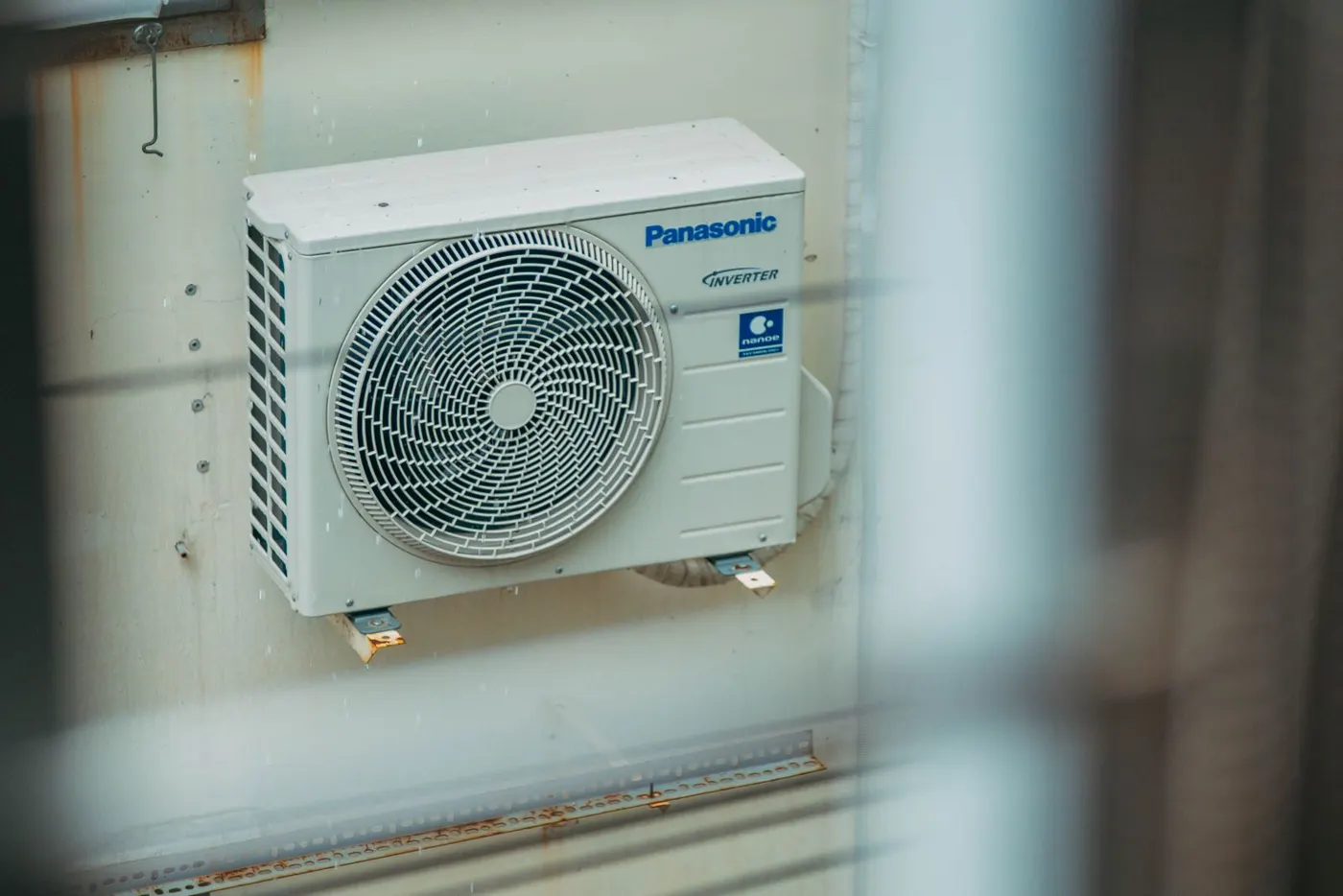
Heating and cooling systems rarely fail without warning. They give you weeks or months of smaller signals first, and catching one of those is almost always a smaller job than the breakdown it was pointing at. We see the same handful of signals on minor service calls across Irvine, Tustin and Lake Forest, year after year.
Five of them run all year and apply to whichever side of the system is working at the time. Seven more belong to heating season, and those are the ones that catch people out, because a furnace in South Orange County sits unused for seven months and then gets asked to work on one cold Tuesday in November.
What counts as a warning sign and what is just normal?
Equipment makes noise and uses power. The question is never whether your system does something, it's whether it does something different from what it did last season. A hum that has been there since you moved in is background. A hum that started three weeks ago is information.
So the useful habit is a baseline. Once a year, stand in the house during one full cycle and pay attention for two minutes. How long does it run. What does start-up sound like. How strong is the air at the vent farthest from the unit. You don't need numbers, just a memory to compare against. Most of what follows is a change against that baseline.
1. The bill climbed and nothing else changed
This is the sign people dismiss most, because the house still feels fine. A system losing efficiency doesn't feel different at first. It compensates by running longer. The thermostat still reaches 72, it just takes 25 minutes instead of 15, and the meter notices long before you do.
The usual causes are unglamorous. A filter nobody changed. A condenser coil packed with dust after a Santa Ana stretch. A capacitor that has drifted out of spec and is making the compressor and fan motors draw more current for the same work. And a refrigerant charge that has fallen because there is a leak somewhere, which is the one that quietly costs the most.
One thing to get right on the comparison. Compare to the same month a year ago, not to last month. October and July are different animals, and a month-over-month jump in a Lake Forest summer tells you about the weather, not the equipment.
2. One room is always wrong
A single room that runs warmer or cooler than the rest of the house, consistently, in both seasons, is usually a distribution problem rather than an equipment problem. Ducts that came loose in the attic, a zone damper stuck part-way, a register that somebody closed years ago, insulation that settled.
When the whole house drifts together, that's different, and it points back at the equipment. A system that used to hold 72 everywhere and now holds 75 on hot afternoons is telling you it has lost capacity. In a two-story Irvine or Tustin home the upstairs goes first, because that's where the margin was thinnest to begin with.
Worth saying plainly: if the room has always been wrong, since the day you moved in, that's a design or duct issue and no amount of service on the equipment will fix it. If it started being wrong this year, it's worth a look.
3. A noise that wasn't there last season
Grinding, squealing and banging are the three that are rarely normal. Grinding usually means a motor bearing that has run dry. Squealing on start-up points at a belt on older blower assemblies or, more often on modern equipment, a bearing again. Banging and rattling can be as simple as a loose panel screw, which is worth checking before anything else, or as serious as a blower wheel out of balance.
A loud electrical hum from the outdoor unit while the fan sits still is a specific one. That's usually a failed capacitor, and the motor is sitting there drawing locked-rotor current while it hums. Shut the system off at the thermostat if you see that, because letting it hum does damage. Our guide on an AC that won't turn on walks through what that failure looks like from the homeowner side.
A clicking relay that repeats every few seconds is a control problem rather than a mechanical one. It's not dangerous, but it will not resolve on its own.
4. Airflow is weaker than you remember
Hold your hand at a supply register, then at the one farthest from the air handler. Weak everywhere points at the blower or the filter. Weak only at the far end points at the duct run.
The filter is first every single time. A one inch pleated filter in a house with pets or in a neighborhood that gets dust off the hills can be matted in six weeks. A matted filter does two bad things at once: it starves the blower, and on the cooling side the coil gets so cold it ices over, which blocks airflow further. That feedback loop is how a five dollar part turns into a frozen system. We cover it in detail in the AC freezing up guide.
Honest field opinion: most people buy filters that are too restrictive. A very high MERV rating in a system that wasn't designed for it chokes the blower. Match the filter to what the equipment calls for, change it on schedule, and stop treating it as an air purification project.
5. It starts and stops every few minutes
A normal cooling cycle runs roughly 10 to 20 minutes. Heating cycles are often shorter in mild weather, which makes this one harder to read in October. What matters is the change: a system that used to run in long steady stretches and now runs in four minute bursts is short cycling, and short cycling wears out the parts that cost the most to replace.
The causes split into cheap and not cheap. Cheap: a dirty filter, a blocked return, a thermostat mounted where sun or a supply register hits it. Not cheap: a compressor tripping on its internal overload, a float switch cutting the system off on a clogged condensate drain, a refrigerant charge that is wrong in either direction. The AC short cycling guide covers what a normal cycle length looks like and the nine causes behind the short ones.
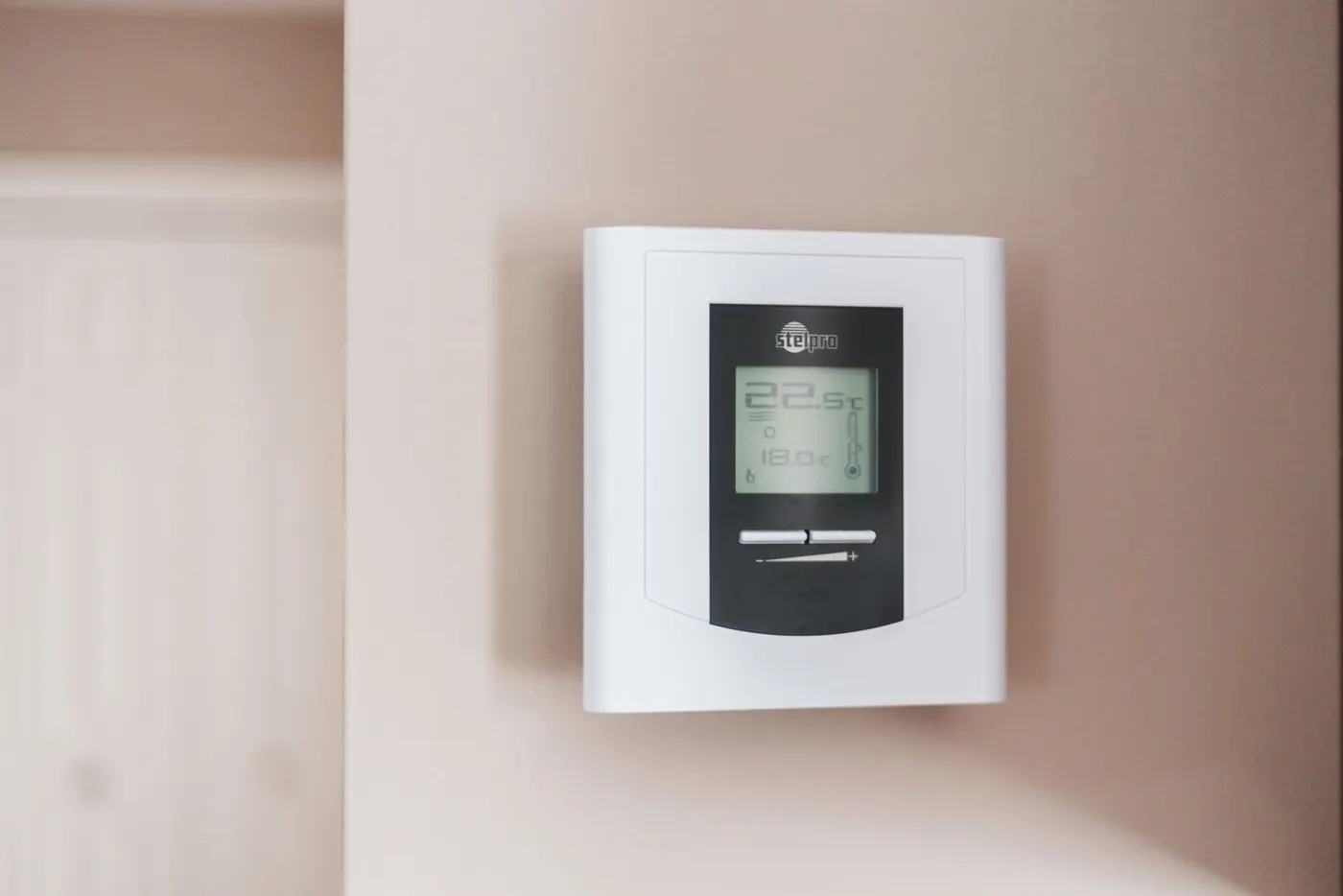
Heating season brings its own list
Here is the structural problem with furnaces in South Orange County. The system runs hard from June through September, then goes quiet. From April to November it does nothing. Dust settles on the heat exchanger, a flame sensor keeps the oxide film it built last winter, a hot surface igniter sits with hairline cracks in it that nobody can see.
Then the temperature drops into the forties one evening, everyone in Irvine, Mission Viejo and Ladera Ranch reaches for the thermostat on the same night, and the faults that were sitting there all summer announce themselves at once. The signs below are the ones worth noticing in that first week, and the best time to test the heat is a warm afternoon in October rather than a cold night in December.
6. The first burn smells like dust
For the first few minutes, this is normal and expected. Household dust on the heat exchanger burns off when the burners come up to temperature. It should fade within ten or fifteen minutes and should not come back on the second or third cycle of the day.
What is not normal: a sharp chemical smell, a hot plastic smell, or a smell that is still there a week later. Burning plastic points at the blower motor windings or the control board. Shut the system off and leave it off until somebody looks at it. And any smell of gas is not a troubleshooting situation at all, which is covered further down.
7. The burners light and then quit a few seconds later
This one confuses people because the furnace looks like it's working. The igniter glows, the gas valve opens, the burners light with a proper whoosh, and three to seven seconds later it all shuts down. A minute later it tries the whole sequence again. Two or three failed attempts and the board locks out.
That pattern is close to diagnostic on its own. It's usually the flame sensor, a plain metal rod sitting in the burner flame that the control board uses to prove the flame is actually burning. The rod builds a film of oxide and combustion residue, the film blocks the tiny current the board is looking for, and the board does exactly what it should: it closes the gas valve rather than letting unburned gas into the exchanger. The flame is right there and the board can't see it. The furnace not heating guide walks the full ignition sequence step by step, including where to find the blink code on the control board.
8. The furnace takes longer each week to reach the same number
Same thing as the rising bill, measured in minutes instead of dollars, and easier to notice in heating season because you're home. If a cycle that used to take 12 minutes now takes 20 for the same setpoint on a similar evening, the system is losing something. A matted filter is first on the list again. Partly blocked burners, a weak blower, or ducts that have come apart in the attic fill out the rest.
The version of this to take seriously: the furnace heats for five or ten minutes, shuts the burners off, keeps the blower running, and tries again later. That's a limit switch opening on high temperature, which is a safety device reacting to restricted airflow. It is doing its job, and it will keep doing its job until the thing causing the restriction is fixed.
9. A boom or a bang when it lights
A furnace should light with a soft whoosh you can barely hear from the next room. A boom, a bang, or a thud a few seconds after the inducer fan starts means delayed ignition: gas has been accumulating in the burner area before something finally lit it. Dirty or partly blocked burner ports are the usual cause.
This is not a wait-and-see item. Shut the furnace off at the thermostat and at the service switch, and book service. Repeated delayed ignition damages the heat exchanger, which is the one furnace part where a crack stops being a comfort problem and starts being a combustion safety problem.
10. The flame looks yellow or lazy
If your furnace has a viewing slot that lets you see the burner flame without removing a panel, a healthy gas flame is mostly blue, steady, and sits tight to the burner. Yellow, orange, flickering, or a flame that lifts away from the burner means incomplete combustion.
Look, don't touch. Do not open the burner compartment, do not adjust anything, and do not try to clean the burners yourself. A yellow flame on a gas appliance is a call, not a project.
11. Soot, scorch marks, or a carbon monoxide alarm
Black soot streaks around the burner area or the flue connection, scorch or discoloration marks on the cabinet, or a CO alarm sounding anywhere in the house are where troubleshooting stops. Shut the furnace off, open windows if the alarm sounded, get everyone outside, and call from outside.
While we're on it: if the house has gas heat and there is no working carbon monoxide alarm on every sleeping level, that is a bigger problem than whatever brought you to this page. Detectors have an expiry date printed on the back, typically seven to ten years from manufacture, and an expired one is not a detector.
12. The thermostat is fighting you
Half the no-heat calls in the first cold week aren't a broken furnace. A thermostat set to Heat with the fan switch on ON runs the blower continuously, pushing room-temperature air through the house all day, and that feels exactly like cold air coming out of the vents. Move the fan to AUTO and the blower only runs when there's heat behind it.
The other thermostat faults worth knowing: dead batteries, a schedule or a geofence in the app holding the setpoint low while you stare at a display you think is the setting, and on smart thermostats a system type configured wrong. A thermostat set up for a heat pump on a gas furnace, or one missing the W wire on the terminal block, will happily run the fan and never call for heat.
Warning sign to likely cause, and how fast to act
| What you notice | Most likely causes | How urgent |
|---|---|---|
| Bill higher than the same month last year, comfort unchanged | Matted filter, dirty condenser coil, capacitor out of spec, refrigerant leak | Weeks. Book before the next season |
| Whole house drifts a few degrees on hot or cold days | Lost capacity: charge, coil, blower, aging compressor | Weeks |
| One room always wrong, both seasons | Duct run, zone damper, closed register, insulation | Not an emergency, often not an equipment fix |
| Grinding or squealing from the air handler | Motor bearing, blower wheel, belt on older units | Days. It gets worse, not better |
| Outdoor unit hums, fan doesn't spin | Failed capacitor, seized fan motor | Shut it off now, then call |
| Airflow weak at every register | Filter, blower, iced evaporator coil | Change the filter today, call if it stays weak |
| Cycles dropped from 10 to 20 minutes down to 3 to 5 | Filter, thermostat placement, compressor overload, float switch on a clogged drain, wrong charge | Days |
| Burners light, quit after three to seven seconds, retry | Flame sensor coated with oxide or soot | Days. Heat is unreliable until it's cleaned |
| Heats five to ten minutes, quits, blower keeps running | Limit switch opening on high temperature: filter, closed registers, weak blower | Days |
| Boom or bang a few seconds after it lights | Delayed ignition from dirty or blocked burners | Shut it off. Same-day call |
| Yellow or lifting burner flame | Incomplete combustion | Shut it off. Same-day call |
| Soot, scorch marks, gas smell, CO alarm | Combustion or gas safety problem | Stop. Everyone outside, call from outside |
What you can safely check yourself
Short list, and it covers a real share of what we get called for.
- The filter. Pull it out and hold it up to a light. If you can't see light through it, that's your answer. One inch filters want attention every one to three months, four or five inch media filters last longer.
- The thermostat. Right mode, fan on AUTO, fresh batteries, setpoint well clear of room temperature, no schedule or hold overriding you. Give it ten minutes before deciding anything failed.
- Registers and returns. Open supply registers, nothing stacked against a return grille, furniture clear of the air path. Closing vents to "save energy" in unused rooms raises static pressure and does the opposite.
- The outdoor unit. Two feet of clear space around it, no bougainvillea grown into the coil, no leaf pile against the fins. Shut power off at the disconnect before you clear anything near it.
- The breaker and the service switch. Furnaces and air handlers have a separate switch that looks like a light switch on or near the cabinet. In Irvine and Tustin attics it sits near the hatch, and it gets flipped by whoever went up for holiday boxes.
- The condensate line. If there's water around the air handler or a pan that stays wet, that's a drain problem. Our AC leaking water guide covers what to shut off and what to check.
That's the whole list. Everything past this point involves line voltage, refrigerant under pressure, or a gas-fired appliance.
What only a technician should touch
Not a liability disclaimer, a real line. These are the items where a homeowner attempt makes the repair more expensive or makes the house less safe.
- Anything inside the burner compartment. Flame sensors, igniters, burners, the gas valve. Cleaning a flame sensor takes five minutes with the right abrasive and a microamp reading afterward to prove it's fixed. Doing it blind on a live gas appliance is a different thing entirely.
- Capacitors. They hold a charge after the power is off. Testing one means knowing how to discharge it first and reading microfarads against the rating stamped on the can.
- Refrigerant. There is no such thing as a system that needs topping off. A sealed system doesn't consume refrigerant, so low charge means a leak, and adding more without finding the leak wastes money and vents refrigerant into the air. Leak search first, repair second, charge by weight third.
- Pressure switches, limit switches and rollout switches. These are safeties. If one is tripping, it is reacting to something. Jumpering a safety out so the system runs is the single worst thing anyone does to a furnace.
- Heat exchanger inspection. Requires pulling the system apart and, done properly, a combustion analyzer.
- Anything behind an electrical panel cover. Contactors, transformers, control boards.
Why systems here fail the way they do
South Orange County is easy on equipment in one way and hard on it in another. The mild climate means neither side of the system works as hard as it would inland, and plenty of furnaces here reach twenty years because they only run a few hundred cycles a year.
The flip side is that equipment that runs rarely still ages. A flame sensor builds its film whether the furnace runs 300 times a year or 3,000. Capacitors dry out on a calendar, not a usage counter. A hot surface igniter cracks from thermal cycling, and a system that sits idle for seven months and then gets hammered for one week is doing a lot of thermal cycling in a short window.
Two local factors on top of that. Santa Ana wind events load outdoor coils with fine dust in a few days, which is why a condenser in Lake Forest or Rancho Santa Margarita near the open hills can go from clean to restricted in one season. And toward the coast, in San Juan Capistrano, Dana Point and San Clemente, salt air works on the aluminum fins and the electrical contacts in the outdoor unit. Coastal condensers usually need their coils rinsed more often than inland ones.
Attic installations deserve a mention because so many homes here have them. An attic furnace or air handler is harder to notice: you don't walk past it, you don't hear it as clearly, and a condensate drip that would be obvious in a garage shows up as a ceiling stain months later. If your equipment is in an attic, look at the secondary drain pan a couple of times a year.
A seasonal rhythm that prevents most of this
You don't need a maintenance program to stay ahead of the list above. You need two moments a year and a filter habit.
Early fall, before the first cold evening. Pick a warm October afternoon and run the heat for twenty minutes with the windows open. That's the whole test. You'll smell the dust burn off, you'll hear whether the burners stay lit, and you'll find out about a cracked igniter at a time when it's an appointment rather than an emergency. Finding a no-heat fault on an October afternoon and finding it at 9pm in December are the same repair with very different stress levels.
Spring, before the first stretch of heat. Same idea on the cooling side. Run it, listen to start-up, check that the air is actually cold and that the condensate is draining. The AC maintenance checklist for Southern California homes has the full spring start-up and fall shutdown sequence.
Filters, on a schedule you'll actually keep. Put a reminder in your phone rather than trying to remember. More filter changes prevent more HVAC failures than anything else a homeowner can do, and it isn't close.
Beyond that, a professional look once a year for most systems, twice a year if the equipment is past ten years or sits near the coast. Our AC maintenance and tune-up service page lists what a visit actually includes.
When to stop reading and call
Call today, no troubleshooting, if any of these are true: a carbon monoxide alarm has sounded, you smell gas, there's soot or scorching near the furnace burners, the furnace bangs when it lights, or the outdoor unit is humming with the fan stopped.
Book within the week if you're seeing two or more of the slower signs together. Bills up plus longer cycles plus a new noise is a system telling you the same thing three ways.
Book before the season if you're seeing one slow sign on its own. That's the cheapest moment to deal with it, and it's also the moment when a technician has time to actually look rather than triage.
When you call, the useful things to have ready are what the system does during one full cycle, whether the blower runs, whether you hear the burners light, and the blink code off the furnace control board if there is one. What to have ready before the technician arrives covers the rest.
Frequently asked questions
How do I know whether an HVAC warning sign is urgent or can wait?
Three things end the troubleshooting on the spot and should be treated as same-day: a carbon monoxide alarm sounding, the smell of gas, or soot and scorch marks around a furnace burner area. A boom or bang a few seconds after the burners light belongs in the same group. Everything else is a matter of weeks rather than minutes. A slow bill creep, a room that drifts a couple of degrees, a new hum, weaker airflow and shorter run cycles are all worth a diagnostic before the next season starts, but none of them means shutting the house down tonight. The rule we use in the field is simple: one sign on its own usually means service, two or three at once usually means something is already failing.
Is it normal for a furnace to smell like burning dust the first time it runs?
For the first few minutes, yes. A furnace that sat idle from April to November collects a layer of household dust on the heat exchanger, and that dust burns off the first time the burners come up to temperature. The smell should fade within ten or fifteen minutes and should not come back on the second or third cycle. What is not normal is a sharp chemical or electrical smell, a smell that lingers for days, or any smell of gas at all. Burning plastic or hot wiring points at the blower motor or the control board and is worth shutting the system off for.
My energy bill jumped but the house feels comfortable. Is something wrong?
Often yes, and this is the sign homeowners dismiss most. A system losing efficiency doesn't feel different at first because it compensates by running longer. The thermostat still reaches 72, it just takes 25 minutes instead of 15, and the meter notices before you do. The usual causes are a matted filter, a condenser coil packed with dust after Santa Ana winds, a refrigerant charge that has dropped because of a leak, or a capacitor that has drifted out of spec and is making the motors work harder. Compare the bill to the same month last year rather than to last month, since weather swings make month-to-month comparison useless.
How often should a heating and cooling system in Orange County be serviced?
Once a year covers most homes here, twice if the system is more than ten years old or if the house sits close to the coast where salt air works on outdoor coils and electrical contacts. The useful timing is seasonal rather than calendar based. Have the cooling side looked at in spring before the first stretch of heat, and the heating side in early fall before the first cold evening. Filters are the exception and need attention far more often: every one to three months for a one inch filter, longer for a four or five inch media filter, and sooner during a dusty Santa Ana stretch.
Why does cool air come out of the vents when the heat first turns on?
That's the design working correctly. After the burners light, the control board waits 30 to 60 seconds before starting the main blower so the heat exchanger has time to warm up. Starting the blower immediately would push room-temperature air through the house and make the first minute feel worse. If the air is still cool after two or three minutes, or if it never warms up at all while the blower keeps running, that's a different situation and points at the burners failing to stay lit or the thermostat fan switch being left on ON instead of AUTO.
Do you service heating and cooling systems in Irvine and South Orange County?
Yes, for minor service and repairs. That covers tune-ups on both the heating and cooling sides, thermostats, capacitors and contactors, condensate drains and float switches, coil cleaning, igniters, flame sensors, limit and pressure switches, blower motors, window and wall units and mini-splits. These are jobs under $1,000 in labor and materials. Larger work such as a new system, a full replacement, ductwork or a major repair goes to our licensed HVAC partner so it is permitted and done to code. The technician looks at the system, tells you what it needs before any work starts, and repairs carry a 90 day parts and labor warranty. We cover Irvine, Tustin, Lake Forest and the rest of South Orange County down to San Clemente.
Related Pages
- Furnace Not Heating: What to Check Before You Call
- AC Short Cycling: On and Off Every Few Minutes
- AC Not Turning On
- AC Freezing Up: Ice on the Unit
- AC Leaking Water
- AC Maintenance Checklist for Southern California Homes
- Before the Technician Arrives
- HVAC Repair & Service in Orange County
- AC & Air Conditioning Repair
- AC Maintenance & Seasonal Tune-Up
- AC Repair in Irvine · Tustin · Lake Forest · Mission Viejo
- Irvine · Tustin · Lake Forest · Mission Viejo · Laguna Niguel · Aliso Viejo · San Clemente