
AC Short Cycling: Why Your Air Conditioner Turns On and Off Every Few Minutes
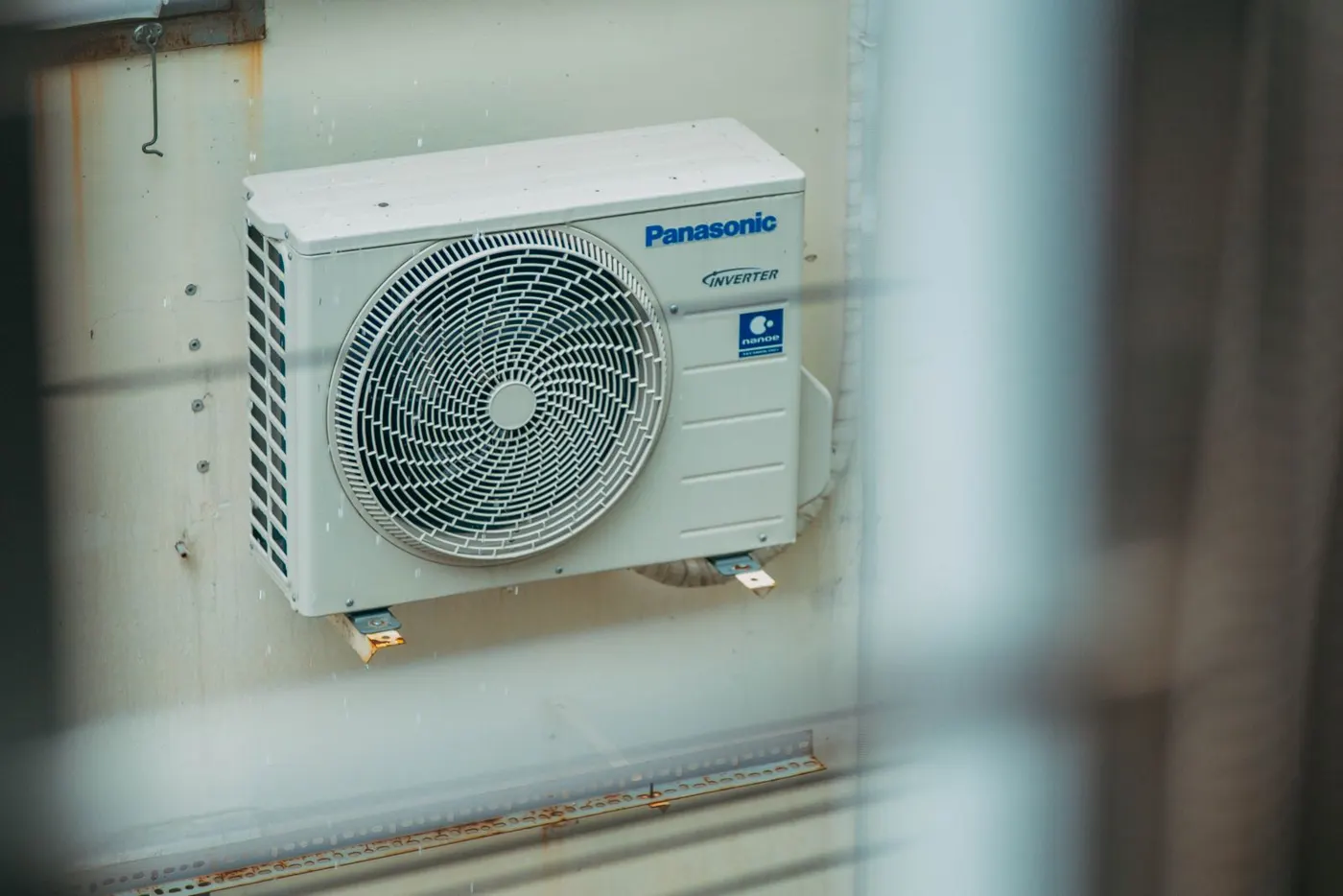
An air conditioner that turns on, runs for three or four minutes, shuts off, and starts again a few minutes later is doing something technicians call short cycling. It is one of the more frustrating symptoms to live with in Irvine, because the house never quite gets comfortable and the system sounds busy all day, yet nothing looks obviously broken. It is also a symptom you should not ignore: every start pulls a large surge of current through the compressor, so a fault that causes short cycling quietly shortens the life of the most expensive part in the system.
This guide explains what a normal cooling cycle looks like, how to tell short cycling apart from an AC that is simply working hard on a hot afternoon, the nine causes we find most often, and which of them you can check safely yourself. As with everything on the refrigerant and high-voltage side, we draw a clear line where the work becomes a job for an EPA-certified technician.
First, what counts as short cycling?
A central air conditioner is not supposed to run continuously, and it is not supposed to blink on and off either. On a moderately warm day — say a 78°F afternoon with the thermostat at 74°F — a correctly sized system typically runs 10 to 20 minutes per cycle and cycles two to three times an hour. On a 95°F inland afternoon in Irvine or Lake Forest, the same system may run nearly nonstop for hours. That is not short cycling; that is a system matched to a hot day, and it is normal.
Short cycling is the opposite pattern: repeated run times under about ten minutes, often three to five minutes, usually with the house never reaching the setting. Some systems do it only in the heat of the afternoon and behave in the morning. Others do it from the first call for cooling. Both patterns are diagnostic, so before anything else, spend twenty minutes gathering three observations.
- Time three cycles. Note how many minutes the system runs and how many it rests. Consistency matters: a compressor that always quits at four minutes behaves differently from one that runs fifteen minutes the first time and four minutes after that.
- Watch which half stops. Stand where you can hear both the outdoor unit and the vents. If the outdoor unit shuts down while the indoor blower keeps running, the thermostat is still calling for cooling and something cut the compressor out. If both stop together and the thermostat drops its "cooling" indicator, the call itself ended.
- Check whether it gets worse with outdoor heat. A fault driven by high pressure or heat — a dirty outdoor coil, a weak capacitor, a compressor overload — shows up worst in the late afternoon. An airflow or thermostat problem is fairly constant.
Symptoms and what they point to
| What you observe | Most likely causes |
|---|---|
| Outdoor unit stops, indoor blower keeps running, restarts a few minutes later | High- or low-pressure safety switch (4, 6, 7), compressor overload (5), weak capacitor (4), pitted contactor (9) |
| Whole system stops and starts, thermostat display cycling with it | Thermostat location or settings (1), low-voltage wiring (9), float switch on a clogged drain (8) |
| Weak airflow at the vents, cycles short, coil or lines frosted | Dirty filter or blocked returns (2), frosting evaporator coil (3) |
| Cycles fine in the morning, short cycles in the afternoon heat | Dust-packed condenser coil (6), run capacitor on its way out (4), compressor overload (5) |
| Cooling faded over weeks, now cycles briefly, hissing near the indoor coil | Refrigerant leak and low-pressure cutout (7) |
| Loud click or chatter from the outdoor unit each time it cuts in and out | Contactor chatter, weak transformer or loose control wiring (9) |
| House cools quickly but feels humid; far rooms stay warm; always behaved this way | Oversized system or duct and zoning issues (10) |
| Water in the secondary drain pan or a wet ceiling stain, system stopping repeatedly | Clogged condensate drain tripping the float switch (8) |
1. The thermostat: location, wiring and cycle settings
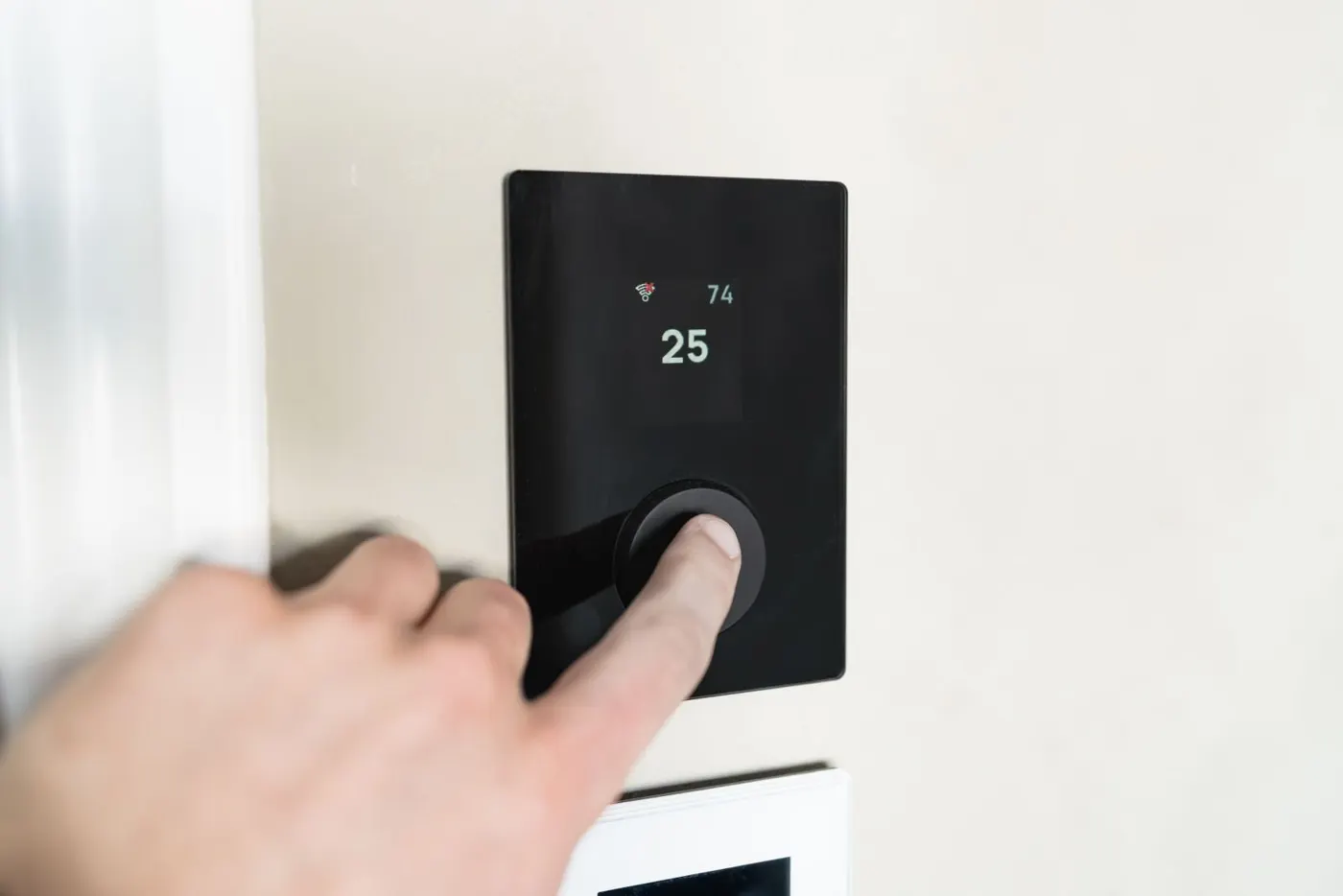
The cheapest cause is also one of the most common, and it has nothing to do with the air conditioner. A thermostat decides when cooling is "done" based on the air right in front of it. Mount it in afternoon sun through a west window, above a lamp or a media cabinet, on a wall shared with a kitchen, or directly in the path of a supply register, and it reads a false temperature swing. It satisfies early, the system stops, the false reading fades, and two minutes later it calls again. Classic short cycling, mechanically perfect equipment.
Three more thermostat-side causes are worth knowing. Weak batteries in a battery-powered thermostat cause it to drop and re-make the cooling call intermittently. A loose, corroded or rubbed-through low-voltage wire behind the plate does the same thing, and in an attic run it can be chafing on a sheet-metal edge where nobody has looked in ten years. And smart and programmable thermostats have a cycle rate or cycles per hour setting: set too aggressively, or configured for a heat pump when the system is straight cooling, the thermostat itself commands short cycles.
Safe to check yourself: yes. Replace the batteries. Look at what is near the thermostat — a lamp, a sunlit window, a register blowing across it, a new TV underneath. Check that the mode is Cool and the fan is on Auto, and that the setting is not being overridden by a schedule or a geofence in the app. In newer Irvine homes with communicating thermostats a setup or wiring problem looks exactly like a broken air conditioner; our AC not turning on guide covers the same wiring checks from the other direction.
2. Restricted airflow: filter, registers and returns
Air conditioning is heat transfer, and the indoor coil needs a specific volume of air across it to work. Choke that airflow and the coil runs colder and colder while the refrigerant pressure on the low side falls. Depending on the system, it will either cut out on a safety control, begin to frost, or simply lose so much capacity that its behavior turns erratic.
The usual restrictions, in the order we find them: a filter that has gone from dusty to matted; supply registers closed in unused bedrooms, which does not "save" cooling but does starve the system; a return grille blocked by a sofa, a headboard or a stack of boxes in a hallway closet; a thick high-MERV filter installed in a system designed for a cheap one; and a crushed or disconnected flex duct in the attic. After a Santa Ana wind event, filters in South Orange County load up noticeably faster than usual, and we see a wave of airflow calls a week or two later.
Safe to check yourself: yes, and do this first. Replace the filter with the size and type the system was designed for, open every supply register, clear anything within a couple of feet of the return grille, and give the system half an hour. Note which way the filter airflow arrow points when you reinstall it. If cycles lengthen immediately, that was it, and a filter schedule will keep it away.
3. A frosting evaporator coil
Restricted airflow and low refrigerant both push the indoor coil below freezing, and once frost starts it snowballs: ice blocks airflow, which makes the coil colder, which makes more ice. A partly iced coil produces exactly the short-cycling pattern — brief runs, weak air, and cutouts on a low-pressure control — before it finally turns into the fully frozen unit described in our AC freezing up guide. Melting ice also overwhelms the drain pan, which is how a frozen coil and a water leak end up on the same service call.
Safe to check yourself: look, do not chip. Ice on the copper lines at the indoor unit or the outdoor service valves confirms it. Switch the thermostat to Off and the fan to On for a few hours so the blower thaws the coil gently, with towels down for the melt. Never use a pick, a screwdriver or a hair dryer on a coil — the fins and the tubing are thin, and a punctured coil turns an airflow problem into a refrigerant repair. If ice returns after a new filter, the cause is deeper and it needs a technician.
4. A weak run capacitor
The outdoor unit uses a capacitor to give the compressor and fan motor the phase shift they need to start and run. Capacitors dry out and lose capacitance gradually, and Southern California heat ages them faster than the spec sheet suggests. A capacitor that has drifted out of tolerance lets the compressor start hard, draw high current and heat up, and its internal overload then trips a few minutes in. The system rests, the overload cools and resets, and it tries again — short cycling with a mechanically sound compressor.
The tells: a hum or a clunk at the outdoor unit when it tries to start, a fan that starts slowly or needs a nudge of wind, behavior that is worse on the hottest part of the day, and sometimes a visibly swollen or leaking capacitor top.
Leave to a technician: yes, completely. A capacitor stores a dangerous charge even after the power is off, and testing it means working inside the high-voltage compartment of the outdoor unit. It is one of the faster and less expensive repairs on an air conditioner — which is exactly why it is worth having diagnosed instead of guessed at.
5. The compressor's overload protector tripping on heat
Every compressor has thermal protection: an overload device that opens the circuit when the motor gets too hot and closes again once it cools. When something makes the compressor run hot — a weak capacitor, a failed condenser fan, a coil that cannot shed heat, low voltage at the disconnect, or a compressor whose windings are degrading — the overload does its job over and over. From the house, that reads as an outdoor unit that quits every few minutes while the indoor fan keeps blowing, then wakes up again.
This is the cause most worth acting on quickly. The overload is protecting the compressor from damage; every trip means the compressor already reached a temperature it should not have. Running a system for weeks in this state is how a repairable fault becomes a compressor replacement and a repair-or-replace conversation.
What to do: turn the system off at the thermostat and have it looked at. If the outdoor fan is not turning while the compressor tries to run, that is the likely reason it is overheating, and continuing to run it makes things worse.
6. A dust-packed outdoor condenser coil
The outdoor coil is where all the heat collected from the house gets dumped. When its fins are blanketed with dust, grass clippings, dryer lint or pet hair, the refrigerant cannot condense properly, the high-side pressure climbs, and on systems with a high-pressure switch the safety control opens and stops the compressor. Pressure falls as the system sits, the switch resets, and the cycle repeats every few minutes. Systems without that switch instead run hot until the compressor overload trips, which looks the same from the hallway.
Two local details make this worse in South Orange County. Santa Ana winds drive fine dust deep into the coil fins, and condensers tucked into narrow side yards between houses — common in Irvine's newer neighborhoods and in Tustin's older tracts — recirculate their own hot discharge air because there is no room to breathe. Landscaping planted a foot from the unit has the same effect.
Safe to check yourself: partly. With the system off at the thermostat and at the outdoor disconnect, clear leaves and debris from around the cabinet, pull anything out of the top grille, and give yourself two to three feet of clearance on all sides. Rinsing the coil gently from the outside in with a garden hose, never a pressure washer, helps when the dirt is on the surface. Deep cleaning, coil chemicals and anything requiring panel removal belong to a technician — and if pressures were high enough to trip a switch, the coil needs to be checked properly anyway. Our AC maintenance and tune-up page covers what a full coil cleaning includes.
7. Low refrigerant from a leak
Refrigerant is not consumed. If the charge is low, it leaked — at a corroded evaporator coil, a rubbed-through line set, a service valve or a brazed joint. As the charge falls, the low-side pressure drops, and systems with a low-pressure switch begin cutting out early and often. The wider picture usually includes cooling that faded over weeks rather than failing overnight, ice on the copper lines, a faint hissing or bubbling near the indoor coil, and a compressor running long and hot before it quits.
Leave to a technician, and do not let anyone simply "top it off." Adding refrigerant without finding the leak buys a few weeks, releases the same refrigerant again, and lets the compressor keep running under conditions that shorten its life. A proper repair means locating the leak, fixing it, evacuating the system and weighing in the correct charge — EPA-certified work with the right gauges and a vacuum pump. On older systems still running the phased-out R-22, the refrigerant itself is scarce and expensive, which changes the math on whether the repair makes sense; our guide to what drives an AC repair lays out the factors.
8. A clogged condensate drain and the float switch
This one is specific to how houses here are built, and it is why we ask about attics on the phone. In many newer two-story homes across Irvine — Great Park, Portola Springs, Woodbury and the villages around them — the air handler sits in the attic. Water condensing on the cooling coil runs out through a condensate line, and under the unit there is a secondary drain pan, usually with a float switch that shuts the system down if water starts collecting. That switch exists to save your ceiling.
When the primary drain line partially clogs with the algae and dust slurry that builds up over a season, water backs up, the float rises, and the system stops. The pan then drains slowly, the float drops, and the system restarts — a short cycle driven entirely by a safety device working exactly as designed. Depending on how the switch is wired, it either kills the whole system or just the compressor. A wet spot on a ceiling or a drip at an exterior secondary drain outlet is the same story a step further along; our AC leaking water guide follows that thread.
Safe to check yourself: looking is fine if the attic is safely accessible — check whether there is standing water in the secondary pan and whether the exterior secondary drain (often a small pipe over a window) has been dripping. Clearing the drain line properly, flushing the trap, and testing the float switch is service work, and forcing a blocked line with pressure can separate a glued joint inside the attic. Never bypass or tape a float switch; it is the only thing between a clogged drain and water coming through drywall.
9. Electrical controls: contactor, wiring and transformer
The compressor is switched by a contactor, a relay energized by 24 volts from the indoor unit. Contacts pit and burn over years of switching, and a pitted contactor makes intermittent contact — you hear it chatter, pull in, drop out and pull in again, which is short cycling at its most literal. The same behavior comes from a weak control transformer, a loose low-voltage terminal, a thermostat wire chafed against sheet metal, or a control board with a failing relay. On systems with electronic controls, a board that logs a fault will often lock out for a fixed number of minutes and then retry, producing a suspiciously regular on-off rhythm.
Leave to a technician: everything in this category. One homeowner-safe note: if the breaker for the air conditioner has tripped, reset it once. If it trips again, stop and leave it off. A repeatedly tripping AC circuit means a short, a seized motor or a failing compressor, and resetting it a third time risks a fire or a much larger repair.
10. An oversized system, ducts and zoning
A system with more capacity than the house needs cools the air around the thermostat fast, satisfies in a few minutes, shuts off and repeats. The signature is a house that gets cold but never dry, uneven far bedrooms, and — importantly — behavior that has always been this way. The same picture appears when ductwork is undersized or badly balanced, when a zoning damper has failed closed, or when a bypass damper on a zoned system dumps supply air back into the return.
We list this last on purpose. If the system cooled normally for years and only recently started cycling every few minutes, it did not suddenly become oversized: something changed, and the previous nine causes are where the change will be. Sizing is a real answer only when the pattern goes back to installation, and it is a conversation about equipment and duct design rather than a repair.
Why short cycling is worth fixing quickly
It is tempting to live with it, particularly if the house is more or less comfortable. Four reasons not to:
- Compressor wear. Starting a compressor draws several times its running current. That inrush is what stresses windings, start components and contactor contacts, and it happens far more often when cycles are three minutes instead of fifteen.
- Humidity. An indoor coil needs several minutes of continuous run time before it starts meaningfully condensing moisture. Short cycles satisfy the thermostat without dehumidifying, which is why a short-cycling house can feel clammy at 74°F, especially during humid late-summer evenings in Mission Viejo and Laguna Hills.
- Energy. The first minutes of every cycle are the least efficient ones. More starts means more electricity for less cooling.
- It is a symptom, not a quirk. With the exception of an oversized system, everything above is a fault that gets worse — and each one is cheaper to repair before it takes the compressor with it. The pattern also shows up on our list of HVAC warning signs for exactly that reason.
What you can safely check yourself, in order
- Time three cycles and note whether the outdoor unit or the whole system stops.
- Thermostat: fresh batteries, Cool mode, fan on Auto, no schedule or app override, and nothing hot, sunny or drafty near it.
- Replace the air filter with the correct size and type; confirm the airflow arrow points toward the blower.
- Open every supply register and clear furniture and boxes away from the return grille.
- Look for ice on the copper lines or the indoor coil. If present, thermostat Off, fan On for a few hours to thaw it.
- With the system off at the thermostat and the outdoor disconnect, clear leaves, debris and overgrown planting from around the condenser and give it clearance.
- If the air handler is in the attic and safely accessible, look for standing water in the secondary drain pan.
- Reset a tripped breaker once. If it trips again, leave it off and call.
Leave to a technician: capacitors and contactors, pressure switches and safety controls, condensate drain clearing and float-switch testing, blower and fan motors, refrigerant diagnosis and charging, the compressor, control boards and duct repair. The outdoor unit carries 240 volts and its capacitor stays charged after power is removed; the checks above are the safe boundary, and a short-cycling system does not become more dangerous while it waits a day for a diagnosis.
What a proper diagnosis looks like
Short cycling is a pattern with many possible sources, so guessing at parts is the wrong approach. On a short-cycling call we time the cycles ourselves, measure airflow and the temperature drop across the indoor coil, inspect both coils and the filter, test the capacitor and the contactor, check the compressor's amp draw and the voltage at the disconnect, verify the safety switches and the condensate drain, and take refrigerant pressures and temperatures to see whether the charge is correct — not to add any. That sequence tells us whether the cause is airflow, electrical, refrigerant, a safety control doing its job, or the thermostat that started the whole thing. You get the actual cause and a quote before any work begins, and every repair carries a 90-day parts and labor warranty.
We handle minor AC service and repairs for homeowners across Irvine, Tustin, Lake Forest, Mission Viejo, Laguna Hills, Laguna Woods, Laguna Niguel, Aliso Viejo, Ladera Ranch, Rancho Santa Margarita, San Juan Capistrano, Dana Point and San Clemente, with larger HVAC projects handled through our licensed HVAC partner. See AC and air conditioning repair for what a visit covers, or the local pages for AC repair in Irvine, Tustin, Lake Forest and Mission Viejo. Our before the technician arrives checklist saves time on the visit — clearing a path to the attic hatch or the closet air handler matters most.
Preventing the next short-cycling call
- Change the filter on a schedule — every one to three months depending on type, pets and how dusty the season has been. Check it after a Santa Ana wind event regardless of the calendar.
- Keep all supply registers open and the return grille clear. Closing vents to "save" cooling is the single most common self-inflicted airflow problem we find.
- Rinse the outdoor coil gently each spring and keep two to three feet of clear space around the cabinet, including above it.
- Have the condensate drain cleared during an annual service, especially on attic systems. It is a few minutes of work that prevents both short cycling on a float switch and a ceiling stain.
- Ask for the capacitor and the compressor's amp draw to be measured at a tune-up. A capacitor drifting out of tolerance is measurable long before it strands you on a hot day.
- Do not ignore a first episode. One afternoon of short cycling that "went away by itself" usually means a safety control tripped and reset, and safety controls trip for reasons.
When to shut it off and call
- A breaker that trips more than once.
- A hum or a buzz at the outdoor unit with the fan not turning.
- Any burning or hot-electrical smell, or scorch marks visible at the disconnect.
- Ice on the refrigerant lines that returns after a new filter and a full thaw.
- Water standing in the secondary drain pan, a dripping secondary drain outlet, or a damp ceiling below an attic unit.
- The outdoor unit cutting out every few minutes on a hot day — that is very likely a safety device protecting the compressor, and it should not be the system's normal operating mode.
If your air conditioner is not just cycling oddly but failing to cool at all, our AC not cooling guide works through the ten causes in the order a technician rules them out, and AC blowing warm air is a faster ten-minute triage for the same complaint.
Frequently Asked Questions
How long should an air conditioner run per cycle?
On a moderately warm day a correctly sized central air conditioner usually runs 10 to 20 minutes at a time and cycles roughly two to three times an hour. On a hot Orange County afternoon it may run almost continuously, which is normal and not a fault. Repeated cycles shorter than about 10 minutes — especially when the house never reaches the setting — are short cycling and worth diagnosing.
Is short cycling bad for my air conditioner?
Yes. Starting a compressor draws several times its running current, and that surge is what wears out motor windings, start components and contactors. Short cycles also never last long enough for the indoor coil to pull humidity out of the air, so the house feels clammy even when the thermostat is satisfied, and the system uses more electricity to deliver less comfort. Most causes of short cycling are also cheaper to fix early than late.
Can a dirty air filter cause an AC to short cycle?
It is one of the most common causes. A clogged filter starves the indoor coil of airflow, the coil gets too cold and begins to frost, refrigerant pressures fall out of range, and the system cuts out on a safety control or simply loses capacity and cycles oddly. Replacing the filter and opening all the supply registers is the first thing to try, and on attic and closet air handlers it solves a real share of these calls.
Why does my outdoor AC unit stop while the indoor fan keeps running?
That pattern means the thermostat is still calling for cooling but something on the compressor side has cut out: a high- or low-pressure safety switch, the compressor's internal overload protector tripping on heat, a weak run capacitor, or a pitted contactor dropping out. It is a useful observation to report, and it is a technician's diagnosis — the outdoor unit carries 240 volts and the capacitor holds a charge after the power is off.
Can a thermostat cause short cycling?
Yes, and it is the easiest cause to rule out. A thermostat mounted in direct sun, above a lamp, near a kitchen or right beside a supply register reads a false spike, satisfies early and restarts a few minutes later. Dying batteries, a loose or corroded low-voltage wire and an aggressive cycle-rate setting on a smart thermostat produce the same behavior. Newer Irvine homes with communicating thermostats also short cycle when a setting or a wire is wrong rather than because anything mechanical has failed.
Does short cycling mean my AC is oversized?
Sometimes, but it is the last explanation to reach for, not the first. A genuinely oversized system short cycles from the day it was installed, cools the thermostat's room quickly, leaves the house humid and keeps the far bedrooms uneven. If a system cooled normally for years and only recently started cycling every few minutes, something changed — airflow, charge, a control or a safety switch — and that is what needs to be found.
Related Pages
- AC & Air Conditioning Repair in Orange County
- AC Repair in Irvine
- AC Maintenance & Seasonal Tune-Up
- HVAC Repair & Service
- Why Is My AC Not Cooling? 10 Most Common Causes
- Ice on Your Air Conditioner
- AC Leaking Water Inside
- AC Not Turning On
- AC Blowing Warm Air: 10-Minute Triage
- 5 Signs Your HVAC Needs Service
- What Drives the Cost of an AC Repair
- Irvine · Tustin · Lake Forest · Mission Viejo · Laguna Hills · Aliso Viejo · San Clemente