
Why Is My AC Not Cooling? 10 Most Common Causes and What You Can Check
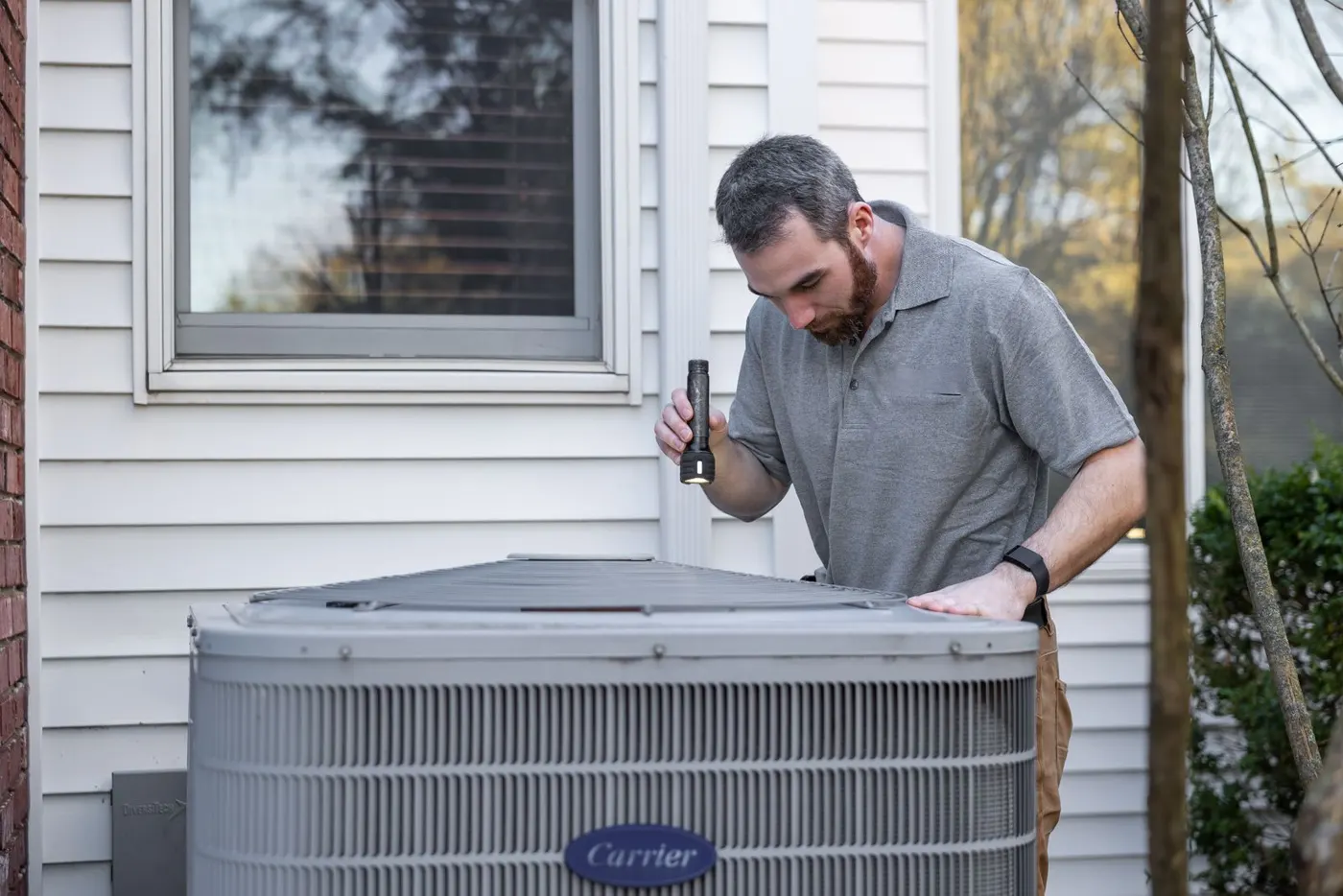
On a hot afternoon in Irvine, Tustin, Lake Forest or Mission Viejo, an air conditioner that runs and runs without cooling the house is one of the most stressful calls we take, and one of the most common. The good news is that a large share of these cases come down to airflow and maintenance, which you can check in fifteen minutes. This guide covers the ten causes we find most often, in roughly the order a technician rules them out, and explains how the symptoms point to each one. It also draws a clear line between what is safe to check yourself and what belongs to an EPA-certified technician.
First, read the symptoms: three things to observe
Before you change anything, note: whether the outdoor unit is running and its fan is spinning; whether the air at the vents is weak or strong; and what the two copper lines at the outdoor unit feel like (the larger, insulated one should be cold and sweating; the smaller one warm). Those three observations narrow the list fast.
| What you observe | Most likely causes |
|---|---|
| Indoor fan runs, outdoor unit completely silent | Thermostat (1), tripped breaker or disconnect, contactor, float switch (8) |
| Outdoor unit hums or clicks, fan not spinning | Run capacitor (7), condenser fan motor (6) |
| Outdoor unit runs, air at vents is weak | Clogged filter (2), frozen coil (4), blocked vents or duct problem (3) |
| Outdoor unit runs, air is strong but barely cool | Dirty condenser coil (5), refrigerant leak (9), thermostat set to FAN ON (1) |
| Ice on the indoor coil or the copper lines | Low airflow (2, 3) or refrigerant leak (9) |
| Both lines warm, compressor running and very hot | Dirty condenser (5), failed condenser fan (6), compressor (10) |
| System cools for a few minutes then stops, repeatedly | Overheating compressor from causes 5 to 7, frozen coil (4), oversized system or thermostat placement |
1. The thermostat: settings, batteries and placement
Start where the call starts. The thermostat should be on COOL with the fan on AUTO. With the fan set to ON, the blower runs continuously and pushes room-temperature air through the vents between cooling cycles, which feels exactly like a broken AC. Drop the setpoint several degrees below the room temperature and listen for the outdoor unit to start within a minute or two. A blank or flickering display usually means dead batteries; some thermostats keep the screen alive on batteries while losing the ability to call for cooling. A thermostat sitting in direct sun or above a lamp will also satisfy itself early and shut the system down while the rest of the house is warm.
Safe to check yourself: yes. Also confirm any schedule or "hold" is not fighting you, and on smart thermostats that the app and the wall unit agree.
2. A clogged air filter, the most common cause of all
The filter is the throttle on the whole system. When it loads up with dust, the blower cannot move enough air across the evaporator coil. Cooling drops, the coil gets colder than designed, and if it goes on long enough the coil freezes into a block of ice that stops nearly all airflow. Inland South Orange County, with its dust and pollen, loads a 1-inch filter faster than most people expect.
What to check: pull the filter and hold it up to a light. If you cannot see light through it, replace it. Match the arrow to the airflow direction. If you found ice anywhere, set the thermostat to FAN ONLY and let the system thaw completely, usually a few hours, before running cooling again.
3. Restricted airflow: vents, returns, blower and ducts
Filters are not the only airflow restriction. Closed or furniture-blocked supply registers, a return grille covered by a couch or a rug, a blower wheel caked with dust, a weak blower motor, or a collapsed or disconnected flex duct in the attic all do the same thing: too little air across the coil, weak air at the vents, and a coil prone to freezing. Attic ducts in older Tustin and Costa Mesa homes are a frequent find; a duct that has pulled off a boot dumps cold air into the attic while one room never cools.
What to check: open every supply register and clear the returns. Compare airflow room to room; one dead room with the rest fine is a duct problem, not an AC problem. Blower and duct diagnosis is technician work.
4. A frozen evaporator coil
The evaporator coil sits above or inside the indoor unit. When it freezes, the ice acts like a closed door. You will notice weak airflow, sometimes water on the floor as it thaws, and frost on the larger copper line where it enters the indoor unit. A coil freezes for two reasons: not enough warm air crossing it (causes 2 and 3) or not enough refrigerant in it (cause 9). The ice is a symptom, not the disease.
What to check: look for frost on the copper lines and, if the access panel is easy to open, on the coil. Thaw with FAN ONLY, replace the filter, open the vents, and run cooling again. If it freezes a second time with a clean filter and good airflow, the problem is on the refrigerant side and needs a technician. We cover the details in our AC freezing up guide.
5. A dirty outdoor condenser coil
The outdoor unit is where your home's heat is released. Its coil is a thin wall of aluminum fins that must be clean to shed heat. Cottonwood fluff, grass clippings, dryer lint, dust from a nearby construction site and dog hair pack those fins, head pressure rises, the compressor runs hot, and cooling collapses on exactly the hottest days when you need it most. Units tucked into a side yard, behind shrubs or under a deck fare worst.
What to check: turn the system off at the thermostat and at the outdoor disconnect. Look at the fins with a flashlight; a gray felt means it is time. Rinse gently with a garden hose from the inside out if you can reach, otherwise from the outside at a low angle. Never use a pressure washer, which folds the fins flat. Clear two feet of space on all sides and trim vegetation. Bent fins and a coil that is greasy or heavily impacted need a technician with the right cleaner and a fin comb.
6. The condenser fan motor
The fan on top of the outdoor unit pulls air through the coil and over the compressor. If it stops while the compressor keeps running, the coil cannot dump heat, the compressor overheats within minutes, and its internal overload shuts it down until it cools, so the system cycles between weak cooling and none at all. Fan motors fail from worn bearings, from a failed capacitor (cause 7), or from running for years with a dirty coil.
What to check: from a safe distance, watch the fan while the system calls for cooling. It should spin steadily. A fan that is stopped, that starts slowly, that wobbles or screeches, or that spins only when the compressor is off is a service call. Turn the system off at the thermostat until it is repaired so the compressor is not cooked in the meantime. Do not reach into the unit.
7. A failed run capacitor
This is the most common summer AC failure in Orange County. The capacitor is a small can that gives the compressor and the condenser fan the phase shift they need to start and run. Heat and age dry it out. When it fails you hear the outdoor unit hum or click without the fan spinning, or the fan runs while the compressor does not, and the top of the capacitor is often visibly bulged. Some capacitors fail gradually, which shows up as weak cooling on hot afternoons before a complete stop.
What to check: only the symptoms above. A capacitor stores a dangerous charge even with the power off, and the fix involves the high-voltage side of the unit. It is a fast, inexpensive repair for a technician; it is not a homeowner job.
8. Electrical problems: breaker, disconnect, contactor and safety switches
If the indoor blower runs but the outdoor unit is completely silent, look at the electrical path. The AC breaker in the main panel may have tripped; the outdoor disconnect (the gray box on the wall next to the unit) may have been pulled by a gardener or a painter; the contactor, the relay that powers the outdoor unit, may have pitted contacts or a failed coil; the low-voltage fuse on the furnace or air-handler board may have blown; or a condensate float switch may have shut cooling down because the drain line is clogged. That last one is common in late summer and shows up alongside water near the indoor unit; see AC leaking water.
What to check: reset a tripped breaker once. If it trips again, stop: a repeatedly tripping AC circuit is a short, a seized motor or a failing compressor, and resetting it again risks a fire or a much bigger repair. Confirm the disconnect is in. Everything else, including the contactor and the float switch, is a technician's diagnosis. If the system is completely dead, our AC not turning on guide goes deeper.
9. A refrigerant leak, and why "topping off" is the wrong answer
Refrigerant moves heat; it does not get used up. If the charge is low, it leaked, most often at a corroded evaporator coil, a rubbed-through line, a service valve or a brazed joint. The symptoms are cooling that has faded over weeks rather than failed overnight, ice on the copper lines, a hissing or bubbling sound near the indoor coil, and a compressor that runs long and hot. Adding refrigerant without repairing the leak gives you a few weeks of cooling, puts the leak back into the atmosphere, and lets the compressor run under conditions that shorten its life. On older systems that still use R-22, the refrigerant itself has been phased out and is expensive, which changes the repair-or-replace math.
What to check: nothing beyond noting the symptoms. Leak detection, repair, evacuation and weighing in the correct charge is EPA-certified work. When we find low charge we find the leak first and give you the honest picture before anything is added.
10. The compressor
The compressor is the heart of the system and the last thing we want to condemn. A compressor that will not start is usually downstream of a failed capacitor or contactor, which is why those are tested first. A compressor that starts, runs and gets very hot while both refrigerant lines stay warm, or that trips the breaker on start, or that has lost its internal valves so it pumps without building pressure, is a genuine compressor failure. So is a locked rotor that hums and trips the overload every few minutes. Years of running with a dirty coil, a weak fan or a low charge are what get a compressor to this point, which is why the causes above matter.
What to check: only the pattern. On a newer system a compressor replacement is often worthwhile, sometimes under a manufacturer's parts warranty; on a system past 12 to 15 years, especially R-22, replacement of the whole system usually makes more sense. We give you both numbers after the diagnosis, not before.
A note on ducts and system sizing
Two problems mimic a failing AC without any failed part. Leaky or crushed ducts in the attic can lose a large share of the cooled air before it reaches the rooms, and an oversized system cools the thermostat's location quickly, shuts off, and leaves the far rooms warm and humid. If your system is mechanically healthy but the house never gets comfortable, the airflow and duct check is the next step, and it is part of a proper AC maintenance visit.
What you can safely check yourself, in order
- Thermostat on COOL and AUTO, setpoint well below room temperature, fresh batteries, no schedule or hold fighting you.
- Air filter: replace if you cannot see light through it.
- All supply registers open, returns uncovered; note any single room with no airflow.
- Ice on the copper lines or the coil: thaw on FAN ONLY, then run again with a clean filter.
- Outdoor unit: power off at the disconnect, gentle rinse of the fins, two feet of clearance.
- Watch and listen at the outdoor unit while cooling is called for: fan spinning, no hum-and-click, no repeated breaker trips.
Leave to a technician: capacitors and contactors, fan and blower motors, anything inside the electrical compartment, refrigerant diagnosis and charging, the compressor, duct repair. The outdoor unit carries 240 volts and the capacitor stays charged after the power is off; the checks above are the safe boundary.
When to stop and call
- The breaker trips a second time.
- The outdoor unit hums or clicks and the fan does not spin.
- Ice returns after the filter is replaced and the vents are open.
- A burning smell, or a compressor that is too hot to touch with the lines warm.
- Cooling that has faded over weeks; that pattern is a leak, not a maintenance item.
- Water pooling around the indoor unit along with no cooling.
Preventing the next no-cool day
- Check the filter monthly during cooling season; replace 1-inch filters every 1 to 3 months and media filters every 6 to 12.
- Rinse the outdoor coil each spring and keep vegetation two feet back.
- Have the capacitor, contactor, refrigerant charge and drain line checked in a spring tune-up, before the first heat wave, not during it.
- Keep the condensate drain clear; a cup of vinegar in the drain line access every couple of months helps in our climate.
- Do not run the system with ice on it or with a fan that is not spinning; a few hours of restraint can save the compressor.
What we do when we arrive
We check airflow and both coils, then test the electrical heart of the system: capacitor, contactor, fan motors and the compressor's amp draw. We measure the refrigerant charge with gauges and temperatures to find a leak rather than simply topping off, and we look at the drain, the thermostat and the ducts if the symptoms point there. You get the actual cause and a quote before any work begins. We handle minor AC service and repairs for homeowners across Irvine, Lake Forest, Tustin, Laguna Hills, Laguna Niguel, Aliso Viejo, Rancho Santa Margarita, San Juan Capistrano, Dana Point and San Clemente, with larger HVAC projects handled through our licensed HVAC partner. See AC repair in Orange County, or the local pages for Irvine, Lake Forest, Mission Viejo, Tustin and Costa Mesa.
Frequently Asked Questions
Why is my AC running but not cooling the house?
Air at the vents only proves the blower works. The usual reasons heat is not being removed are, in order of how often we find them: a clogged air filter, a frozen evaporator coil (often caused by that filter), a dirt-packed outdoor condenser coil, a failed run capacitor so the outdoor fan or compressor never starts, a thermostat set to FAN ON or with dead batteries, a refrigerant leak, and finally a failing compressor. Check the thermostat, filter and outdoor unit yourself; the rest is a technician's diagnosis.
Should I just add refrigerant if my AC is low?
No. Refrigerant is not consumed; if the charge is low, it leaked out, and topping off without finding the leak buys a few weeks at best and can damage the compressor. A proper repair means locating the leak, fixing it, evacuating the system and weighing in the correct charge, which requires an EPA-certified technician.
My outdoor unit hums but the fan does not spin. What is that?
Almost always a failed run capacitor, the most common summer AC failure in Orange County. The motor gets voltage but no starting phase, so it hums and heats up. Turn the system off at the thermostat so the compressor is not left straining, and have the capacitor tested and replaced. Do not push the fan with a stick to start it.
Why is there ice on my AC?
Ice on the indoor coil or the copper lines means the coil got colder than it should, either because too little air is moving across it (dirty filter, closed vents, weak blower) or because the refrigerant charge is low from a leak. Switch to FAN ONLY, let it thaw completely, replace the filter, and if it freezes again the cause is on the refrigerant side.
How often should I change the AC filter in Southern California?
Check monthly during cooling season and replace when it is visibly gray, typically every 1 to 3 months for 1-inch filters and every 6 to 12 months for 4- to 5-inch media filters. Homes near construction, with pets, or in dusty inland areas like Rancho Santa Margarita and Trabuco Canyon need the shorter end of that range.
When is an AC repair not worth it?
A capacitor, contactor, fan motor, thermostat or a small accessible leak is almost always worth repairing. A compressor failure or a leaking evaporator coil on a system 12 to 15 years old, especially one using the phased-out R-22 refrigerant, is where replacement often makes more sense. A technician can give you the diagnosis and both numbers before you decide.
Related Pages
- AC & Air Conditioning Repair in Orange County
- AC Maintenance & Seasonal Tune-Up
- HVAC Repair & Service
- AC Blowing Warm Air: 10-Minute Triage
- Ice on Your Air Conditioner
- AC Leaking Water Inside
- AC Not Turning On
- AC Short Cycling: On and Off Every Few Minutes
- What Drives the Cost of an AC Repair
- 5 Signs Your HVAC Needs Service
- Irvine · Tustin · Lake Forest · Laguna Niguel · Aliso Viejo · Rancho Santa Margarita · San Juan Capistrano · Dana Point · San Clemente · Huntington Beach