
Samsung Refrigerator Problems We Fix Most in Irvine Homes
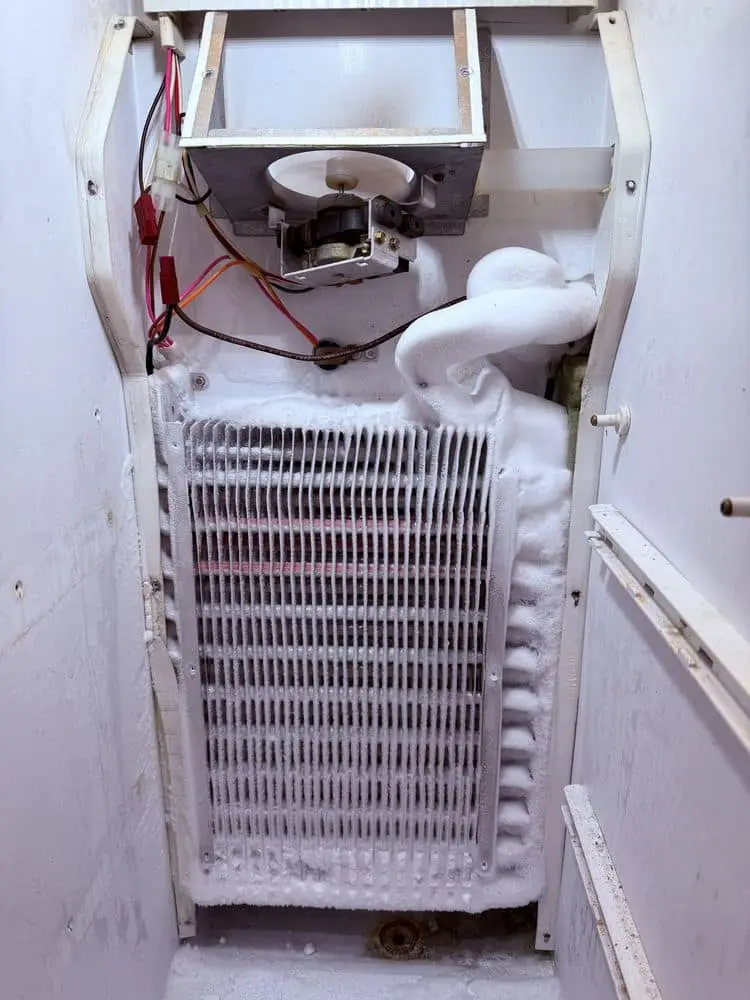
If you own a Samsung refrigerator in Irvine and something is wrong with it, odds are good the problem involves ice in the wrong place. That is the honest pattern from our service calls in Irvine, Tustin and Lake Forest: Samsung builds a lot of features into its French-door and side-by-side models, and the features that move water and cold air around are the ones that give owners trouble. The good news is that most of these problems are repairable, and several of them give you clear warning signs before the fridge stops cooling.
This is a repair technician's view, not a buying guide. We work on Samsung refrigerators every week, our technicians are Samsung-certified, and we would rather tell you which problems are worth fixing and which ones are worth planning around than pretend every brand fails the same way. They don't.
Why do Samsung refrigerators have so many ice problems?
Mostly because of where Samsung puts the ice maker. On many French-door models the ice maker sits in an insulated compartment on the left fresh-food door, not in the freezer. The fridge side runs around 37°F, so that compartment needs its own cold air supply, a fan, a seal around the door compartment, and in some designs a small heater to keep water from freezing where it shouldn't. Every one of those parts has to work together. When the seal leaks a little warm, humid air in, frost builds up on the ice maker's evaporator or around the ice bucket. When frost builds, the fan starts to scrape, the bucket freezes to the chute, and the ice maker stops making ice.
It is a clever design for the kitchen. You get a full-width freezer drawer and ice in the door. It is just a design with more ways for moisture to get where it shouldn't. In a typical coastal South Orange County kitchen, where the doors open dozens of times a day, the margin is thinner than the engineers probably hoped.
What are the Samsung refrigerator problems we fix most?
This table is the quick version. The sections below explain each one, what you can check, and what usually fixes it.
| What you notice | What is usually behind it |
|---|---|
| Ice maker stops, bucket frozen solid, ice stuck in the chute | Frost in the door ice compartment: seal, ice room fan, or a heater in that area |
| Loud fan noise, a buzz or scraping that stops when you open the door | Ice building behind the evaporator cover and touching a fan blade |
| Freezer cold, fresh-food side warm | Frosted fridge evaporator, failed defrost heater or sensor, or the fridge fan |
| Water on the floor or under the crisper drawers | Frozen defrost drain, water line or filter housing leak, door ice compartment melting |
| Display shows "OF OF" or lights work but nothing cools | Demo or showroom mode, or cooling switched off in settings |
| Error code on the display | A sensor, fan or ice maker fault the control board has already found |
| Both sides warm, compressor quiet or clicking | Inverter board, compressor, or a sealed-system problem |
Why is my Samsung ice maker freezing up?
This is the call we get most on Samsung French-door refrigerators. The ice stops, you open the ice compartment on the door, and you find a block of ice where the bucket used to be, or frost packed around the ice maker and its fan. Some people chip it out with a butter knife every few weeks. We understand why. It works for a while.
What actually causes it is moisture getting into a compartment that should be dry and cold. The usual suspects are the seal around the ice compartment door, the ice room fan, a drain or heater in that area, and a water fill that overfills the tray. Which one it is depends on the model and on where the ice is forming. Ice on the back wall of the compartment tells a different story than ice packed around the chute.
What you can check: make sure the ice compartment cover on the door closes flat and the latch clicks. Look at the gasket around it for a tear or a corner that is folded over. Make sure nothing in the door bins pushes against the compartment. If the bucket is frozen in, unplug the fridge or turn the ice maker off, let it thaw with towels underneath, and dry everything before you start it again. That clears the symptom.
What usually fixes it: a proper repair to whichever part let the moisture in. Samsung has released updated parts and procedures for the ice compartment on several model families over the years, and part of a Samsung-certified repair is knowing which update applies to your model number. If your ice maker freezes up again within a few weeks of a thaw, don't keep chipping. The repeated freeze and thaw is hard on the ice maker motor and can push water where it ends up on the floor.
What is the loud fan noise that stops when I open the door?
On most Samsung refrigerators the fan noise that stops when you open a door is a fan that is touching ice. The fan shuts off when the door switch tells it a door is open, so the noise stops. Close the door and it comes back: a buzz, a rattle, a clicking or a scraping that can get loud enough to hear from the next room.
Behind the back panel of the fresh-food section (and the freezer) sits an evaporator, the cold coil, with a fan that pushes air across it. When the defrost system doesn't fully melt the frost on that coil, ice builds up a little more every day until it reaches the fan blades. Many Samsung French-door models have separate evaporators for the fridge and freezer, which is good for humidity and food, and also means there are two places where this can happen.
What you can check: listen to which compartment the noise comes from. Look for frost on the back wall or around the vents. If you see it, a full manual defrost with the fridge unplugged for a day will usually stop the noise for a while. Treat that as a test. If it is quiet for two or three weeks and then the noise returns, the defrost heater, the defrost sensor, or a drain that refreezes is the real problem, and that is a technician's repair.
Why is my Samsung freezer cold but the fridge warm?
On a model with separate evaporators, the fresh-food section can go warm while the freezer stays perfectly cold, because the fridge side makes its own cold. When that side's evaporator is frosted over, or its fan has stopped, or a defrost sensor is reading wrong, the freezer keeps working and the fridge slowly climbs toward 50°F. People tell us it feels like the fridge "gave up" over a weekend.
The order we check in: frost pattern on the fridge evaporator, the fridge fan, the defrost heater and its sensor, then the control board's readings. You can do the first step yourself by looking at the back wall of the fresh-food section for frost or ice around the vents. If the freezer is the one that's warm, the causes overlap but the order changes, and our freezer not cooling guide walks through it. For a general no-cool on any brand, start with why a refrigerator stops cooling, because dirty condenser coils and blocked vents cause no-cool on Samsungs too.
Why is my Samsung refrigerator leaking water?
Water under the crisper drawers or a puddle in front of the fridge on a Samsung usually comes from one of four places. The defrost drain at the back of the fresh-food section can freeze and send melt water into the cabinet. The water line or the filter housing can drip, especially after a filter change. The ice compartment on the door can thaw and drip if it froze up earlier. And on some models a door dispenser drips from a valve that doesn't fully close.
What you can check: where the water shows up tells you a lot. Water inside under the crispers points at the drain. Water behind the fridge near the wall points at the supply line or the inlet valve. Water right under the dispenser points at the dispenser or the filter. If you recently changed the water filter, take it out and reseat it so it locks fully, and use a filter that is made for your model. A filter that doesn't seat right is a common, cheap reason for a slow leak. Our refrigerator leaking water guide has the full checklist for every brand.
What do Samsung refrigerator error codes mean?
Samsung refrigerators run self-diagnostics and show codes on the display when they find a fault. On many models, codes in the 20s point at fans (for example 21E for the freezer fan and 22E for the fridge fan), 39E points at the ice maker, and codes like 5E point at a defrost sensor. The exact meaning and the letter that follows the number vary by model and by year. The tech sheet for your model, often tucked behind the bottom grille or on the back of the unit, has the real list.
A code tells us where the control board saw a problem, not always why. A 22E on the fridge fan can be a bad fan motor, or a perfectly good fan that is jammed with ice because the defrost system failed. Changing the fan alone in that case gives you a quiet fridge for a few weeks and then the same code. That is the part where experience with the brand matters more than the code list. When you call, tell us the full code exactly as shown and the model number. It shortens the visit.
One code that isn't a fault: if the display reads "OF OF", the refrigerator is in demo or showroom mode. The lights work, the display works, nothing cools. The button combination to exit it depends on the model, so check the manual or the Samsung support page for your model number before you call anyone.
Can a Samsung refrigerator compressor fail?
It can, as on any brand. Samsung uses digital inverter compressors driven by an inverter board, and when both compartments go warm with a quiet compressor, we test the board and the compressor before anyone talks about replacing anything. An inverter board failure looks a lot like a compressor failure from the outside. A real compressor failure or a refrigerant leak is a sealed-system repair, and that is where age and the rest of the fridge's condition decide whether it is worth doing. We explain the difference between a bad start circuit and a bad compressor in refrigerator compressor problems, and we handle the bigger jobs through our sealed-system repair service. Refrigerant work requires EPA certification and recovery equipment, so it is never a do-it-yourself job.
Before you assume the worst, check the warranty. Manufacturers sometimes cover sealed-system parts longer than the rest of the fridge. Your paperwork or the Samsung support site will say what applies to your model.
What can I safely check on a Samsung fridge before calling?
- Read the actual temperature with a fridge thermometer. The display often shows the setpoint, not the real number.
- Check for "OF OF" or a cooling-off setting on the display.
- Pull food away from the vents in both compartments, especially the back wall of the fridge.
- Look for frost on the back walls and around the vents. Note where it is.
- Check that the door ice compartment cover closes flat and its gasket isn't torn or folded.
- Unplug the fridge, remove the bottom grille, and vacuum the condenser coil and fan if your model has a front-access coil.
- Reseat the water filter so it locks fully.
- Write down any error code and the model number from the label inside the fresh-food section.
Leave to a technician: anything behind the evaporator covers, the defrost circuit, fans, the ice maker assembly itself, the inverter board and compressor, and everything in the sealed system. Samsung refrigerators also have water lines running through the doors and hinges, and pulling those apart without the right procedure is how a small leak becomes a cracked line.
Is a Samsung refrigerator worth repairing?
In our opinion, usually yes, as long as the fridge is in the first half of its life and this is the first or second real repair. Most Samsung problems we fix are fans, defrost parts, sensors, seals, ice maker parts and drains. Those are moderate repairs compared with replacing a French-door refrigerator, especially a counter-depth or Family Hub model that was fitted into your cabinets.
Where we tell people to think twice: a sealed-system leak on an older model, an ice compartment that has been repaired more than once and keeps coming back, or a fridge that needs several unrelated parts at the same visit. We'd rather give you that honest answer at the diagnosis than sell you a repair you'll regret. Our repair or replace guide lays out how we think about that decision for any brand.
How do I keep my Samsung fridge out of trouble?
- Close the ice compartment cover on the door firmly after you clean or empty the bucket. Most ice compartment frost starts with a cover that isn't fully seated.
- Don't block the vents on the back wall with tall containers. Samsung fridge sections are compact and airflow matters.
- Vacuum the condenser coil once a year, twice with pets.
- Change the water filter on schedule, use one made for your model, and make sure it locks.
- Don't ignore a new fan noise. Ice touching a fan for weeks wears the motor and makes the repair bigger.
- After a power outage, check that the display didn't land in a demo or cooling-off mode.
The full schedule for any brand is in our refrigerator maintenance checklist.
What happens when we come out for a Samsung refrigerator
The technician reads the real temperatures, checks the display for codes and runs the model's diagnostic mode, looks at the frost pattern behind the panels, tests the fans, the defrost heater and sensors, and checks the ice compartment, the drains and the water lines. Then you get an explanation of what failed and why, and a quote before any work starts. Repairs carry a 90-day parts and labor warranty. We cover Samsung refrigerator repair across Irvine first, then Tustin, Lake Forest, Mission Viejo, Laguna Hills, Aliso Viejo, Laguna Niguel and down to San Clemente. See our Samsung appliance repair page, or book through refrigerator repair in Irvine.
Frequently Asked Questions
What is the most common problem with Samsung refrigerators?
In our service calls it is ice where it shouldn't be. On French-door models with the ice maker in the fresh-food door, the ice compartment frosts up and the ice maker stops. On many models ice also builds on the evaporator behind the back panel and causes fan noise or a warm fresh-food section. Both usually trace back to a seal, a fan, a defrost part or a drain.
Why does my Samsung ice maker keep freezing up after I defrost it?
Because defrosting removes the ice but not the reason it formed. Moisture is getting into the ice compartment through a seal, or the fan, heater or drain in that area isn't doing its job. If the ice comes back within a few weeks, the part that lets moisture in needs to be repaired, and on many models there are updated parts for exactly this.
Why is my Samsung fridge making a loud noise that stops when I open the door?
The fan stops when a door opens, so a noise that stops with the door open is almost always a fan. On a Samsung that usually means ice has built up behind the evaporator cover and the blades are hitting it. A manual defrost quiets it for a while, and the lasting fix is in the defrost system.
What does "OF OF" mean on a Samsung refrigerator?
It means the refrigerator is in demo or showroom mode. The lights and display work but the cooling is off. The button combination to exit varies by model, so check the manual or Samsung's support page for your model number.
Are your technicians certified on Samsung refrigerators?
Yes. We have Samsung-certified technicians, and we work on Samsung French-door, side-by-side, bottom-freezer and Family Hub refrigerators across Irvine, Tustin, Lake Forest and South Orange County.
Is it worth fixing a Samsung refrigerator?
Usually yes when the fridge is in the first half of its life and the problem is a fan, defrost part, sensor, seal, drain or ice maker part. A sealed-system failure on an older unit, or an ice problem that keeps returning after several repairs, is when replacement deserves a real look.
Samsung fridge acting up?
Call us at (949) 267-7771 with the model number, any error code on the display, and where you see ice or water. We are 5.0 on Yelp, and the technician quotes the repair on site before any work begins.
Related Pages
- Samsung Appliance Repair
- Refrigerator Repair in Irvine
- Refrigerator Repair in Tustin
- Refrigerator Repair in Lake Forest
- Refrigerator Repair in Orange County
- Ice Maker Not Working
- Refrigerator Making Strange Noises? What Each Sound Means
- Why Is My Refrigerator Not Cooling?
- Refrigerator Leaking Water
- Frost Building Up in Your Freezer?
- How Long Should a Refrigerator Last?
- Fridge Food After a Power Outage
- Irvine · Tustin · Lake Forest · Mission Viejo · Laguna Niguel · San Clemente