
Commercial Refrigeration Repair in Irvine, CA
- ⭐ 5.0★ Yelp · 5.0★ Google
- 🛡️ 90-Day Parts & Labor Warranty
- 📅 Family-Owned Since 2005
- 📍 Based in Irvine
Quick answer
We repair commercial refrigeration for Irvine restaurants, cafés, bakeries, markets, bars and office kitchens, walk-in coolers and freezers, reach-ins, prep tables, undercounter and worktop units, glass-door merchandisers, and ice machines. We are based in Irvine, so the Spectrum, Diamond Jamboree, Woodbury, University Town Center and Irvine Business Complex kitchens are short runs for us, and a warm box moves to the front of the day's schedule because product is on the line. We are independent technicians, not a factory service center for any commercial brand. The technician diagnoses on site and quotes the repair before any work starts, and every repair carries a 90-day parts and labor warranty. If a box is warm right now, keep the doors shut, write down the temperature and the time, and call (310) 600-8152.
A down walk-in is not one bill, it is three: the repair, the product you throw away, and the service you cannot run until it is cold again. Alpha & Omega is a family-owned repair company that has worked in Orange County since 2005 and is based in Irvine, which is the whole reason commercial calls here move fast, we are not driving down from the far side of the county while your cooler climbs a degree an hour. Call or text (310) 600-8152 with the equipment type, the brand and model off the data plate, what it is doing, and what hours a technician can get in.
The Irvine Kitchens We Work In
Irvine's food service is concentrated in a handful of very different settings, and the setting changes the job as much as the equipment does.
- Dense restaurant plazas: Diamond Jamboree, University Town Center, the Woodbury and Orchard Hills centers. Small kitchens, equipment packed wall to wall, and condensing units crammed into a back corridor or a shared rear alley. Clearance around the condenser is usually the first thing we measure, because a unit breathing its own hot discharge air will never hold temperature in August no matter what parts go into it.
- Irvine Spectrum Center and the large shopping centers. Mall tenants often have loading-dock hours, gated service corridors and property-manager rules for roof access. Tell us that when you book, it decides what time we can realistically be standing in front of the equipment.
- The Irvine Business Complex and the office parks off Jamboree, Michelson, Von Karman and Barranca. Corporate café kitchens, break rooms and catering pantries: undercounter units, glass-door merchandisers, ice machines and small reach-ins that nobody cleans because there is no dedicated kitchen staff.
- Markets, bakeries and juice and boba shops. Display merchandisers and deli cases that run all day with a door opening every minute, plus back-of-house reach-ins and a chest freezer or two.
- Great Park, Portola Springs and the newer village centers. Newer build-outs with newer equipment, where the failures skew electronic, controllers, sensors and fan motors, rather than worn-out compressors.
More about the city and our coverage is on the Irvine service area page.
Equipment We Service
- Walk-in coolers and walk-in freezers, self-contained and remote systems, rooftop or ground-mounted condensing units
- Reach-in refrigerators and freezers, one, two and three-door, solid and glass door
- Prep tables, sandwich and salad units, pizza prep tables, mega-top units
- Undercounter and worktop refrigeration, including back-bar and bottle coolers
- Glass-door merchandisers, deli cases and display refrigeration
- Ice machines, cubers, undercounter machines, modular heads on bins and dispensers
- Wine and beverage refrigeration for restaurants, bars and tasting rooms
- Chest and upright freezers in back-of-house and storage areas
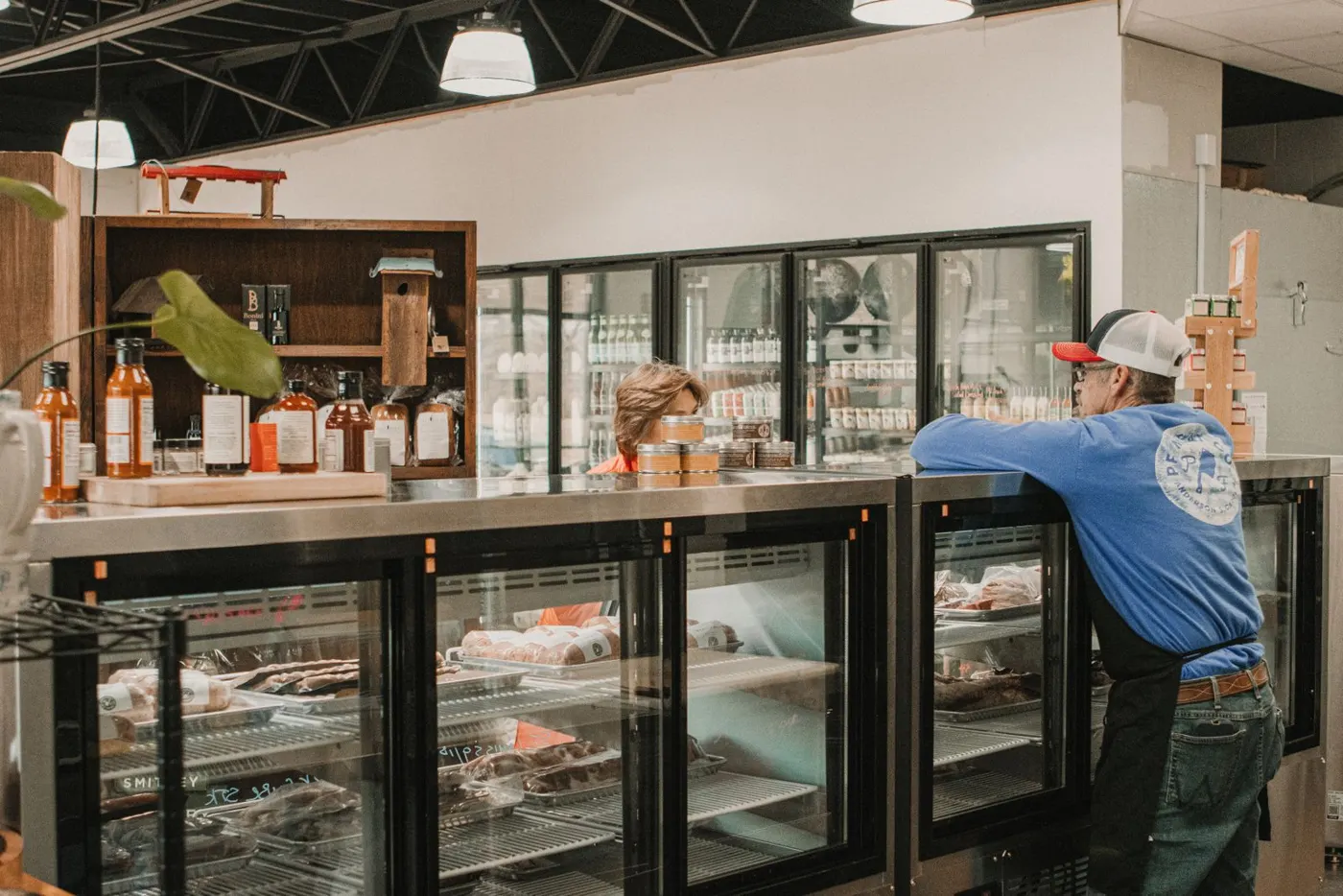
Walk-In Coolers and Freezers
A walk-in is a system with three separate halves that can each fail on their own: the box and its door, the evaporator inside, and the condensing unit outside. Diagnosing it means deciding which one is actually the problem before anything is replaced.
- The condensing unit. On most Irvine build-outs it sits on the roof or in a rear service area. Dust, kitchen exhaust grease and afternoon sun all push head pressure up, and a coil that looks lightly dirty from ten feet away can be badly blocked when you get a light on it. A cooler that holds overnight and drifts warm in the afternoon is the classic sign.
- The evaporator and defrost. Cooler evaporators usually defrost during the off cycle; freezer evaporators need an electric defrost that has to both start and terminate correctly. A failed defrost heater, a bad termination sensor or a stuck timer buries the coil in ice, and the box goes warm while the compressor runs non-stop.
- The drain line. A freezer drain runs through a heater or heat tape and out through a P-trap. When the heater fails, the line freezes, the defrost water backs up, and you get ice on the floor and water at the threshold.
- The door. Torn gaskets, a sagging hinge, a broken closer, a failed heated door frame on a freezer, or missing strip curtains all let humid kitchen air in. That shows up as frost on the coil and ceiling, sweating panels, and a compressor that never shuts off. Door problems are the cheapest thing on this list to fix and the most expensive thing to ignore.
- Controls and safeties. Pressure controls, liquid line solenoids and pump-down cycles, contactors and relays. A unit that trips on a safety is telling you something, repeatedly resetting it usually ends in a failed compressor.
See our county-wide commercial refrigerator and walk-in cooler page and the commercial freezer repair page for equipment-specific detail.
Reach-Ins, Prep Tables and Merchandisers
These are the units that do the most door cycles per shift and get the least attention.
- Grease-clogged condenser coils are the single most preventable failure in a commercial kitchen. A reach-in parked near the cook line pulls fryer vapor through its coil until it is felted shut, and then it runs constantly, holds 45°F instead of 38°F, and eventually loses the compressor.
- Evaporator and condenser fan motors that stop or slow down. If a box is cold in one spot and warm in another, suspect airflow before refrigerant.
- Door gaskets and self-closing hinges. A gasket flattened by a few hundred openings a day no longer seals, and a worn hinge cartridge stops pulling the door shut the last inch.
- Prep table rails. A prep table is designed to keep the pans in the rail cold, not to chill product that went in warm. Over-filled pans, product stacked above the cold air stream, missing lids overnight and a clogged rail drain are the usual reasons the rail reads above 41°F while the box below it is fine.
- Controllers and sensors. Digital controllers on newer units will show an error or a wildly wrong temperature when a probe fails, take a photo of the display before you call, it often saves a trip.
- Merchandisers and deli cases. Anti-sweat door heaters, fan motors, night curtains, and drains that back up under the case.
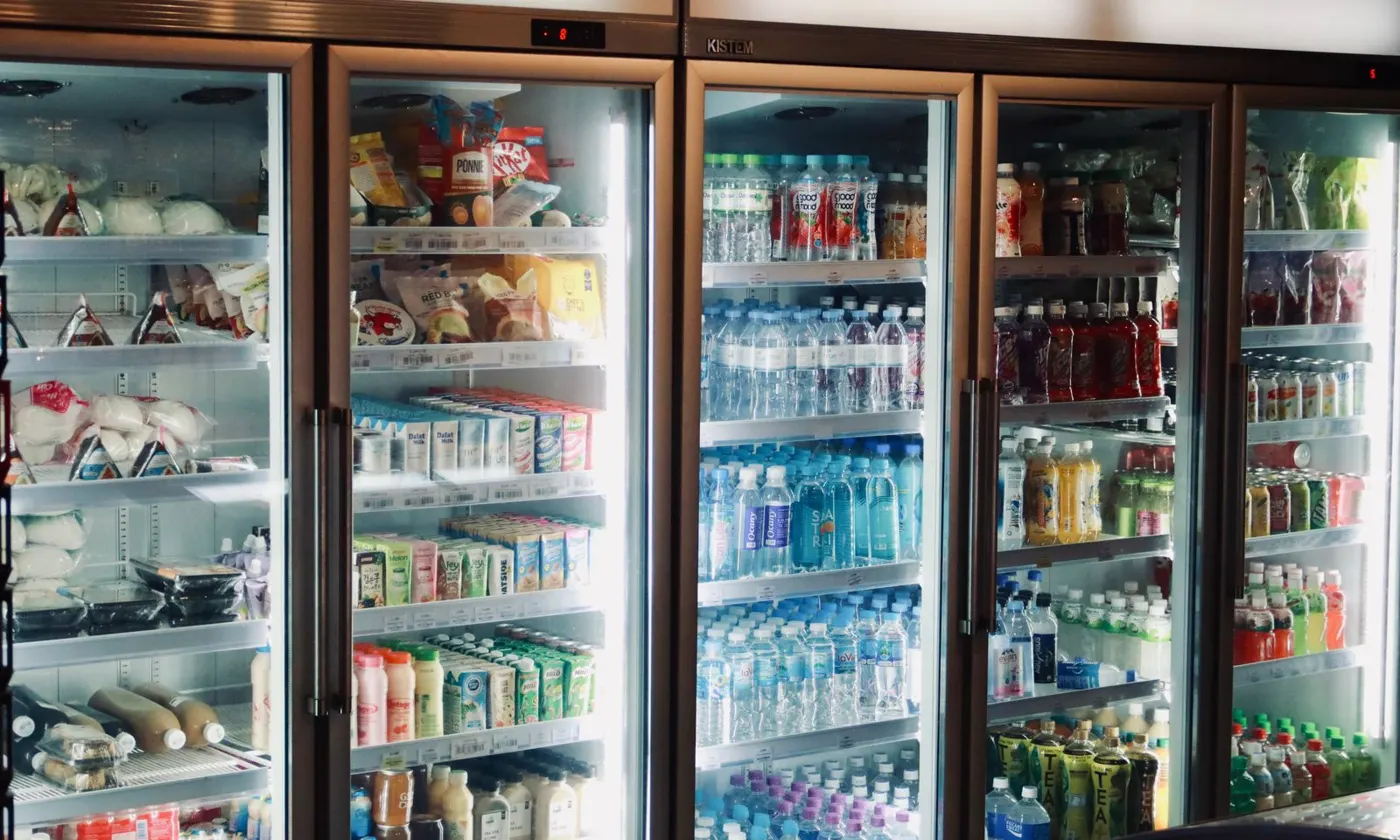
Ice Machines
Ice is the piece of equipment a bar, boba shop or café notices within an hour of losing. Most ice machine calls in Orange County come back to three things:
- Scale. Local tap water is hard enough that mineral scale builds on the evaporator, the water distribution tubes and the float or reservoir. Scale shows up first as cloudy, thin or irregular cubes and slow harvests, then as a machine that stops making ice at all. A deep clean and descale roughly every six months, and a water filter changed on schedule, prevents most of it.
- Heat and clearance. Air-cooled machines are rated at a moderate room and water temperature. Push one into a hot corner of a kitchen with no clearance behind it and production drops well below the number on the spec sheet, which looks exactly like a failure but is really an installation problem.
- Water-side parts. Inlet valves, purge or dump valves, pumps, float switches and bin level controls. A machine that runs but makes no ice, or that freezes into a single slab, is usually a water or harvest problem rather than a refrigeration problem.
Our guide to an ice machine that stopped making ice walks through what to check first, and the commercial ice machine repair page covers the service itself.
Symptoms and What They Usually Mean
- Runs non-stop, never reaches temperature, dirty condenser, failed condenser fan, poor clearance around the unit, a door that is not sealing, or a low charge from a leak.
- Cold at night, warm in the afternoon, condenser side. Head pressure climbing with ambient temperature is the usual story.
- Coil buried in ice, defrost failure (heater, sensor, timer or control), or humid air getting in through a door or gasket.
- Water on the floor, blocked or frozen drain line, failed drain heater on a freezer, or condensate overflowing an evaporation pan.
- Compressor clicks and will not start, start components, contactor, or an overload tripping. Stop cycling power to it; repeated start attempts kill compressors.
- Breaker trips when the unit starts, an electrical fault. Leave the breaker off and call; resetting it repeatedly is a fire risk, not a diagnosis.
- One end of the box warm, one end cold, airflow: a stopped evaporator fan, an iced coil, or product stacked against the air return.
- Product freezing in a cooler, a failed control or probe, or a damper stuck open. Often ignored until the produce bill shows it.
- Ice machine making thin or cloudy cubes, scale and water quality first, refrigeration second. See our sealed system repair page for the refrigeration side.
Holding Temperatures and Health Inspections
California's retail food rules generally require potentially hazardous food to be held at 41°F or below, and Orange County environmental health inspectors check the food temperature, the thermometer, and your temperature logs, not just whether the equipment is running. That has a few practical consequences for an Irvine operator:
- Log box temperatures at least twice a day, with a thermometer in the warmest part of the box, and keep the log where an inspector can see it.
- Measure product temperature, not just the display. A display reading air temperature at the coil can look fine while product in the rail sits several degrees warmer.
- Treat a unit that is drifting warm as an inspection issue, not an inconvenience. A cooler holding at 45°F is a violation waiting to happen even though it feels cold.
- If product has been above 41°F, follow your health department's guidance on how long it can be held and when it must be discarded, document the decision.
What Your Staff Can Safely Check Before Calling
- The door. Does it latch and seal on its own? Is a case, a pallet or a strip curtain holding it open? Run a hand around the gasket for a draft.
- The condenser coil. Look at it with a flashlight. If you cannot see through the fins, that is your answer. Vacuum or brush loose debris; do not pressure wash it.
- The set point. Somebody adjusts it, especially after a busy night. Check it against what the box should be running.
- Power. Breaker, disconnect switch, and whether anything else on that circuit went out with it.
- Airflow inside. Product stacked against the evaporator fan or the air return will warm one end of the box on its own.
- Recent deliveries. A warm delivery loaded straight into a box raises the temperature for hours. That is physics, not a breakdown.
- The controller display. Photograph any error code or reading before someone resets it.
What Not to Do
- Do not chip ice off an evaporator with a knife, screwdriver or ice pick. One hole in the tubing turns a defrost repair into a sealed-system repair and a full refrigerant recovery.
- Do not keep resetting a breaker or a safety control that trips. It is protecting the compressor, and eventually it will stop being able to.
- Do not pressure wash or hose down a condensing unit. Water driven into the fins, the fan motor or the electrical box creates a second failure on top of the first.
- Do not block a freezer door's pressure relief port or tape a door shut.
- Do not let anyone "top up" the refrigerant without finding the leak. Low charge means a leak, EPA Section 608 rules govern who may handle refrigerant and require leaks to be repaired, and a top-up alone is money spent to lose the same charge again.
- Do not load warm product into a box that is already struggling, hoping it will catch up.
If a Walk-In Goes Down: the First Thirty Minutes
- Close it and leave it closed. A full, closed walk-in holds temperature far longer than one being opened every few minutes while people look at it.
- Log the temperature and the time. That record decides later what you can keep and what you have to discard, and your inspector will want it.
- Move the most perishable product first, dairy, raw protein, prepped items, into whatever cold space you have: other reach-ins, a neighbor's walk-in, a rented refrigerated truck. Ice or dry ice in the box buys hours, not days.
- Call with details. Equipment type, brand and model from the data plate, what it is doing, whether the compressor is running, and when a technician can get in. That is what makes a first-visit repair possible.
Maintenance That Actually Prevents Calls
Almost every emergency we see on commercial refrigeration was visible weeks earlier. A realistic schedule for an Irvine kitchen:
- Monthly: check and clean condenser coils on units near the cook line, flush drain lines, and look at every gasket.
- Quarterly: full condenser cleaning on all units including rooftop condensing units, check fan motors and blades, verify defrost operation on freezers, check door closers and hinges.
- Twice a year: ice machine deep clean and descale, water filter change, and a temperature check on every box against a calibrated thermometer.
- Before summer: get the condenser side looked at in spring, not on the first 95°F afternoon. Marginal systems fail on the hottest days, which is also the day every refrigeration company in the county is booked.
Our commercial refrigeration maintenance guide has the full checklist.
Brands We Service
We are not factory authorized on any commercial brand, we are independent technicians who work on what is actually installed in Irvine kitchens: True, Traulsen, Beverage-Air, Turbo Air, Delfield, Continental, Silver King, Randell, Atosa, Everest, Migali, Avantco, Master-Bilt, Nor-Lake, Kolpak, Heatcraft, Federal Industries, Structural Concepts, Victory, Scotsman, Hoshizaki, Manitowoc, Ice-O-Matic, Follett, Perlick, U-Line, Marvel and most other commercial refrigeration equipment.
What to Expect When You Call
- Call or text (310) 600-8152. Give us the equipment, the brand and model, the symptom, and your access hours. Commercial calls are scheduled as priority work.
- A technician diagnoses on site and quotes the exact repair before anything is replaced. You approve it first.
- Many repairs finish on the first visit. Commercial parts, controls, compressors, specific evaporator assemblies, sometimes have to be ordered; when that happens we tell you the expected date and book the return visit then, and we will say what you can safely run in the meantime.
- Every repair carries a 90-day parts and labor warranty. If a piece of equipment is past the point where repair makes sense, the technician will tell you that instead of selling you the repair.
Hours are Monday to Saturday 8 AM to 8 PM and Sunday 8 AM to 5 PM. We are not a 24-hour emergency service, so on commercial equipment the earlier in the day you call, the better the odds of being cold again the same day.
Frequently Asked Questions
How fast can you get to a failed walk-in or cooler in Irvine?
We are based in Irvine, and commercial refrigeration calls go to the front of the schedule because product loss adds up by the hour. Same-day service in Irvine is often possible, especially if you call early in the day, but it is not guaranteed, if the day is full we will tell you so and give you the first real slot instead of a promise. Our hours are Monday to Saturday 8 AM to 8 PM and Sunday 8 AM to 5 PM.
Can you come before we open or after we close?
Often, yes, early morning before service and mid-afternoon between lunch and dinner are the easiest windows to work in a running kitchen, and they are the slots most Irvine restaurants ask for. Tell us your access situation when you call: shopping-center tenants at Irvine Spectrum, Diamond Jamboree or the Woodbury and Orchard Hills centers frequently have loading-dock hours, gated service corridors or roof-access rules that a property manager controls, and knowing that in advance keeps the technician from losing an hour at the door.
Are you factory authorized for commercial refrigeration brands?
No. We are independent commercial refrigeration technicians and we are not a factory-authorized service center for any commercial brand. Compressors, condensers, defrost systems, controls and gaskets work in similar ways across manufacturers, so we service nearly every brand found in an Irvine kitchen: True, Traulsen, Beverage-Air, Turbo Air, Delfield, Continental, Silver King, Randell, Atosa, Master-Bilt, Nor-Lake, Kolpak, Scotsman, Hoshizaki, Manitowoc and others.
Do you repair commercial ice machines in Irvine?
Yes, cubers, undercounter units and modular heads on bins or dispensers, including Scotsman, Hoshizaki, Manitowoc and Ice-O-Matic. Typical calls are no ice, slow or short harvest cycles, thin or cloudy cubes, a machine that freezes into one solid slab, water leaking under the bin, and units that shut down on a safety. In Orange County the most common underlying cause is scale from hard water, so a deep clean and descale schedule prevents most of these calls.
My walk-in cooler holds temperature at night but drifts warm every afternoon. Why?
That pattern almost always points at the condensing unit rather than the box. When the coil is blanketed with dust or kitchen grease, or the condensing unit sits on a hot roof or in an unventilated back corridor, head pressure climbs with the afternoon ambient temperature and capacity falls off, so the box keeps up overnight and loses ground in the heat of the day. A failing condenser fan motor, a partly blocked coil, or a low refrigerant charge from a leak produce the same daily curve. It is worth fixing before the first real heat wave, because the same system will not hold at all on a 95°F day.
There is ice on the walk-in freezer floor and water by the door. What causes that?
Usually the defrost or drain side, not the cooling side. A freezer evaporator drain line runs through a heater or heat tape so the melt water can get out; when that heater fails the line freezes and the defrost water backs up and runs into the box. A failed door heater, a torn gasket or a door left open also pumps humid kitchen air in, which turns into ice on the floor, the ceiling and the coil. Either way, chipping the ice is not the fix, the defrost cycle, the drain heater and the door seal need to be checked.
What does a commercial refrigeration repair cost?
The technician diagnoses the equipment on site and quotes the exact repair before any work starts, nothing is replaced until you approve it. Commercial jobs vary far too much to quote sight unseen: a gasket, a fan motor, a control and a sealed-system repair on a remote condensing unit are different pieces of work. Every repair carries a 90-day parts and labor warranty.
Beyond Irvine
We service commercial refrigeration in Tustin, Lake Forest, Mission Viejo, Laguna Hills and the rest of South Orange County, the county-wide commercial refrigeration overview lists every equipment page. For equipment-specific detail see commercial freezer repair, commercial refrigerator and walk-in repair and commercial ice machine repair. Household equipment in an Irvine home or a break room is covered on our Irvine refrigerator repair page.