
How Much Does AC Repair Cost in Orange County? (What Drives the Bill in 2026)
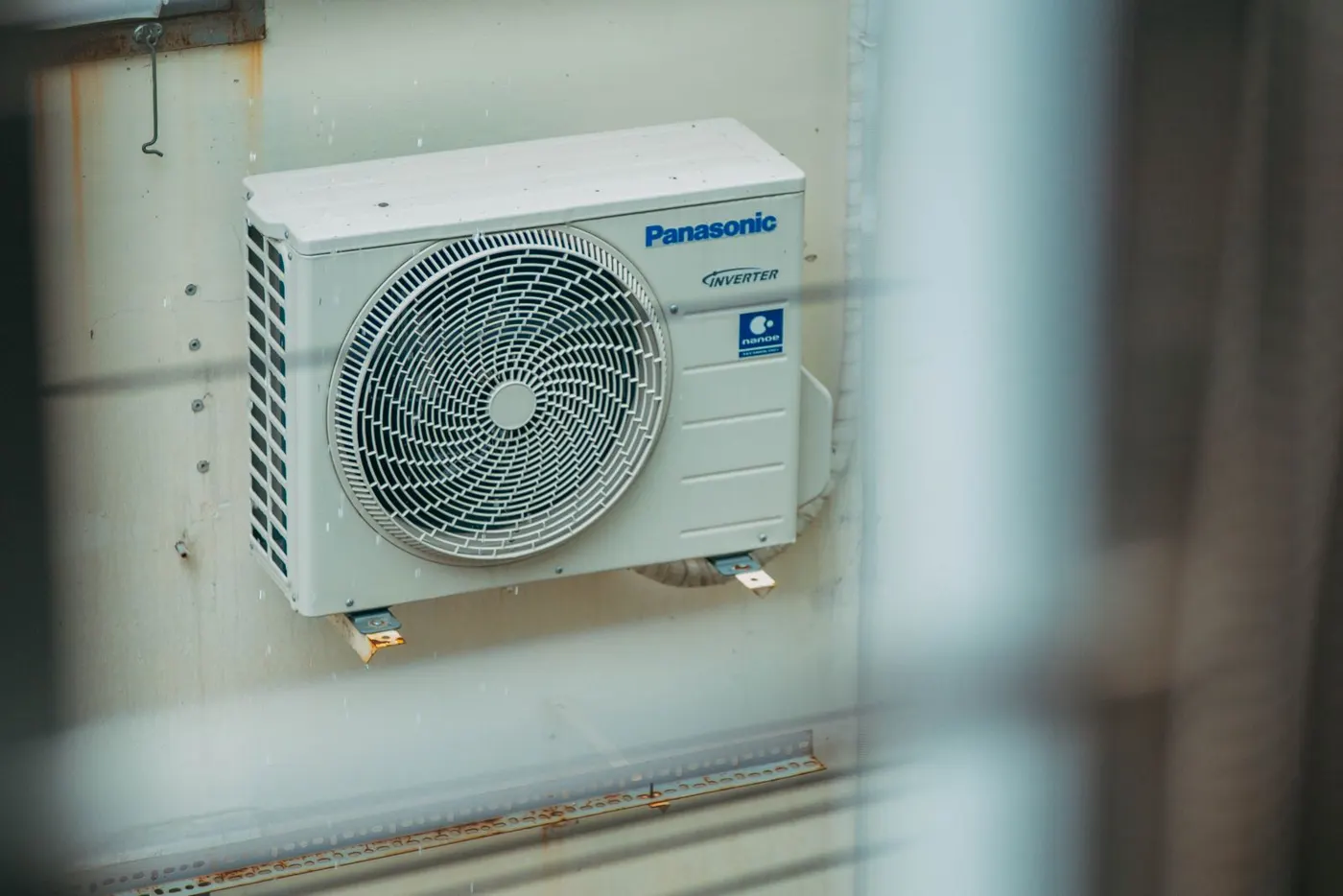
An air conditioner fails in one of maybe ten ways, and the bill swings enormously depending on which one it is, a capacitor and a compressor are not in the same universe. We do not publish price lists, because a number on a web page is either too high or too low for your actual system, and both are unfair to you. What this guide does instead is show you which failure you are probably looking at, where it falls on the cheap-to-expensive scale, and what makes it move, across Irvine, Tustin, Lake Forest and the rest of South Orange County. The AC diagnostic is free, so a firm number costs you nothing: call or text (310) 600-8152.
Which AC Failure You Have, and Where It Falls on the Cost Scale
| Repair | Where it falls on the scale | Typical symptom |
|---|---|---|
| Run capacitor (dual or single) | Least expensive tier, stocked on the truck, same visit | Outdoor unit hums or clicks, fan will not spin, or spins slowly; AC blows warm |
| Contactor | Least expensive tier, stocked, same visit | Outdoor unit will not start, or will not shut off; buzzing at the disconnect |
| Condenser fan motor | Lower-middle tier | Outdoor fan dead or running hot, compressor overheating and tripping |
| Blower motor (PSC) | Middle tier | Weak or no airflow at vents; furnace/air handler humming |
| Blower motor (ECM / variable speed) | Upper tier, module and motor priced together | Same symptoms on newer variable-speed systems; module and motor priced together |
| Thermostat replacement | Lower tier; smart thermostats at the higher end | Blank screen, wrong calls, system ignores setpoint; smart thermostats at the high end |
| Control board (furnace / air handler) | Middle tier | No response to thermostat, blinking fault codes, blower stuck on |
| Refrigerant leak detection + repair | Wide range, depends entirely on where the leak is | Ice on the lines, weak cooling that gets worse over weeks; price depends on leak location |
| R-410A recharge (after repair) | Lower-middle tier, charged per pound after the leak is fixed | Charged per pound after the leak is fixed |
| R-22 recharge (legacy systems) | Upper tier: R-22 is no longer produced and reclaimed stock is scarce | R-22 is no longer produced; reclaimed stock only, priced per pound |
| Evaporator coil replacement | Beyond our scope, we refer this to a specialist contractor | Leak inside the coil, usually on 10–15 year old systems |
| Compressor replacement | Beyond our scope, this is where replacement gets discussed | Compressor locked or shorted; often the point where replacement is discussed |
| Reversing valve (heat pumps) | Upper tier, one of the bigger heat-pump jobs | Heat pump stuck in heat or cool, common on newer Irvine/Tustin all-electric homes |
| Condensate drain clear / float switch | Least expensive tier | AC shuts off, water at the air handler; see our AC leaking water guide |
Roughly 60% of the AC calls we run in July and August land in the first four rows, capacitor, contactor, fan motor, or a dirty condenser that only needed a proper cleaning. If your system is "humming but not starting," odds are very good you are on the cheap end of the table.
What the Free AC Diagnostic Covers
The AC service call is free, you only pay if we do the repair. The technician checks the thermostat and 24V control circuit, filter and return airflow, the evaporator coil for ice or dirt, the condenser coil, tests the capacitor with a meter (a 45 µF capacitor reading 32 µF is a failure waiting for a hot day), inspects the contactor, measures amperage on both motors and the compressor against the nameplate, and puts gauges on to check pressures, superheat and subcooling. That last step is what separates a real diagnosis from "it's low, let me add some." Commercial rooftop units are billed at a separate flat commercial service call, see commercial HVAC & rooftop AC repair.
Refrigerant: R-22, R-410A, and the New R-32 / R-454B Systems
Refrigerant is the part of the bill that surprises people, so here is where things stand in 2026:
- R-22 (Freon). Systems installed before roughly 2010. Production and import ended January 2020; only reclaimed stock is left, and it is expensive. If your R-22 system has a leak, we will fix small leaks and recharge if the equipment is otherwise sound, but a compressor or coil failure on R-22 is almost always a replacement conversation.
- R-410A (Puron). The standard from about 2010 through 2024. Still widely available and reasonably priced, but the EPA's AIM Act phasedown is cutting production allowances every year, so per-pound cost is climbing. Perfectly serviceable for years to come.
- R-32 and R-454B. New residential systems manufactured from January 2025 onward use these lower-GWP refrigerants. They are mildly flammable (A2L class), which means different tooling and handling, and R-454B in particular has had supply hiccups. If you bought a new system in 2025–2026, its parts and refrigerant are not interchangeable with your old R-410A equipment.
Two rules that protect your wallet: refrigerant is not consumed, so "low" always means a leak; and a recharge without a leak repair is a temporary fix that you will pay for again next summer. Handling refrigerant legally requires EPA Section 608 certification, all of our technicians carry it.
Is a Tune-Up Worth It?
A tune-up is worth paying for only if it includes measurement, not just a filter swap and a hose-down. The failures that leave you without AC on a 100°F Santa Ana day, weak capacitors, pitted contactors, condenser coils packed with dust from the wind, all show up in a proper spring inspection. Catching a weak capacitor in May, before it takes out a fan motor in August, is the whole point, the part costs a fraction of what it protects. Our AC maintenance & tune-up service includes the capacitor test, coil cleaning, amperage readings, refrigerant check and drain flush.
Repair or Replace the Whole System?
The rough math we use with homeowners:
- Under 10 years old, R-410A: repair nearly everything. Even a compressor is usually justified, and many are still under a 10-year parts warranty if registered.
- 10–15 years: repair capacitors, contactors, motors and boards without hesitation. Think carefully about a coil or compressor, multiply the repair cost by the age in years and weigh that against a new system, we will do that arithmetic with you once we know what failed.
- 15-plus years or any R-22 system with a major failure: replacement is almost always the right call. A new 16-SEER2 system uses 30–40% less electricity than a 10-SEER unit from 2005.
We also look at the ductwork, the furnace or air handler age (they are usually replaced together), and whether the home is all-electric, many newer Irvine, Tustin Legacy and Great Park homes run heat pumps, and a heat pump replacement has different costs and rebates than a gas furnace plus AC.
The SCE Peak-Rate Angle
Southern California Edison time-of-use plans charge the highest rates from 4 PM to 9 PM, exactly when a struggling AC is running hardest. A system with a weak capacitor, a dirty condenser coil or a low charge draws more amps for less cooling, so the inefficiency lands right in the most expensive window. We have measured condensers pulling 20–30% above nameplate amperage purely from a dirty coil. On a 4-ton system that is real money over a summer, and it is the same neglect that eventually kills the compressor. Fixing the small stuff early is as much a utility-bill decision as a comfort decision.
What Makes Orange County AC Repairs Cost More or Less
- Attic air handlers. Most Irvine, Lake Forest and Mission Viejo homes have the coil and blower in the attic. Summer attic temperatures reach 130°F-plus, which is why we schedule attic work early in the day and why some coil replacements take longer than the same job in a closet.
- Rooftop package units. Common in older Costa Mesa, Santa Ana and Anaheim homes and on commercial buildings. Access is easier for some parts and harder for others; crane fees apply only on full replacements.
- Santa Ana winds. After a wind event, condenser coils in Tustin, Orange, Yorba Linda and Anaheim Hills are packed with dust and leaves. A thorough coil cleaning often restores cooling completely with no parts at all, and it is one of the least expensive things we do.
- Coastal corrosion. In Newport Beach, Huntington Beach and Seal Beach, condenser coils and contactors corrode faster. Coil failures come earlier near the water.
Every repair carries a 90-day parts & labor warranty. For same-day service see AC repair in Orange County or AC repair in Irvine. If the system runs but will not cool, our AC not cooling guide walks through what to check before we arrive.
Frequently Asked Questions
What is the most common AC repair and what does it cost?
The run capacitor. It fails constantly in our summer heat, especially on units in direct afternoon sun in Irvine, Tustin and Anaheim. It is one of the least expensive repairs on the list, we carry the common sizes on the truck, and it is usually done within the hour of the diagnosis. The symptom is an outdoor unit that hums or clicks but the fan or compressor will not start.
How much does it cost to recharge an AC with refrigerant?
A recharge is priced per pound, so it depends on how much the system holds, but the recharge is rarely the main cost. Leak detection and repair is, and that swings widely depending on where the leak turns out to be. R-22 is the expensive case: production ended in 2020, so only reclaimed stock is left and the per-pound cost is far higher than R-410A. A recharge without fixing the leak is a short-term patch, not a repair.
Should I repair or replace a 15-year-old air conditioner?
If the repair is a capacitor, contactor or fan motor, repair it, those are a few hundred dollars. If it needs a compressor or a coil, and it is an R-22 system, replacement usually makes financial sense: the parts are expensive, refrigerant is scarce, and a new R-32 or R-454B system will cut your SCE bill noticeably during peak hours.
Does an AC tune-up actually save money?
Yes, when it includes real work: measuring capacitor microfarads, checking refrigerant superheat and subcooling, cleaning the condenser coil, testing amperage on the motors and clearing the condensate drain. That catches the weak capacitor in May instead of on a 105°F day in August when every company in the county is booked out three days.
What does the free AC service call include?
A full diagnostic: thermostat and low-voltage check, filter and airflow, evaporator and condenser inspection, capacitor and contactor testing, motor amperage, refrigerant pressures and temperature split. You get a written quote before any work. The AC service call is free, you only pay if we do the repair.